

Every raise starts the same way.
A blank spreadsheet. Forty LinkedIn tabs. A firm’s “Team” page that hasn’t been updated since 2023.
You guess the email format. firstname@. first.last@. You hope.
You find a partner who looks right. Then you find out she left in the spring.
By the time the list is done, the round should have started.

The hardest part of a raise isn’t the pitch. It’s knowing exactly who to send it to.
So here’s the file we’d want on day one. 1,000 investors. 782 firms. One download.
Brought to you by Omnisend
11 days to Black Friday. Is your inbox ready for war?
On 27 November, your customer’s inbox becomes a battlefield. Hundreds of brands, thousands of emails, every one screaming “SALE,” “HURRY,” “LAST CHANCE.”
And every one sounds exactly the same. Your email? Buried. Skimmed. Gone.
Unless it’s doing something the others aren’t. Moving.
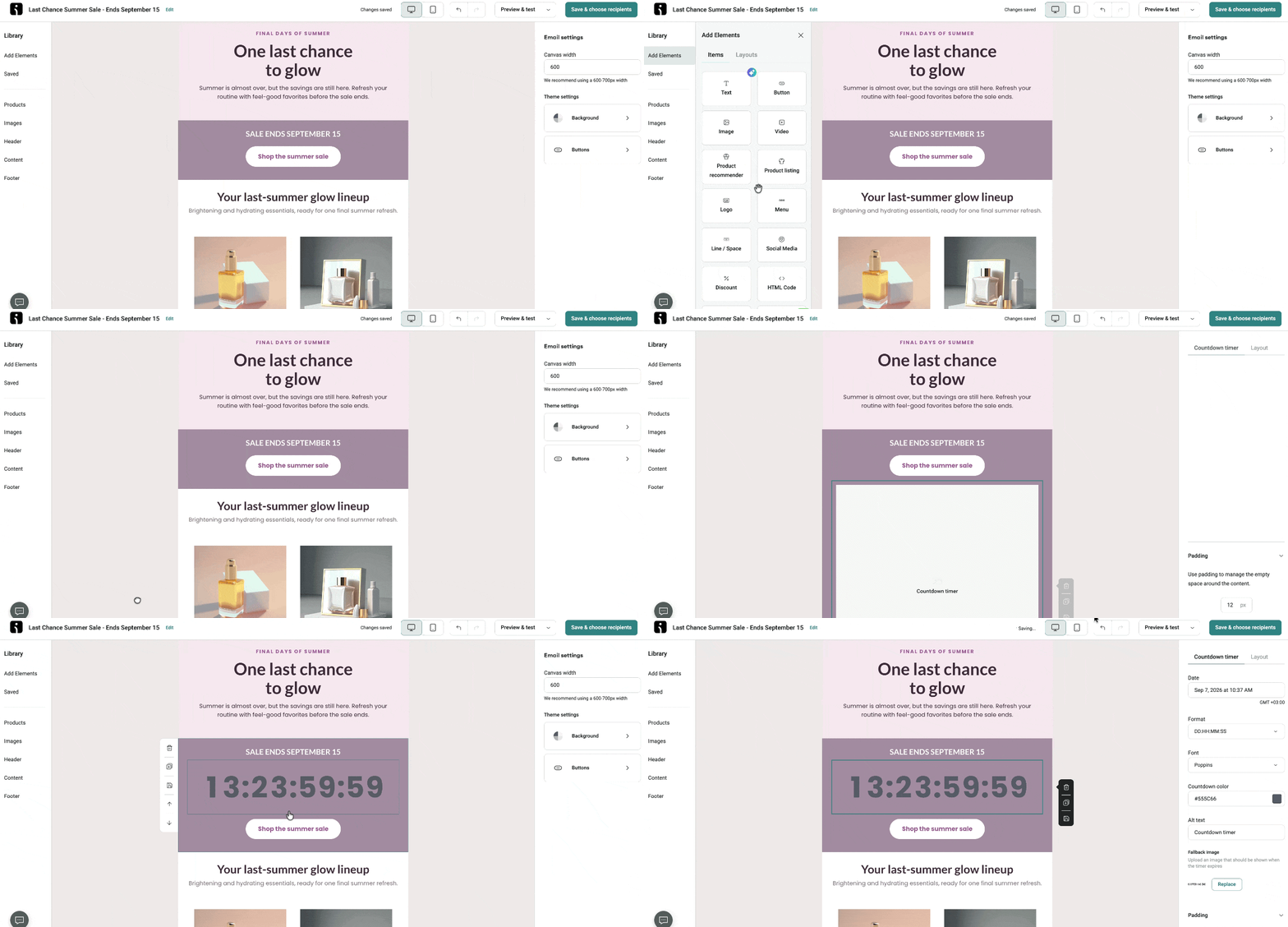
The Omnisend email countdown timer puts a live, ticking clock right inside your email. Not a promise of urgency. Real urgency, burning down second by second while your customer stares at it.
02:23:59:41... 02:23:59:40... 02:23:59:39...
You can’t skim past that. You can’t “come back later” to that. Suddenly, today feels like the right day to buy.
Tick. Tock. Sold.
🔥 Stops the scroll dead. In a sea of static shouting, the one thing moving is the one thing they see.
⚡ Turns “maybe” into “mine.” Hesitation is the silent killer of Black Friday revenue. A draining clock kills it first.
🔁 Fires everywhere. Campaigns, automation workflows, every time-sensitive send. Set it once and let the urgency sell.
🎨 Looks like your brand on fire. Your fonts, your colours, days down to seconds.
💀 Zero means zero. When time’s up, your own image takes over from the timer. Anyone who missed out will be quick to open your next email.
No third-party timer app. No HTML. No extra bill bleeding your margin. Drag, drop, set the end date, done.
Black Friday doesn’t reward the brand with the best product. It rewards the brand that makes people act now.
Your competitors will be shouting. You’ll be counting down.
Live now on Omnisend’s Standard and Pro plans. The real clock is already running.
👉 Arm your Black Friday emails with a countdown timer
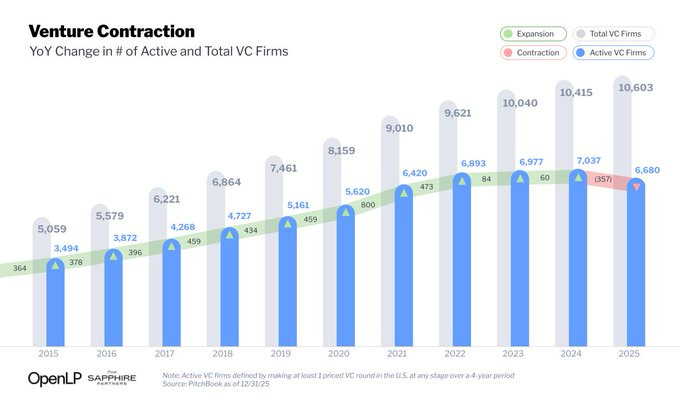
There Are Fewer Firms Than Last Year
Start with the market you’re raising into.
The NVCA’s 2026 Yearbook counted 2,984 US venture firms at the end of 2025, down from 3,054. It’s the first time the number has ever fallen.
And many of the firms still standing aren’t writing new cheques.
In February, Sapphire Partners’ Beezer Clarkson published “I See Dead VCs.” Her finding: fewer than half of existing US VC firms are actively investing.
It isn’t just the US. CB Insights counted 9,999 active investors worldwide in Q1 2026, down 10% in a single quarter and the lowest since Q3 2020.
The pipeline behind them is thinner too.

Fewer firms means every name on your list has to count.
My Next AMA
You know the email.
“Loved meeting you. Not quite right for us at this stage. Keep us posted.”
Translation: no. And no idea why.
Was it the traction? The deck? The valuation? You never find out.
This time you can ask.
On Wednesday 25 November at 4pm GMT, we’re hosting a live call for paid subscribers and free trialists. No camera-off webinar. You bring the problem, we dig into it with you.
Straight answers. Uncomfortable ones included.
🧭 Me. MessageLabs from tiny team to $700m exit, then co-founded Notion Capital. Operator and investor.
📣 Paul Watson. Sales won’t move? Paul works out who to sell to, what to say and how to make it repeatable.
💰 David Levine. CEO of Glenluna Ventures, Principal at Manchester Angels. Story, valuation, who to approach. Wonderfully blunt.
🛠 Your tools, actually opened. Investor readiness check, the 30-second deck test, and the filter across 2,500+ investors.
Three experts on your problem would normally take three intros and a lot of diary juggling. Here, it comes with your subscription.
Places are limited. More calls on 25 November and 10 December.
👉 Start your 7-day free trial and the invite is yours. Book your place:
The Money Sits With Fewer People
The capital didn’t disappear. It concentrated.
In January, Andreessen Horowitz announced it had raised more than $15bn across new funds. The firm said that was more than 18% of all US venture capital allocated in 2025.
It’s not alone. The NVCA found the 10 largest funds took 32.9% of all US VC capital raised in 2025, up from 13% in 2021.

When the money concentrates, the people controlling it get more email. Yours has to arrive in the right inbox, with the right name on it.
The Queue Has Never Been Longer
On the other side of the table, it’s the busiest it has ever been.
Through Q3 2026, 8,625 US startups raised their first venture round, according to PitchBook. That’s already more than the full-year record of 8,507, set in 2021.
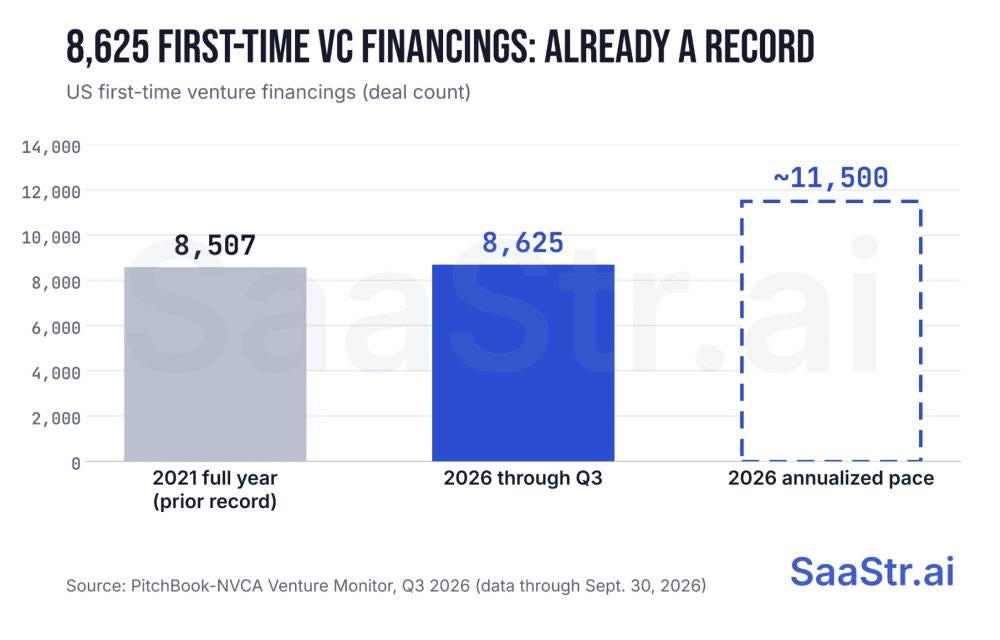
Record numbers of founders. Fewer firms. More money in fewer hands.
That’s three reasons the list matters more in 2026 than it did in 2021.
Our Most-Read Articles Right Now
🔥 The Quiet Filter That Decides Your Entire Fundraise Rank investors by real fit, and stop emailing the ones who were never going to reply.
🔥 The Only Cold Email Format Mark Cuban Actually Reads The outreach structure that earns investor replies.
📋 The Pitch Deck Test Investors Use in 30 Seconds — Now You Can Too See how your deck lands and which slides trigger a silent no.
🔥 The Way VCs Actually Calculate Your Valuation (But Never Say Out Loud) The return maths that sets your price before the meeting starts.
Who’s in the File
1,000 investors across 782 firms and 43 US states.
By seniority:
Partners. 459.
Founders. 178.
C-suite. 106.
Directors. 73.
VPs. 71.
Plus heads, managers, senior staff and owners: 113 more.
The names you’d expect are here. Andreessen Horowitz, Accel, General Catalyst, Sequoia Capital, SignalFire. So are accelerators like Techstars and Plug and Play.
So are hundreds of smaller seed funds you won’t find on a top-50 list. Those are often the firms most likely to take a first meeting.
Ten firms in the file are headquartered on Sand Hill Road in Menlo Park, including Andreessen Horowitz, Sequoia Capital, Greylock, Khosla Ventures and Felicis. Between them, 47 people.

By location, it follows the money: California 323, New York 157, Massachusetts 57, Texas 56, Florida 51. Then Illinois, Colorado, Utah, Tennessee, Ohio and more.
Every person has a LinkedIn profile linked. 774 have a verified email address.
And for 233 firms, you’ll see the latest fund size and the date it closed.
The Column to Sort By First
That fund date is the one most founders ignore.
A VC fund invests most of its money in new companies in its first few years. After that, much of what’s left is held back for the companies it already owns.
A firm that closed a fund recently is still shopping. A firm whose last fund closed years ago is probably busy looking after its portfolio.
So open the Firms tab and sort by Latest Fund Date. 73 firms in the file closed a fund in 2024 or 2025.
Start there.
No fund date doesn’t mean no fund. Plenty of smaller firms never announce their closes. For those, check the firm’s news before you write.
How to Use It Without Burning It
A list this size is powerful. It’s also easy to waste.
Four rules.
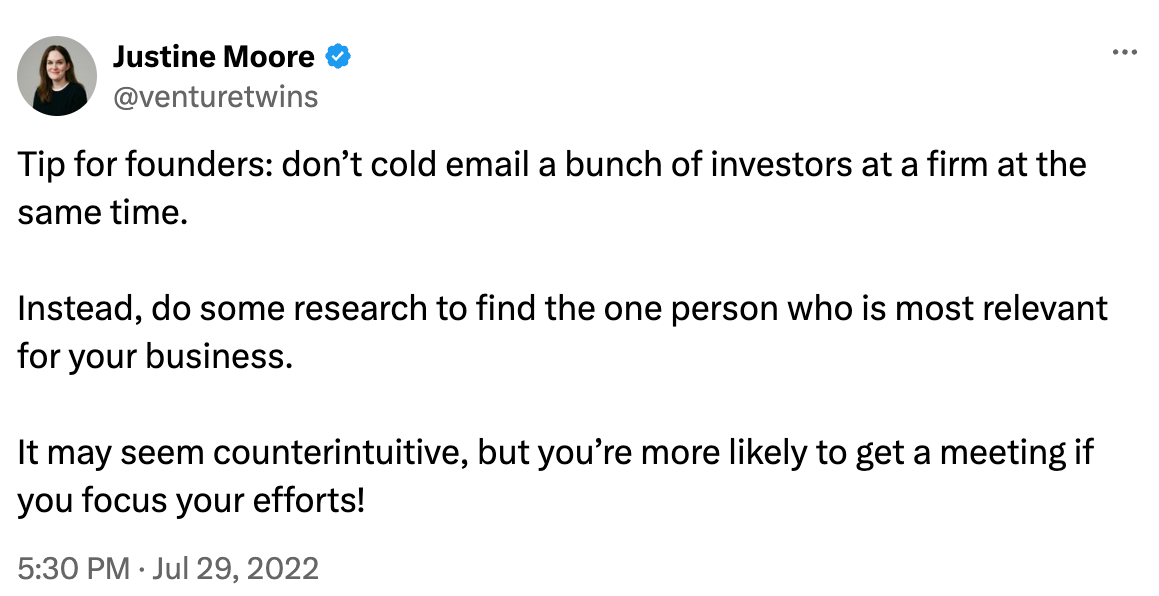
One person per firm. Three partners at one fund means three forwards to the same Monday meeting. Union Square Ventures’ Fred Wilson calls it “email hot potato”: when two partners get the same email, it isn’t clear whose job it is to reply.
Read the title, not just the seniority. A Talent Partner and an Investing Partner are both “Partner”. Only one of them takes your pitch.
Match the fund to the round. Some firms in here back seed. Some buy whole companies. Check the website before you write.
Write to a person. Thirty specific emails will beat three hundred templated ones.
And the fair point: warm introductions still win. Use the LinkedIn links to see who you already know at each firm before you send anything cold. The best use of this file might be finding the mutual connection, not the email address.
“Your round isn’t decided by how many investors you email. It’s decided by whether the right one opens it.”
Before the First Email
The pattern is always the same.
Weeks building a list by hand.
The wrong person at the right firm.
The right person at a fund that stopped investing.
The same deck sent three times into one partner meeting.
The fix: filter to your state, sort by fund date, pick one partner per firm, check their LinkedIn, then write.
Do it before your raise starts, not halfway through it.
The file is waiting below.
The Founders Corner Investor Database: 1,000 Investors
Exactly what you’re downloading:
Investors. 1,000 people at 782 firms: name, job title, seniority, firm, email with verified status, LinkedIn profile, city and state
Firm details on every row. Website, LinkedIn page, HQ city and state, team size, latest fund size and date, and total capital raised
Firms. All 782 firms on one row each, with HQ address and phone, fund data, and how many of their people are in the file
Summary. The database at a glance, by seniority, state and firm
Filters on every column. Cut to Partners in California, or Founders in New York, in two clicks
Filter to your state, sort the firms by fund date, then write to one partner at each of your first thirty.
Paid subscribers also get:
60+ additional tools across every stage of fundraising and company building: investor research, pitch deck screening, meeting prep, term sheet analysis, financial models, and the full investor database library.
Download Below
Start your 7-day free trial → Cancel anytime.