

Most founders walk into a fundraise with a story about the round they are raising.
“We are seed ready.”
“We are gearing up for Series A.”
But investors do not buy the story.
They buy the signals behind it.
In 2026, those signals are sharper, stricter, and far less forgiving than they were even two years ago.
After 20 plus years investing, 500 plus portfolio companies, and two exits of my own, I have learned exactly which metrics matter at each stage, and which gaps quietly kill a fundraise before it begins.
That is why I built the Funding Milestone Navigator.
A simple way for you to understand whether you are truly fundable at the round you want, and what it would take to get there.
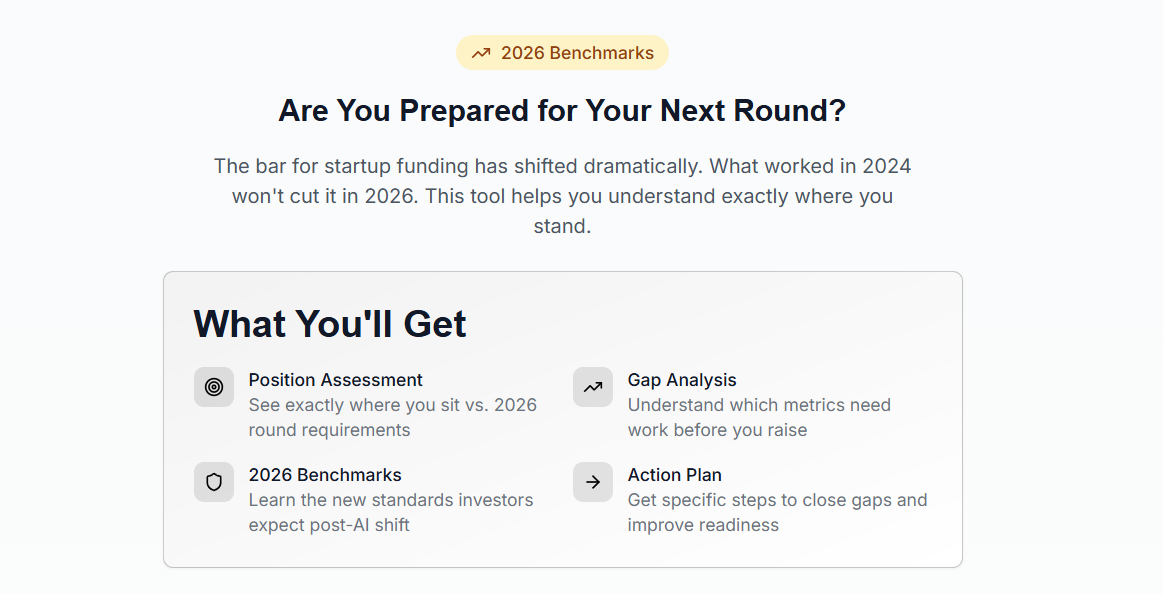
Below is a walkthrough of how it works.
1. Start With Where You Are, And Where You Want To Be
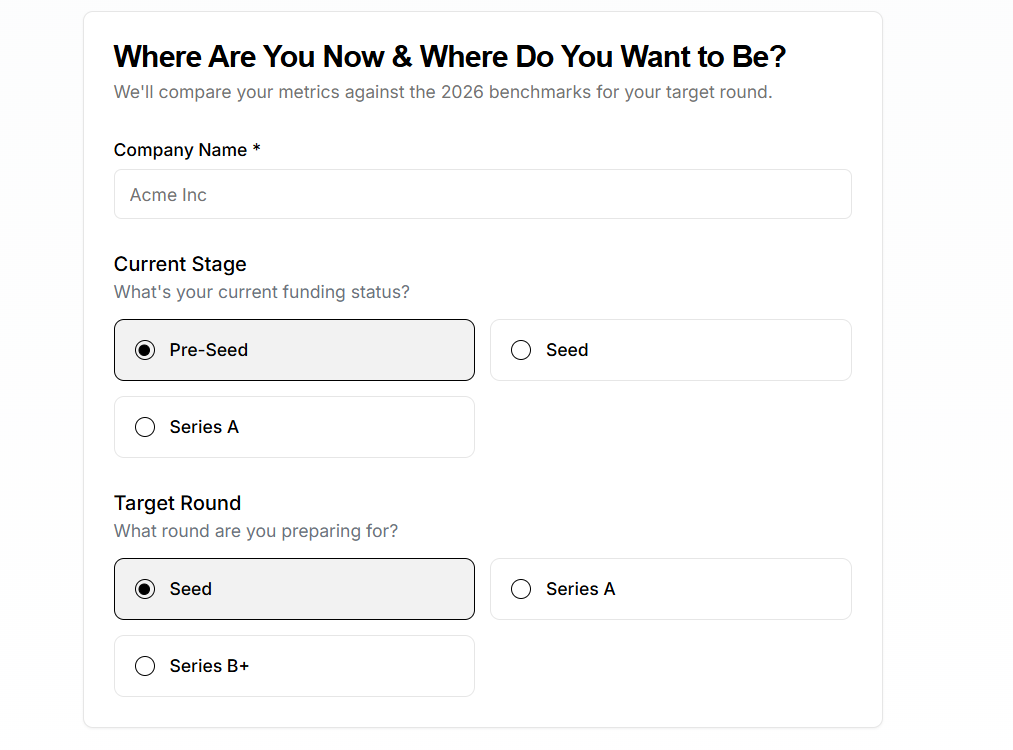
The first screen looks deceptively simple.
You input:
Your company name
Your current stage
The round you are preparing for
This matters because almost every fundraising mismatch begins here.
Founders often anchor to narrative:
“We feel like a seed company.”
Investors anchor to readiness:
“These look like pre seed signals.”
By clarifying your current and target stage upfront, the tool calibrates everything else. You instantly shift from asking:
“Are we good enough?”
to
“Are we aligned with what investors expect at the stage we want?”
For most founders, that reframing alone prevents six to twelve weeks of wasted conversations.
2. Enter Your Financial Metrics: The Backbone of Any Raise
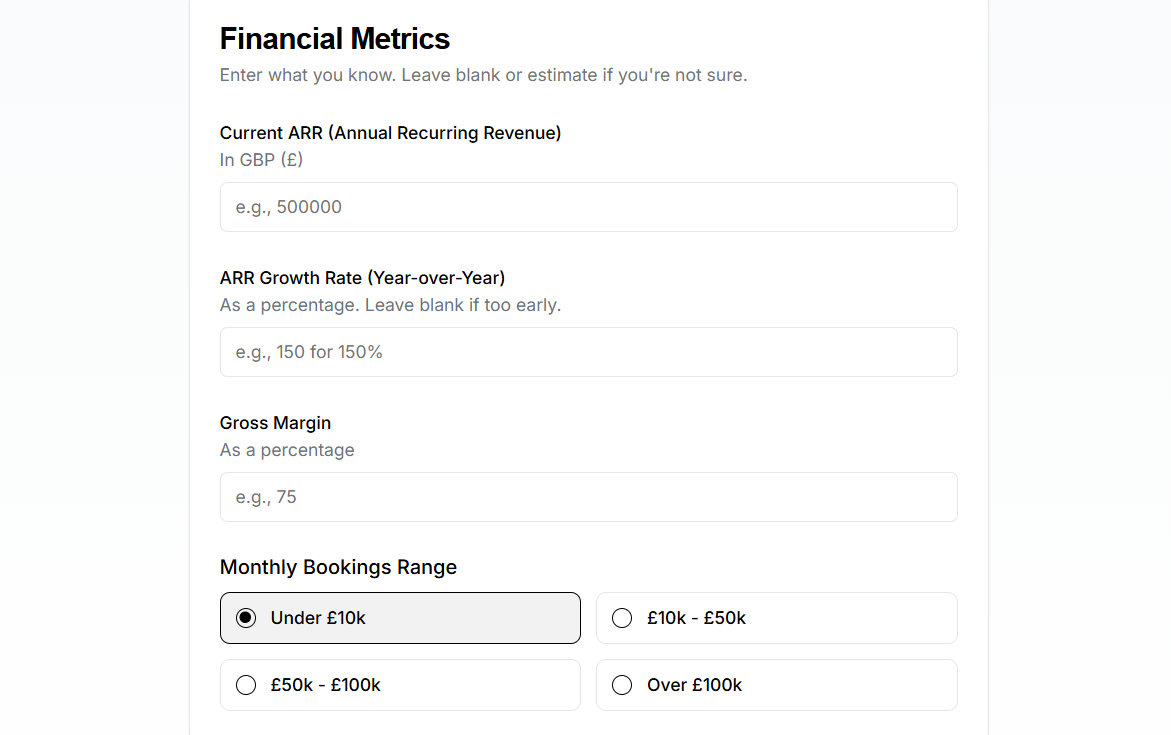
Next, you input your core financials:
ARR
Growth rate
Gross margin
Monthly bookings
Think of these as the spine of your fundraising story.
Investors rarely reject a company because a single metric is off.
They reject because the pattern does not match the stage.
For example:
ARR is fine
Growth is slow
Margins are thin
Efficiency is weak
That combination reads as:
“Not ready for Seed yet.”
Whereas strong retention plus strong efficiency plus early revenue equals
“High quality, small base. Seed ready.”
If you do not know a number, leave it blank. The Navigator adapts.
3. Add Retention and Efficiency: The 2026 Investor Lens
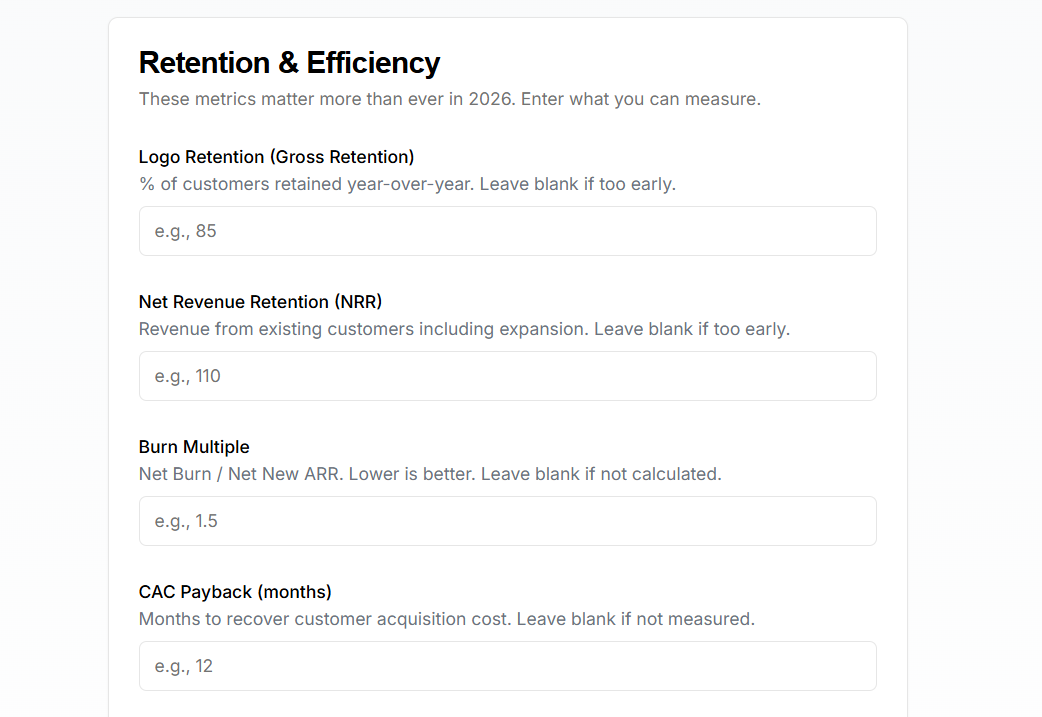
This is where 2026 expectations differ most from the last cycle.
Investors want to know:
Do customers stick
Do they expand
Is your burn multiple improving
Is your CAC payback reasonable
These metrics tell investors whether:
“…this company grows because customers love it…”
or
“…this company grows because it is lighting money on fire.”
The Navigator uses the same benchmark ranges I look for internally:
Logo retention above 80%
NRR at 90 to 100% plus
Burn multiple below 3x, ideally below 2x
CAC payback under 18 months
A company can be early and still compelling, but only if the efficiency narrative is credible.
4. Qualitative Factors: How You Build Matters
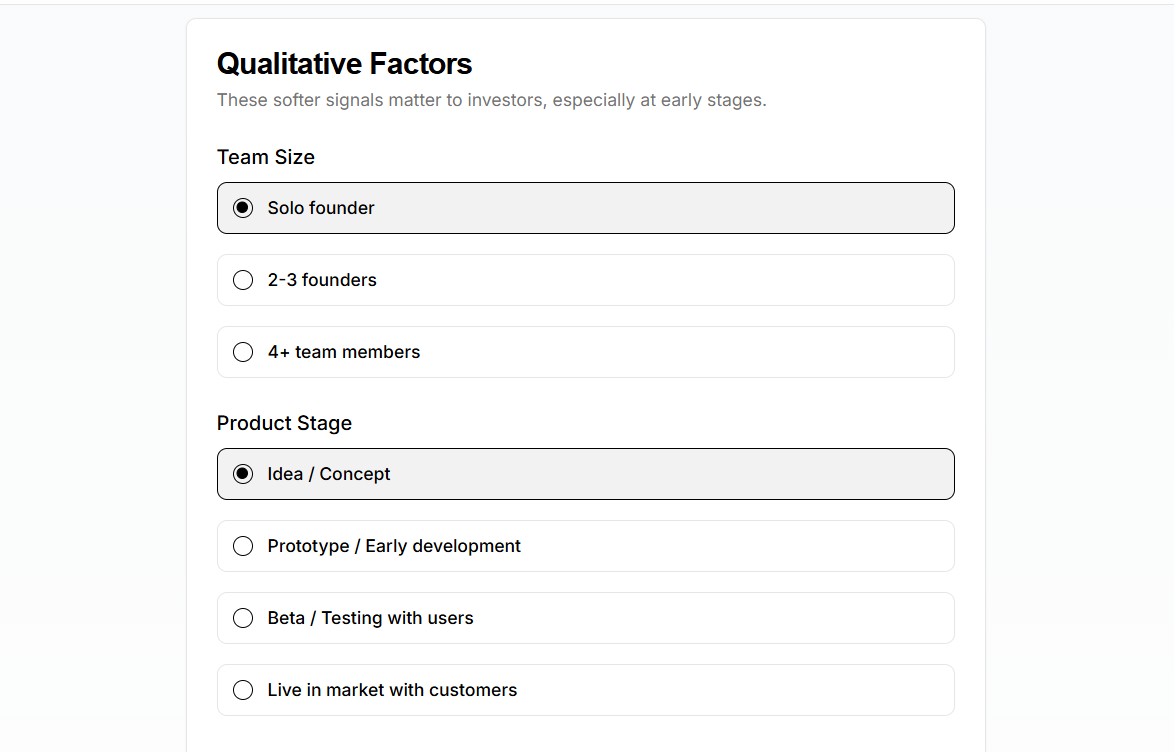
Metrics alone do not win rounds.
Signals do.
Here you input:
Team composition
Product maturity
PMF indicators
Moat and defensibility
This section captures what I look for in founder meetings that spreadsheets miss:
How clearly you understand your ICP
Whether customers love you or merely tolerate you
Whether you have found one repeatable acquisition channel
Whether your moat is emerging or non existent
It is the difference between:
“Interesting product.”
and
“A fundable company.”
Be brutally honest, this is where many founders unintentionally overestimate readiness.
5. Your Readiness Score: A Clear, Unbiased Snapshot
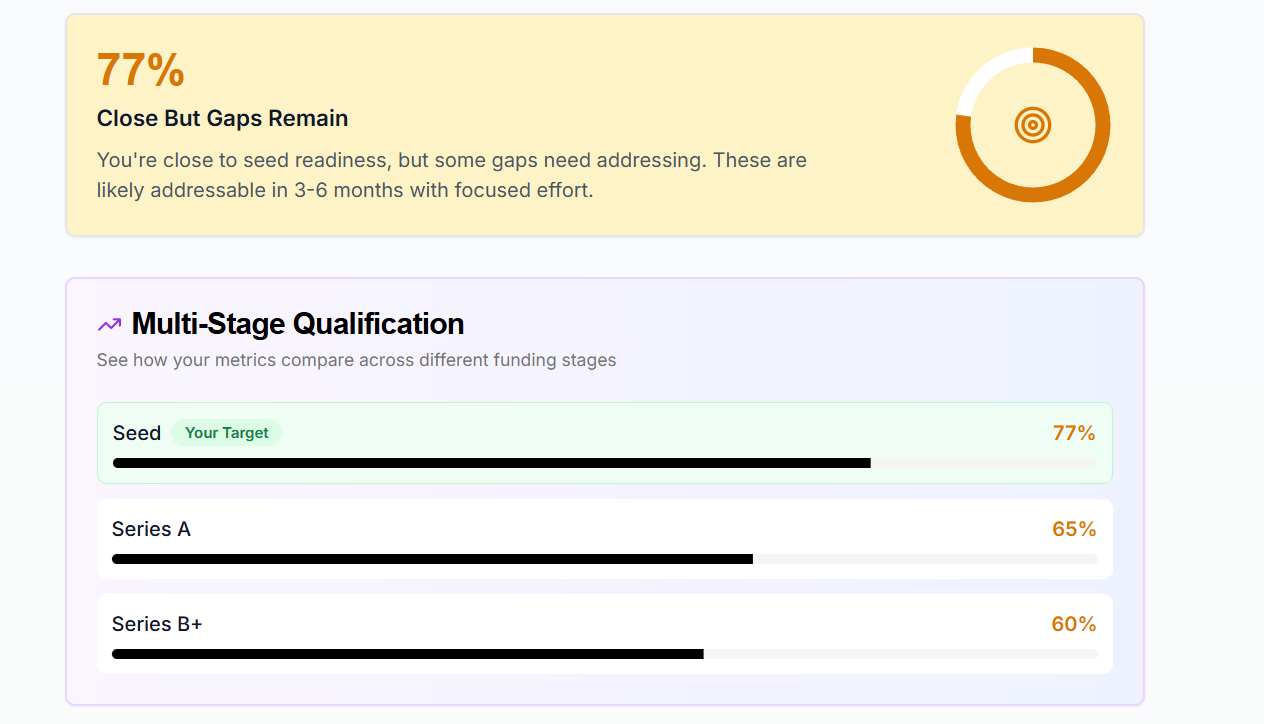
Once everything is filled in, you receive:
A readiness score for your target stage
A breakdown across Seed, Series A, Series B plus
A simple visual showing whether you are close, ready, or not yet aligned
This is not a grade.
It is not a prediction.
It is a map that helps you avoid the most expensive mistake founders make:
Starting a fundraise six months too early.
Most rounds fail not because the story is wrong, but because the timing is wrong.
This is your early warning system.
6. Priority Gaps to Close: Your Ninety Day Execution Plan
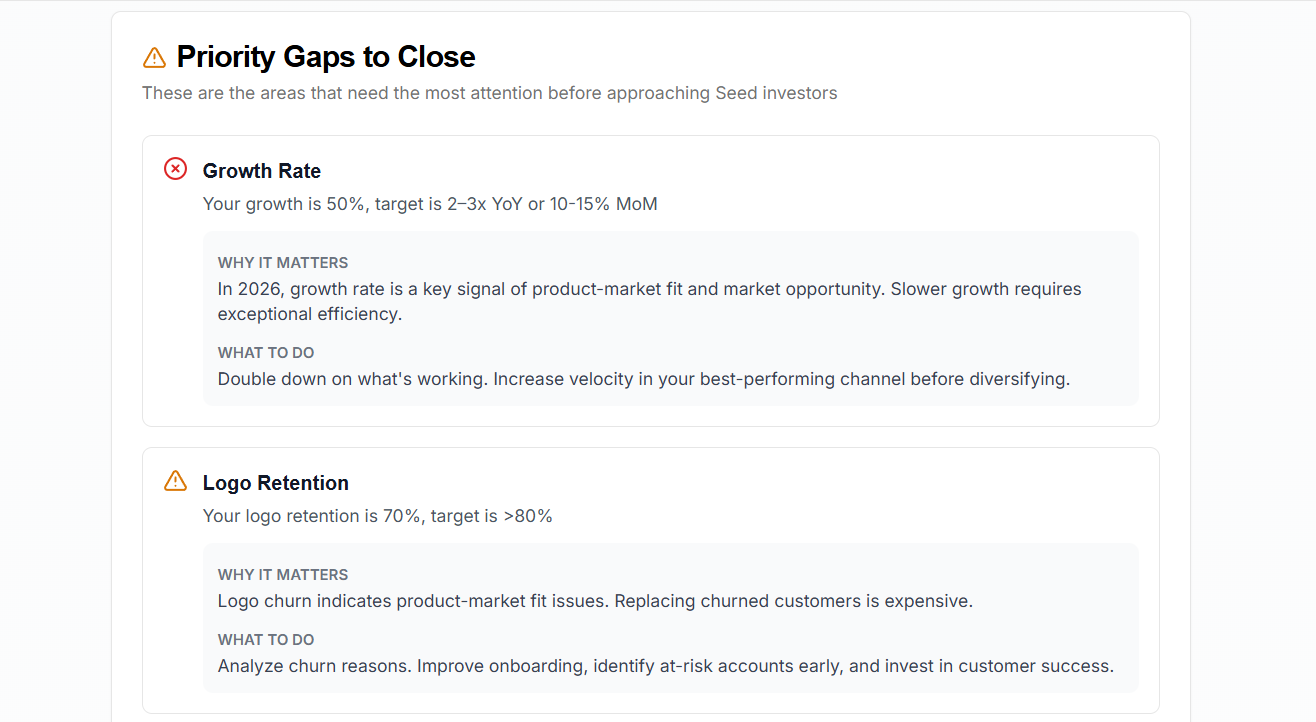
This is where the Navigator becomes practical.
For each gap, it explains:
What is off (for example, growth 50% versus the 2 to 3x expected)
Why it matters
What to do next
It translates investor feedback from vague signals such as “too early”, “not enough traction”, “come back later” into specific, stage aligned tasks.
Examples:
“Double down on your highest performing channel before diversifying.”
“Fix early churn through onboarding improvements.”
“Increase velocity on expansion revenue.”
For founders, this becomes your short, sharp list of priorities for the next three to six months.
7. 2026 Benchmarks: What ‘Good’ Actually Looks Like
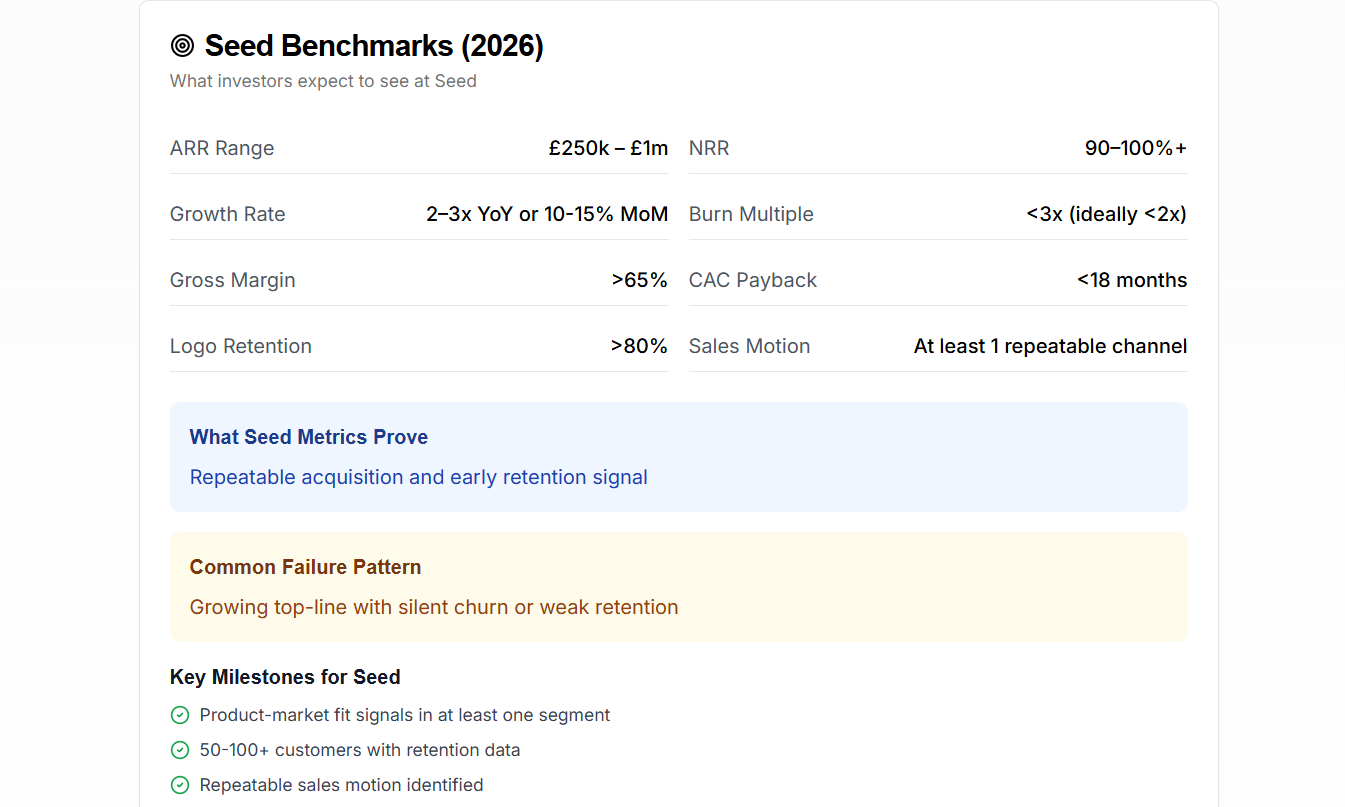
Finally, you see benchmarks for your target stage:
ARR ranges
Growth expectations
Retention floors
Burn multiple norms
CAC payback windows
Sales motion requirements
Plus:
What these metrics prove
Common failure patterns
Key milestones founders must hit
In other words:
What investors expect before writing a cheque.
This replaces guesswork with clarity.
It removes blind spots.
It anchors your entire fundraise.
How To Use This Navigator Inside Your Company
Here is where founders get the most value:
1. Align your leadership team
Instead of debating feelings, debate the data.
2. Set quarterly OKRs
Turn the biggest gaps into focused execution priorities.
3. Pressure test your fundraising timing
Start when the signals say you are ready, not when your runway scares you into it.
4. Build your narrative from reality
Investors do not fund potential.
They fund evidence.
This tool helps you understand exactly what evidence you have.
Closing Thoughts
I built this because too many good founders walk into fundraising blind.
Not for lack of effort, but for lack of a clear, objective, investor quality way to understand readiness.
The Navigator gives you that clarity.
For readers who want to dig further into the mechanics behind a successful raise, these pieces are worth exploring:
The 30 Second Investor Test, a breakdown of the silent evaluation every VC runs before deciding whether your deck deserves a real meeting.
The Term Sheet Walkthrough, a plain English guide to the terms that quietly shape founder outcomes for years.
The Cap Table Explained, an overview of how ownership really shifts across rounds and why certain structures alarm investors instantly.
To explore how your own numbers stack up against real stage expectations, the full tool is available below.
👀 If you are planning to raise this year, you will want to have it.