

👋 Hey, Chris here! Welcome to BrainDumps—a weekly series from The Founders Corner. If you’ve been reading along, you know this series is a preview of a bigger project. Well, it’s finally here: The Big Book of BrainDumps is out now!
It isn’t a theory book—it’s the founder’s field manual. Inside, you’ll find 70 powerful frameworks distilled from 30+ years scaling software companies to hundreds of millions in ARR, 20+ years investing in 500+ B2B tech startups, and over $1B of shareholder value created. From raising capital to hiring your first VP of Sales, this book turns scars and successes into practical playbooks you’ll return to again and again. I expect most copies will become well-worn, scribbled on, and dog-eared—because it works.
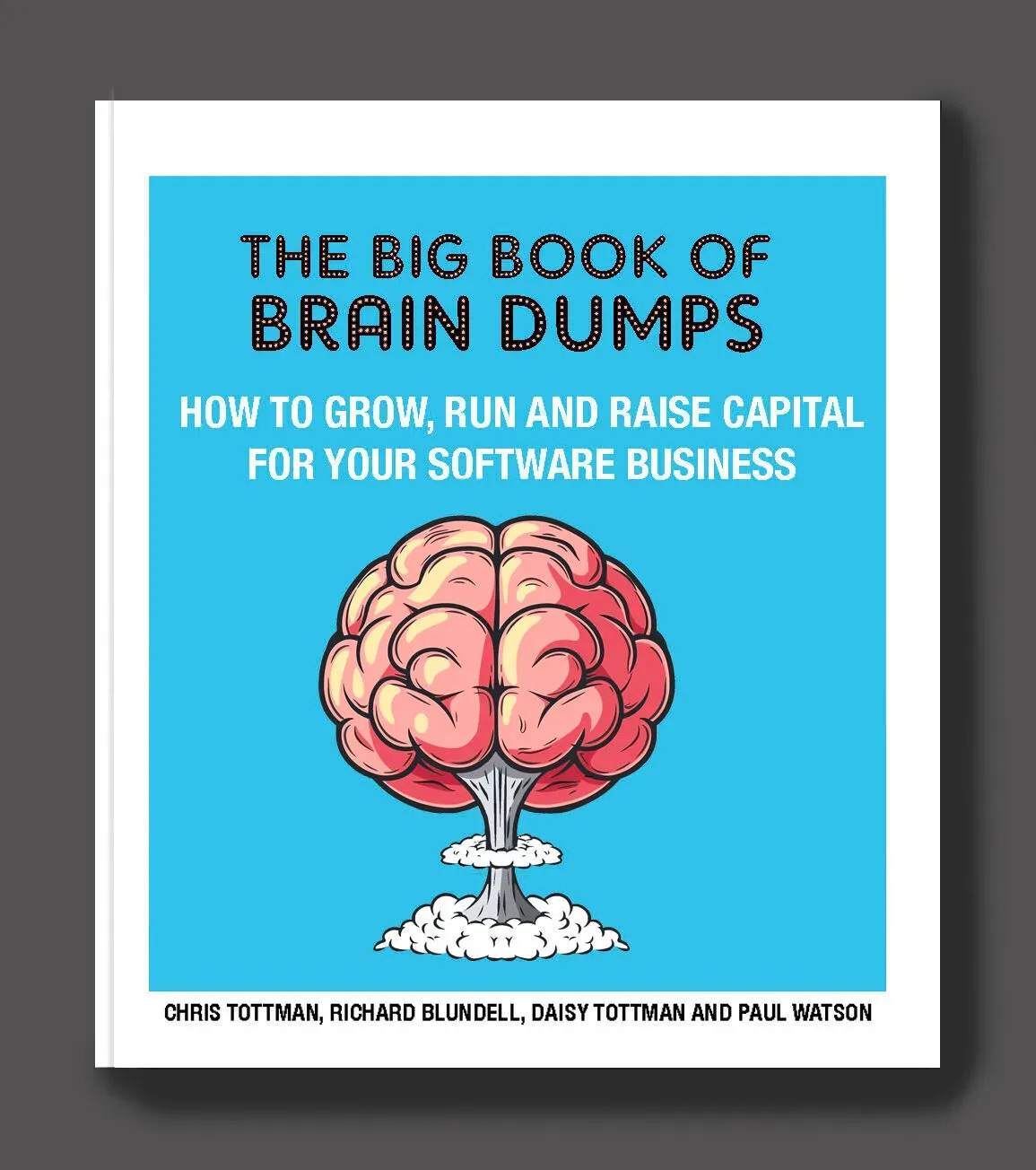
Table of Contents
Fundability in Today’s Market
CAC Payback: How Fast You Recover Growth Spend
Operational Efficiency: Turning Spend into Revenue
Net Revenue Retention: The Stickiness Test
Runway: Your Survival Clock
Revenue Growth: The Headline Metric
Logo Retention: Loyalty That Compounds
Why These Metrics Matter More Than Ever
Understanding Your Spending
Looking Beyond Revenue
The Founder’s Fundability Checklist
Final Thought

Every founder wants to believe their company is fundable. But when investors look under the hood, the numbers tell the real story.
In today’s capital climate, fundability isn’t about storytelling — it’s about metrics.
It’s about proving that your business model can turn ambition into efficiency and growth into sustainability.
These benchmarks — drawn from insights by Bessemer Venture Partners’ State of the Cloud report and refined by leading SaaS investors — have become the yardstick by which fundability is measured. They offer a framework for understanding whether your company is not just growing, but doing so in a way that compels investor confidence.
Let’s break down the numbers that define whether you’re “good,” “better,” or “best” in the eyes of investors — and what they reveal about your business.
1. CAC Payback: How Fast Can You Earn It Back?
If investors could only look at one metric, Customer Acquisition Cost (CAC) Payback might be it.
It tells them how long it takes you to recover the money spent to acquire a new customer. In plain terms — how quickly does your growth start paying for itself?
Best-in-class: Less than 6 months
Better: 6–12 months
Good: 12–18 months
A payback period under six months signals operational excellence and product-market fit. You’re not just acquiring customers — you’re monetising them efficiently.
If your payback period stretches beyond 12 months, it’s a sign to revisit acquisition strategy or pricing. Long CAC payback cycles often point to inefficient marketing spend or over-generous discounting.
2. Operational Efficiency: How Smartly Are You Spending?
Operational efficiency measures how effectively you turn operating expenses into revenue. It’s the ultimate ratio of output to input.
Best: 1.5x or higher
Better: 0.5–1.5x
Good: Under 0.5x
Investors view this as a proxy for scalability. A ratio above 1.5x means you’re generating more than £1.50 for every £1 you spend — a hallmark of efficient, mature SaaS companies.
Fall below 0.5x, and alarm bells ring. It suggests that growth is being driven by unsustainable spending — the startup equivalent of burning the candle at both ends.
3. Net Revenue Retention (NRR): The True Test of Stickiness
Net Revenue Retention is the gold standard for SaaS. It reveals how well you retain and expand your existing customer base, factoring in churn, upsells, and cross-sells.
Best: 120%+
Better: 110%
Good: 100%
An NRR above 120% means your existing customers are not just staying — they’re buying more. It’s a sign of exceptional product-market fit and pricing power.
If you’re below 100%, it’s time to dig into churn. It may signal weak onboarding, pricing mismatches, or feature gaps that need fixing before scaling further.
4. Time to Cash Out (Runway): Your Survival Clock
Runway is one of the simplest — and most brutally honest — metrics in the book. It tells investors how long your company can operate before running out of cash, assuming no new funding.
Best: 24+ months
Better: 18 months
Good: 12 months
A 24-month runway gives you the space to focus on building, not just fundraising. Investors interpret long runway as proof of discipline and foresight.
If you’ve got less than 12 months, it sends the opposite message: urgency, risk, and possibly a lack of financial control.
5. Revenue Growth: The Headline Number
Revenue growth is the simplest story to tell — and the hardest to sustain.
Best: 125%+ YoY
Better: 100–125%
Good: 75%+
Growth above 125% signals breakout momentum — the kind of numbers investors chase. But even if you’re in the 75–100% range, you’re still in the game. Just be ready to explain how you’ll convert that growth into profitability.
Remember, investors no longer celebrate growth at all costs. They’re looking for balanced growth — the kind that scales without breaking the bank.
6. Logo Retention: The Silent Strength
While many founders focus on revenue retention, logo retention — the percentage of customers who continue using your product — can be even more revealing.
Best: 95%+
Better: 90%+
Good: 85%+
High logo retention shows that customers aren’t just paying invoices — they’re loyal advocates.
Below 85%, investors will start asking tough questions about churn, satisfaction, and differentiation.
Why These Metrics Matter More Than Ever
Investors today aren’t chasing hypergrowth for its own sake. The era of “grow fast, figure it out later” is over.
They’re funding companies that can prove capital efficiency — the ability to grow revenue faster than they spend it. These benchmarks capture that story in six simple metrics.
When you can demonstrate efficiency, retention, and sustainable growth, you’re showing investors something more powerful than promise — you’re showing proof.
Understanding Your Spending
If your company’s spending aggressively, make sure that spend is justified by growth.
High burn without a clear payback plan is the fastest route to fundraising fatigue. But equally, if your spending is too low while growth is stagnating, it can signal missed opportunities.
Investors want to see that your spend matches your ambition — controlled, but not cautious.
Looking Beyond Revenue
Revenue is important, but it’s not everything.
Investors look for the shape of your growth — are you scaling customers efficiently? Are you driving upsells and renewals faster than churn? Are you growing your average revenue per account without ballooning your acquisition costs?
These are the signals of a company with long-term value.
The Founder’s Checklist
Before your next investor conversation, benchmark your business honestly against these metrics:
✅ How efficient is your customer acquisition?
✅ Are your customers expanding or churning?
✅ Is your growth sustainable, or fuelled by spend?
✅ Do you have enough runway to make smart decisions?
If you’re hitting “good” or “better,” you’re investable.
If you’re hitting “best,” you’re commanding attention.
Final Thought
Fundability isn’t luck — it’s alignment.
When your metrics align with investor expectations, your story writes itself. You’re no longer asking for belief — you’re earning it.
-Chris Tottman
“A payback period under six months signals operational excellence and product-market fit. You’re not just acquiring customers — you’re monetising them efficiently.”
Today I learned! Thanks! Great post :)
This isn't just a checklist; it's a structural guide to building a resilient business...Great share, man!