

There’s a number that should stop every founder in their tracks: 95%.
That’s the percentage of cold investor outreach that generates zero reply. Not a no. Silence.
Meanwhile, warm introductions convert at 58% or higher. That’s a 10–20× difference.
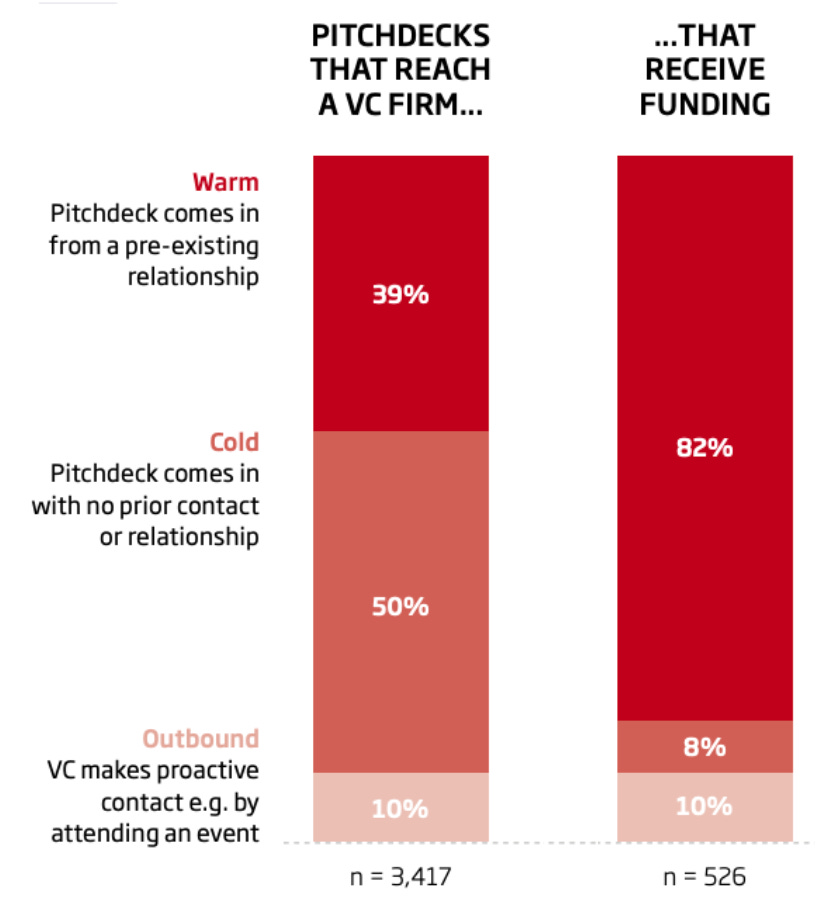
The founders who close rounds fast aren’t better at pitching. They’re better at preparation. They started the relationship before they needed the money, and by the time they officially opened a round, they weren’t convincing strangers - they were inviting people who already believed in them.
This article is the exact playbook for doing that. Six months of deliberate, light-touch work that means when you finally say “we’re raising,” half the room already wants in.
Also included at the end: the full Investor CRM you need to run this system - ready to copy and use today.
Why timing is the most under-rated fundraising variable
Most first-time founders treat fundraising like a sprint: build a deck, get warm intros, take 50 meetings, close a round. The problem is that model assumes investors are ready to move the moment you are.
They aren’t.
Venture capital decision-making is relationship-driven. Investors often commit to founders they’ve been tracking for months - watching them execute, hit milestones, and handle setbacks. There’s a concept in VC that captures this perfectly: investors invest in lines, not dots. A single meeting gives them one data point. Six months of consistent updates gives them a trajectory.
The data reinforces the timeline pressure. Carta’s 2025 State of Private Markets confirms seed valuations hit all-time highs - but deal counts fell 28% year-over-year. Fewer deals, higher competition, longer wait times between rounds. The median company in 2025 waited 1.9 years between seed and Series A - the longest recorded interval. Investors are more selective than at any point since 2018.
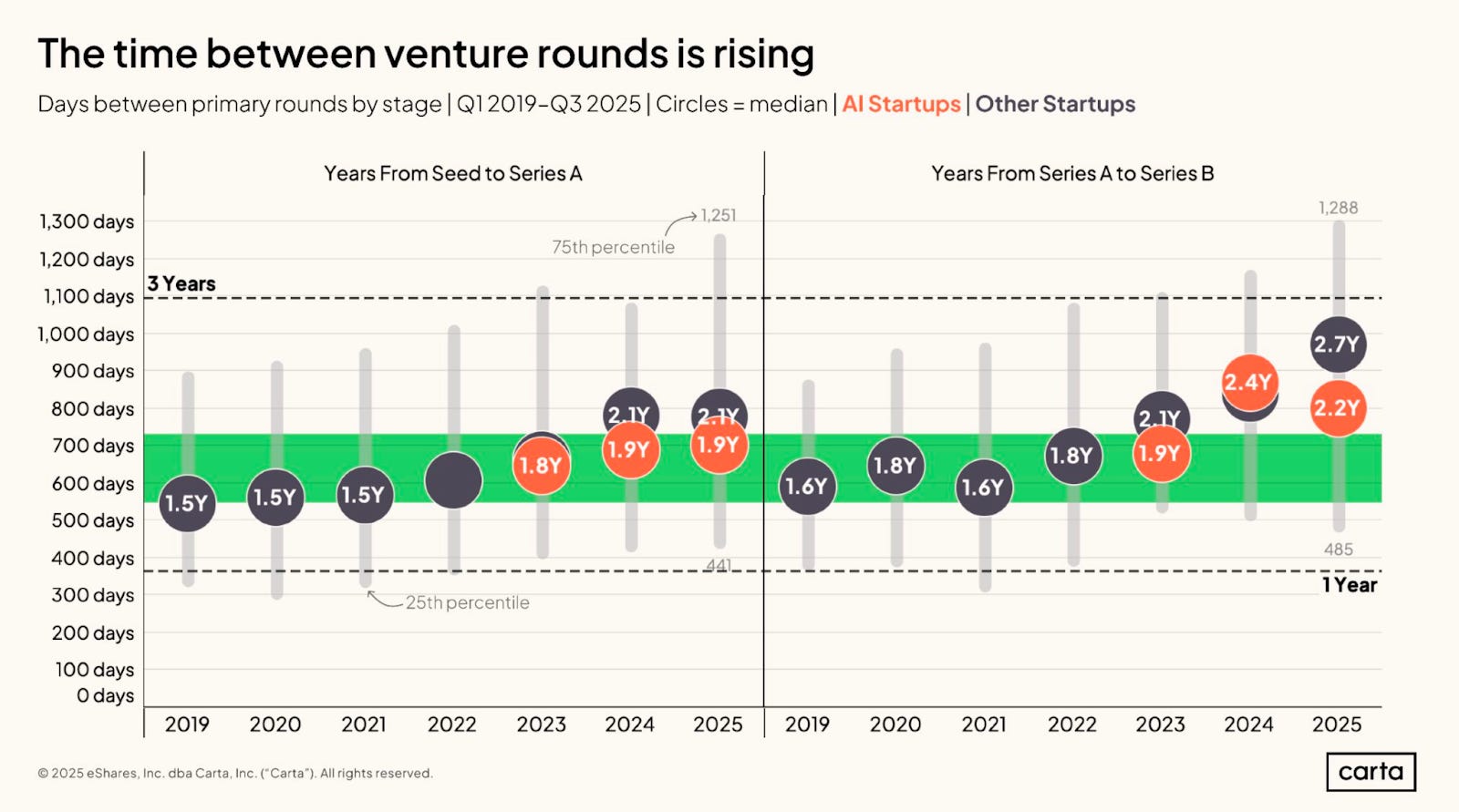
The other reality: early-stage rounds typically take three to six months from first meeting to wire. If you start building relationships at the same time you open the round, you’re looking at nine months minimum of cash runway consumed before a single penny arrives. Starting six months earlier means your raise isn’t racing against your runway - it’s an exercise in choosing between competing term sheets.
The Pre-Raise Framework: Month by Month
Here’s the full system, broken into three two-month phases.
Months 1–2: Build your target list and make first contact
The goal: Get on the radar of 50–75 relevant investors. Not pitch them. Not ask for anything. Just exist in their awareness.
Step 1: Build a tiered investor list
Most founders build their list wrong. They Google “top VCs” and start emailing Sequoia. This is how you waste three months.
Your investor list should be built around four filters, in this order:
1. Stage fit. A pre-seed fund cannot write a Series A cheque. An early-stage fund that’s already deployed 90% of its current vehicle isn’t writing any cheque. Research which funds are actively deploying at your stage. Crunchbase Pro (around £60–80/month) lets you filter by fund stage, recent investment activity, and check size. The fastest raisers use the most targeted lists.
2. Sector fit. Over 70% of active seed funds in 2025 focus on specific verticals. An investor with no B2B SaaS portfolio companies will not suddenly lead your B2B SaaS round. Filter by portfolio companies, not fund name.
3. Geography. Many European and UK funds cannot invest in non-UK entities. Many US funds won’t lead European rounds. Know the rules before you spend time on an investor.
4. Warm path. For every investor on your list, score them by how easily you can get an introduction. Check LinkedIn for second-degree connections. Use NFX Signal (free), which maps your Gmail and LinkedIn network against 14,000+ VC relationships, to surface invisible intro paths.
We built a tool specifically for this filtering process. Before you build your list manually, run it through our investor fit filter first - it matches your stage, sector, geography, and raise amount against 2,500+ active investors and surfaces only the ones who are structurally capable of saying yes. → Use The Quiet Filter here
Aim for 75–100 names. Tier them:
Tier 1 (15–20): dream leads - high fit, warm intro path exists
Tier 2 (30–40): strong fits - sector and stage match, intro path requires work
Tier 3 (20–30): good options if Tiers 1–2 don’t convert
Build your tracking spreadsheet with these columns: Fund name, Partner name, Stage focus, Sector focus, Geography, Check size range, Warm intro path, and a “Why us” column. If you can’t write a sentence explaining why this specific investor would care about your company, remove them from the list.
Step 2: Make first contact - the permission ask
Here is the email that starts everything. It is not a pitch. It is a request for permission to stay in touch.
Subject: [Your Company] - mind if I share occasional updates?
Hi [Name],
I’m [Your Name], founder of [Company]. We’re building [one-sentence description] - we’re currently at [brief traction signal, e.g. £40K MRR, 3,200 active users, or “launching with 12 paying design partners”].
I saw your investment in [specific portfolio company] and thought you might find our progress interesting to follow. We’re not raising right now, but I’m planning to open a Seed round in [approximate month/quarter].
Would you mind if I added you to a short monthly update I send to a handful of people I’d love to have in our corner?
[Your Name]
Three things make this email work. First, you’re not asking for a meeting - the perceived cost is near zero. Second, you’ve demonstrated you know their portfolio. Third, you’ve flagged you’ll eventually raise, so they understand the context without feeling sold to.
The reply rate on this format is high. Early-stage VCs and angels almost universally say yes. Their job is to track emerging companies. You’re making that job easier.
Send this to your Tier 1 list in month one. Send it to Tier 2 in month two. Keep Tier 3 for when you officially open the round.
Months 3–4: The monthly investor update
This is where most founders quit. And it’s where the real work happens.
Once someone has agreed to receive updates, you need to deliver. Every month. Without fail.
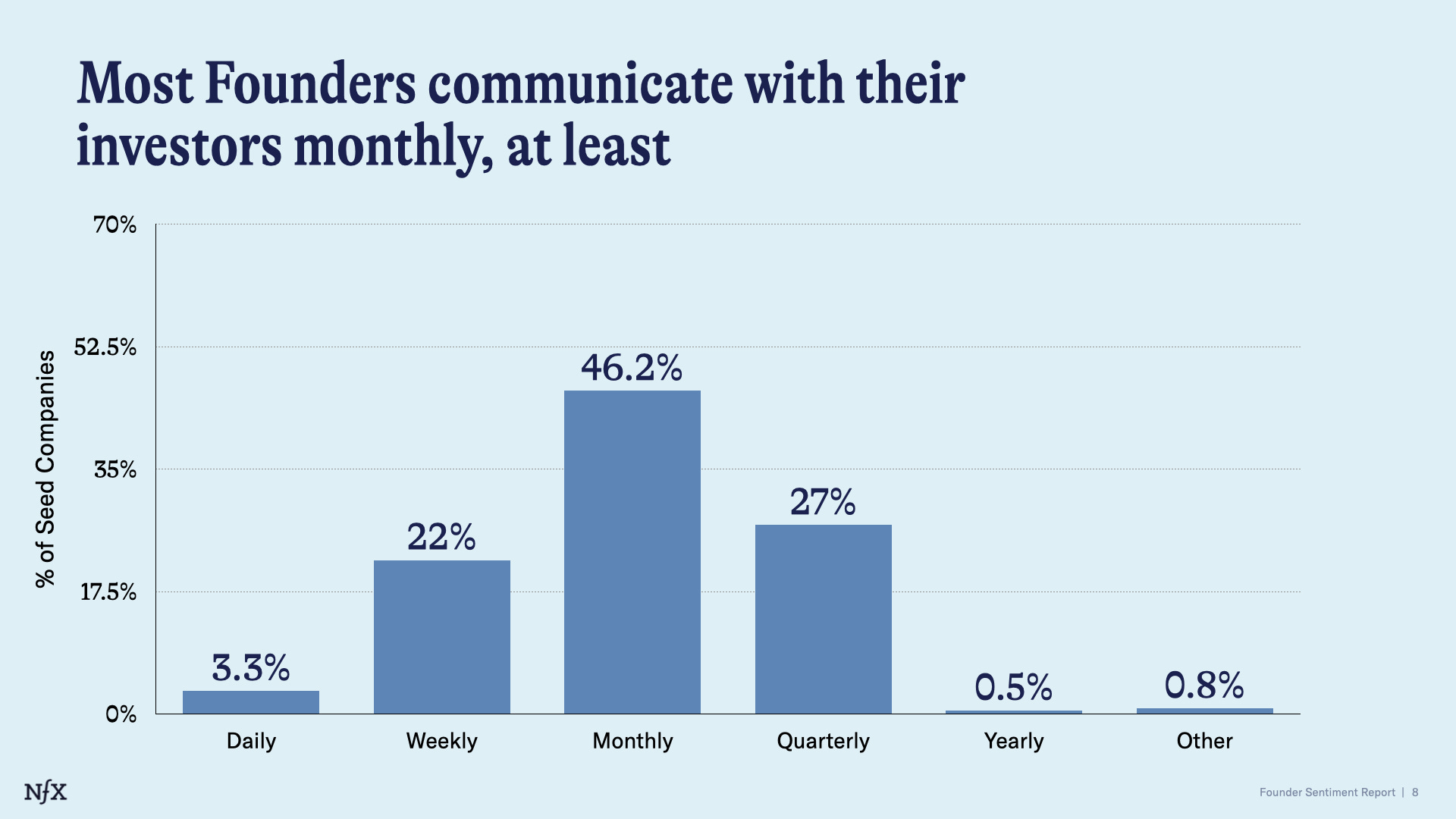
Visible.vc’s data on this is unambiguous: founders who send consistent investor updates are twice as likely to raise follow-on funding from their current investors. NFX puts the same figure even higher - their survey of 870+ founders found that monthly updates are the single highest-value communication ritual a founder can build. The mechanism is simple - an investor who has watched you execute for five months has seen far more than an investor who hears a one-hour pitch.
We wrote a full deep-dive on crafting investor updates that actually get read and acted on - including the exact structure, what to include in each section, and the specific framing that turns passive investors into active allies: → Stop Sending Boring Investor Updates - Do This Instead
The pre-raise monthly update template (keep it under 400 words):
Subject: [Company] - [Month] Update
Hi [First Name],
[One-sentence summary of where we stand.]
HEADLINE THIS MONTH [One specific, concrete win. Numbers preferred. “Closed our first enterprise customer at £2,400/month.” “Hit 1,000 active users.” “Signed LOI with [recognisable brand].”]
KEY METRICS → MRR: £[X] ([+X%] MoM) → Active users / customers: [X] → Burn rate: £[X]/month → Runway: [X] months
WHAT WE LEARNED [One honest insight or challenge. Founders who share what’s hard earn more trust than those who only share wins.]
WHAT’S NEXT [Two or three specific goals for next month. These become the metrics you report in the next update.]
ASK (optional, but powerful) [One specific ask - not “any intros would be great.” Instead: “If you know anyone at a Series A B2B SaaS fund actively looking at infrastructure tools, I’d love a connection.”]
[Your Name]
Send on the first Tuesday or Wednesday of the month - early-week is when investor inboxes are active and they’re at their desks, not in meetings or travel.
The power of this format is compounding. By month six, an investor who has received five of these updates has watched you state goals and hit them. They’ve seen you handle a setback honestly. They’ve tracked the revenue number growing. When you email them to say the round is open, they’re not starting from zero - they’re already halfway to a yes.
The rest of this playbook is for premium subscribers.
What’s inside:
The exact email sequences for converting warm relationships into committed investors - word for word, ready to send
The follow-up cadence that creates momentum without burning bridges, including the specific timing and triggers that move investors from warm to decided
How to handle the “not right now” reply in a way that keeps the door open and often generates your most valuable introductions
The 48-hour launch playbook for opening your round; how to create competing conversations from day one and use parallel momentum to close faster
The complete Investor CRM: six working tabs covering your master list, outreach log, monthly update tracker, active pipeline, intro map, and live dashboard
Premium subscribers also unlock The Founders Corner's full library of 50+ tools, templates, and deep-dives: investor lists, fundraising models, cap table templates, pitch deck frameworks, and every premium playbook published to date.
Keep reading with a 7-day free trial → Cancel anytime.