

Quick game.
Two founders walk into two different partner meetings this month. Both put up the exact same slide: 112% Net Revenue Retention. Same font, same green arrow, same confident pause after the number lands.
One of them keeps 94% of existing revenue and grows the rest through expansion. The other keeps 78% and covers the hole with aggressive upsell on two or three big accounts.
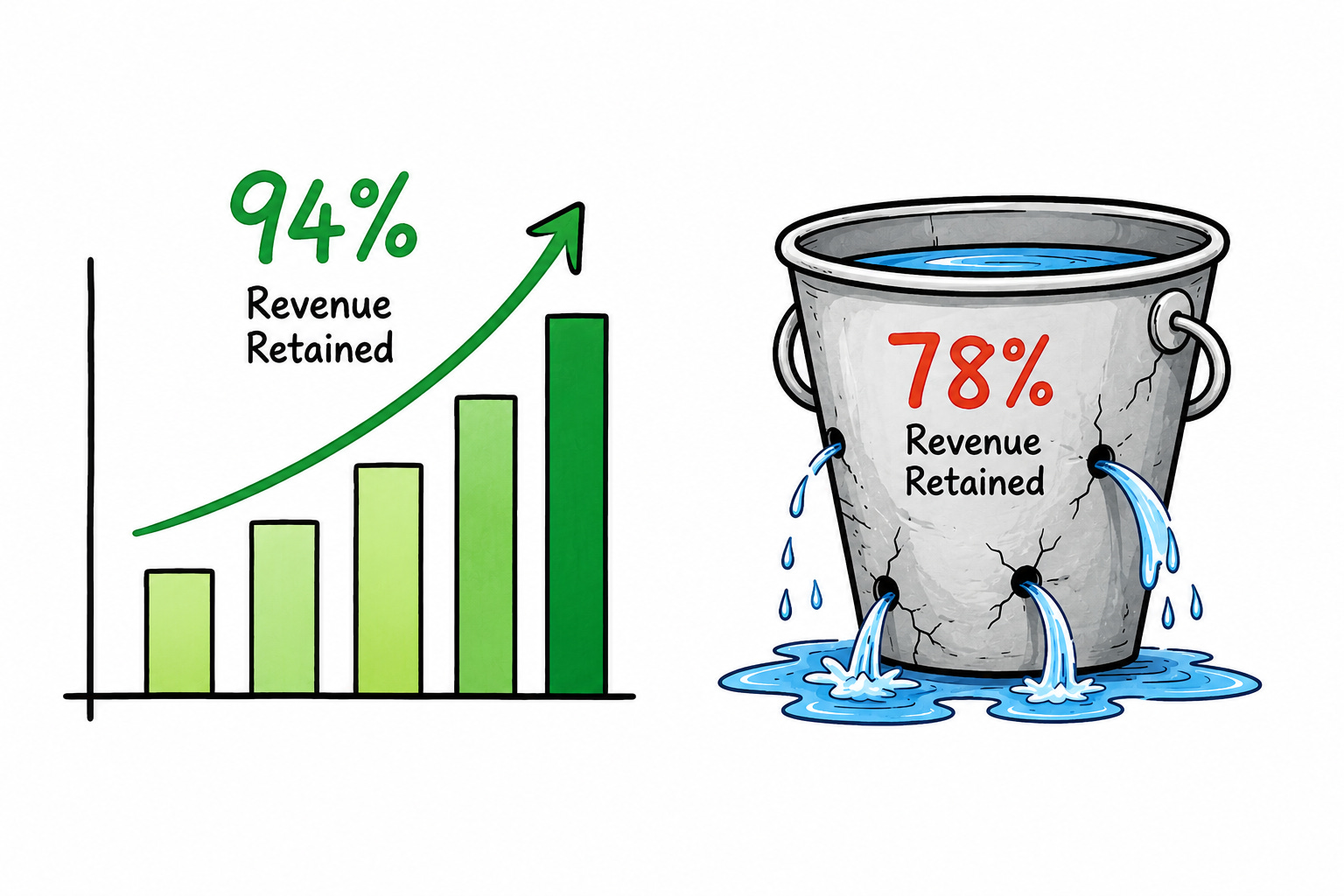
Same headline. One is a compounding business. The other is a leaky bucket that hasn’t sprung its last leak yet.
The partner in the room knows which is which within about ninety seconds, because they were never looking at the number on the slide. They were calculating the one you didn’t show them.
The gap between the two numbers is the signal. The number on the slide never was.
Want to get in front of 250k+ founders and investors?
For sponsorship opportunities across The Founders Corner newsletter and LinkedIn (160k followers), email: founderscornermedia@gmail.com
The number hiding behind your number
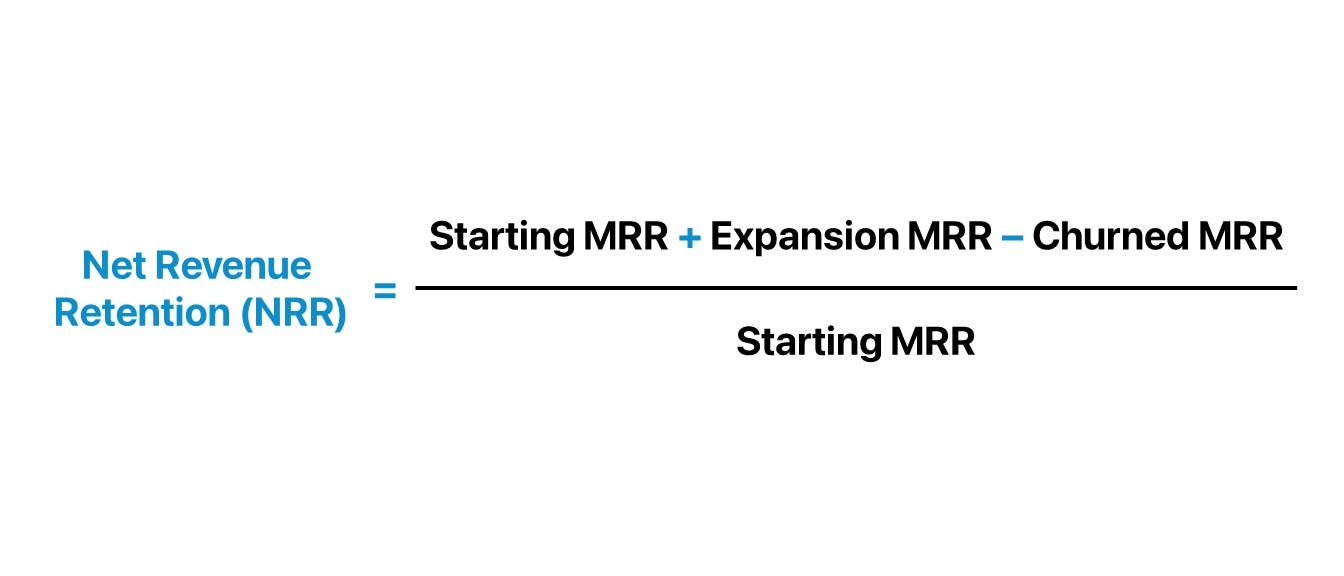
The slide number is NRR, Net Revenue Retention: what you keep from existing customers, plus everything they grew into. Upgrades, seats, usage. Because expansion gets added back in, NRR is uncapped. You can print 130% with zero new logos.
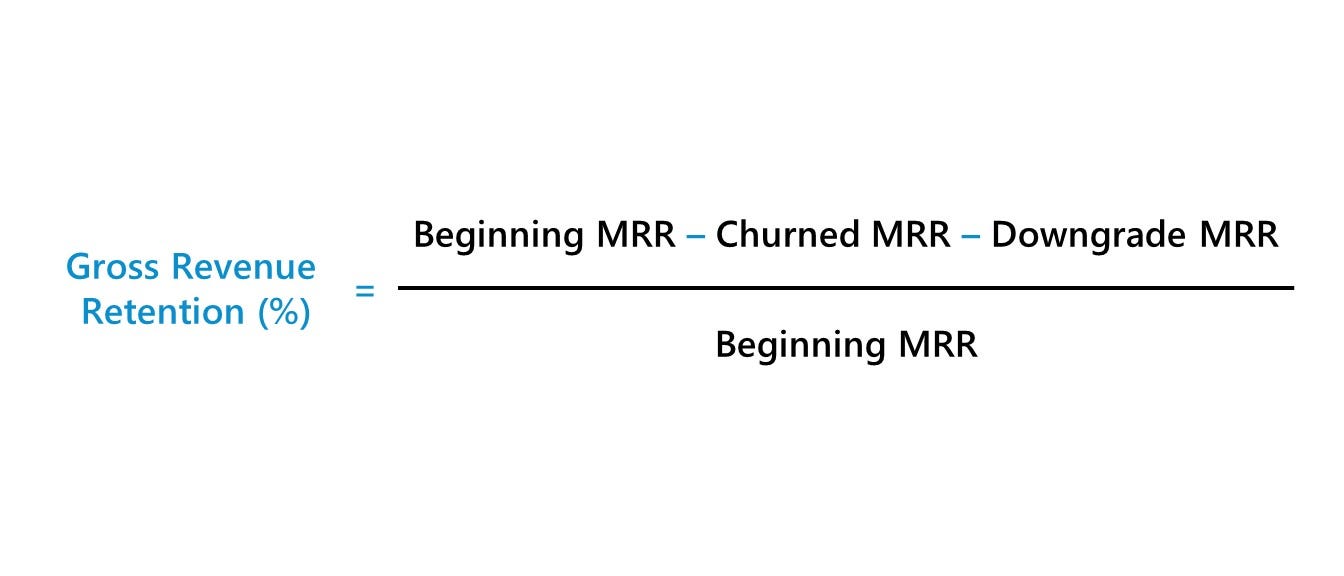
The number the partner is calculating in their head is GRR, Gross Revenue Retention: the same base with expansion stripped back out. Churn and downgrades only. It can never go above 100%, which is exactly what makes it honest. It’s the floor of what you keep before anyone upsells anything.
Put both founders through the math:
▫️ Founder one: $4M ARR, loses $240K to churn, adds $720K in expansion. GRR 94%, NRR 112%. Gap: 18 points.
▫️ Founder two: $4M ARR, loses $880K to churn, adds $1.36M in expansion. GRR 78%, NRR 112%. Gap: 34 points.
A healthy gap sits between 15 and 25 points. Under 15 and you’re durable but leaving money on the table, which is a pricing problem, not a churn problem. Over 25 and you’re masking a leak with a handful of accounts that could all walk in the same quarter.
Most founders have never calculated GRR separately. They’ve only ever seen the blended number, and that’s rarely an accident. NRR is the number that goes up when you sell harder to the customers you already have, so it’s the one every dashboard defaults to and every board deck leads with. GRR just sits quietly underneath, refusing to be flattered.
What “good” looks like in 2026
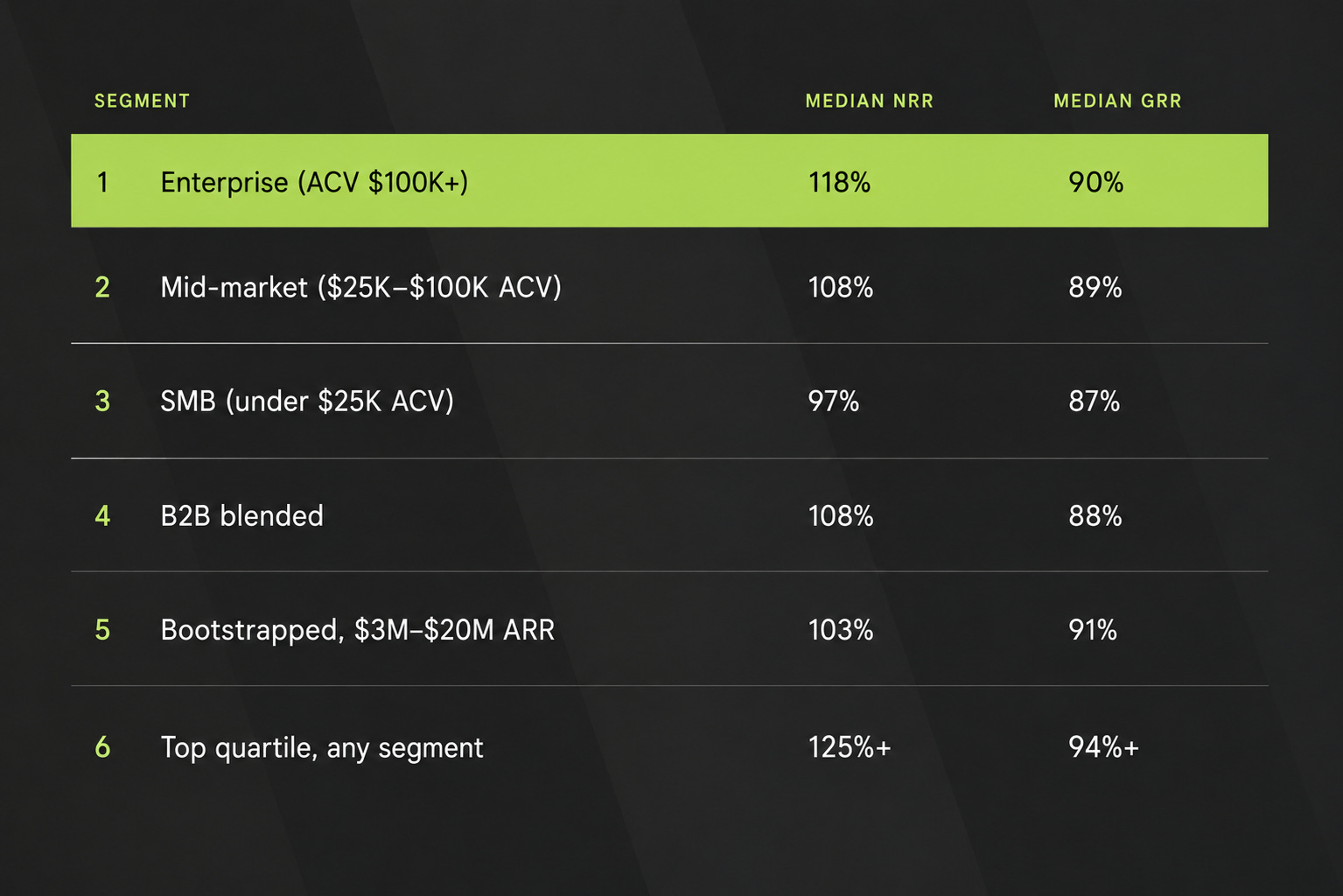
Retention benchmarks are close to useless blended, because they move hard by segment. A 97% NRR is a red flag for an enterprise vendor and roughly average for an SMB one.
▫️ Enterprise (ACV $100K+): median NRR ~118%
▫️ Mid-market ($25K–$100K ACV): median NRR ~108%
▫️ SMB (under $25K ACV): median NRR ~97%
▫️ B2B blended: median NRR ~108%, GRR ~88%
▫️ Bootstrapped, $3M–$20M ARR: median NRR ~103%, GRR ~91%
▫️ Top quartile, any segment: NRR 125%+, GRR 94%+
This isn’t a vanity metric. Public SaaS companies above 120% NRR have traded at roughly 9.3x median EV/revenue, against 3.1x for those below 100%, according to Software Equity Group. Retention isn’t a line on your deck. It’s a multiplier on the entire company.
And it’s usually the first thing a partner sanity-checks against your growth story. A founder who shows up with 40% year-over-year growth and a soft GRR underneath it is telling the room, without meaning to, that the growth is bought rather than earned. The multiple follows the retention, not the other way around.
Your GRR is a fundraising number before it’s ever a retention number
A partner doesn’t ask about churn out of curiosity. It’s one input into a bigger judgment about whether you’re ready to raise at all, and it rarely travels alone. If retention is on your mind right now, these are worth reading next:
▫️ The Number That Kills More Fundraises Than Any Bad Idea: one slide, one metric, quietly killing raises without founders ever knowing it.
▫️ The Way VCs Actually Calculate Your Valuation: they already have a number in their head before you walk in. What is it, and how do you hit it?
▫️ How Investors Decide If You’re Ready to Raise: it’s not timing, it’s not luck. The exact criteria investors use.
▫️ The Quiet Filter That Decides Your Entire Fundraise: every investor runs this before you open your mouth.
Which of the four quadrants are you in
Plot yourself. GRR on one axis, the gap on the other. There are only four places to land, and each one gets a different verdict in a partner meeting.
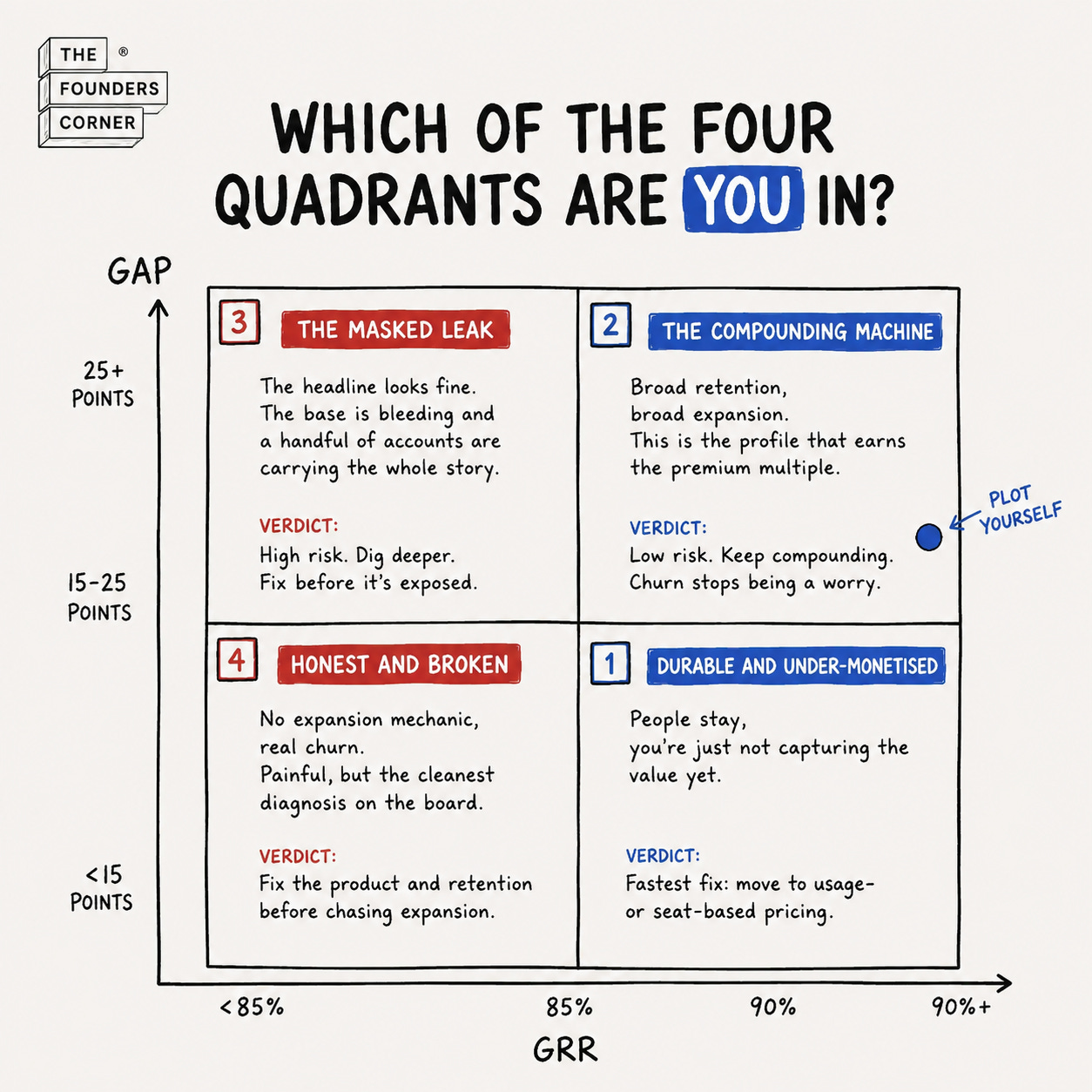
▫️ GRR 90%+, gap under 15 points, durable and under-monetised. People stay, you’re just not capturing the value yet. Fastest fix here: move to usage- or seat-based pricing so revenue climbs alongside the customer’s own success.
▫️ GRR 90%+, gap 15 to 25 points, the compounding machine. Broad retention, broad expansion. This is the profile that earns the premium multiple, and the only quadrant where churn genuinely stops being a worry.
▫️ GRR under 85%, gap 25+ points, the masked leak. The headline looks fine. The base is bleeding and a handful of accounts are carrying the whole story. Partners are trained to find this quadrant, and them finding it is far worse for you than you disclosing it first.
▫️ GRR under 85%, gap under 15 points, honest and broken. No expansion mechanic, real churn. Painful, but the cleanest diagnosis on the board: you know exactly what to fix, and nobody can accuse you of hiding it.
Most founders assume they’re in quadrant two and have simply never run the GRR math to check.
The fix you can start this week, before touching the product
Here’s the part almost nobody acts on, because it doesn’t feel like a growth initiative.
Across analyses from ProfitWell, Recurly and Paddle, failed payments account for 20 to 40% of all SaaS churn. Expired cards. Bank declines. Customers who never chose to leave and, in a lot of cases, never even noticed they’d gone. A proper dunning setup recovers 70 to 80% of them, per Chargebee’s research on the subject.

This is the highest-leverage fix on the list, because it’s a technical problem with nobody’s opinion attached. You’re not persuading anyone to stay. You’re just catching the ones who wanted to.
▫️ Retry on a schedule, not once. Days 1, 3, 5 and 10 beats a single attempt at the moment of failure, since most declines are timing issues that clear within a week.
▫️ Email before the card expires, not after. Pre-dunning recovers far more cheaply than chasing a failure after the fact.
▫️ Turn on the account updater. Stripe and Adyen will refresh reissued card details automatically. Most teams have simply never flipped the switch.
▫️ Put it in the app, not just the inbox. Billing emails land in a finance address nobody checks. The person who can fix it is the one logged in.
▫️ Split the number in your own reporting. Report voluntary and involuntary churn separately from here on. If you can’t split them yet, that’s the tell you don’t know which problem you actually have.
▫️ Report GRR trailing twelve months, not last month. A single bad month reads as a crisis. Twelve months reads as a trend, which is the only version a partner actually trusts.
One to two weeks of engineering. Zero new customers acquired. Several points back on the number that was carrying the real signal the whole time.
🔒 This is exactly the kind of asset we built Premium for
You now have the diagnostic and the fastest fix. What you don’t have yet is the other side of the table, and that’s the part that actually decides your round.
Behind the paywall is The Retention Diligence Pack. The nine questions a partner asks about your retention, in the exact order they ask them, with the answer that lands and the answer that quietly ends the process, including the one about your largest customer that catches out almost every founder who hasn’t rehearsed it. The cohort table format built for a data room, the one that makes a partner stop probing instead of asking twenty more questions. And the three ways founders accidentally disclose a churn problem they don’t actually have, one of which is a single word in an investor update that has cost people term sheets.
Plus the NRR/GRR gap calculator itself, pre-built so you can drop in your own numbers and know which quadrant you’re actually in before anyone else tells you.
Premium subscribers get:
✅ The Retention Diligence Pack: nine diligence questions with model answers, the cohort table template, and the three silent disclosure mistakes
✅ The NRR/GRR gap calculator, ready to drop your own numbers into
✅ Every past and future proprietary framework, model and swipe file we publish
✅ Early access to new research before it goes out to the free list
Paid subscribers also get:
✅ 60+ additional tools across every stage of fundraising and company building: investor research, pitch deck screening, meeting prep, term sheet analysis, financial models, and the full investor database library.
Start your 7-day free trial → Cancel anytime.