

Most startups don’t fail because they lack effort.
They fail because the leadership team is misaligned on what’s actually true.
One founder believes the pain is clear.
Another believes the ICP is shifting.
GTM thinks momentum is building.
Product quietly sees churn signals.
Everyone is smart.
Everyone is committed.
But everyone is operating from a slightly different model of reality.
That’s expensive.
The PMF Alignment Assessment, built on Sean Ellis’ leadership PMF framework, exists for one reason:
To surface what your team actually believes about Product-Market Fit.
Not what you say in meetings.
What you genuinely believe.
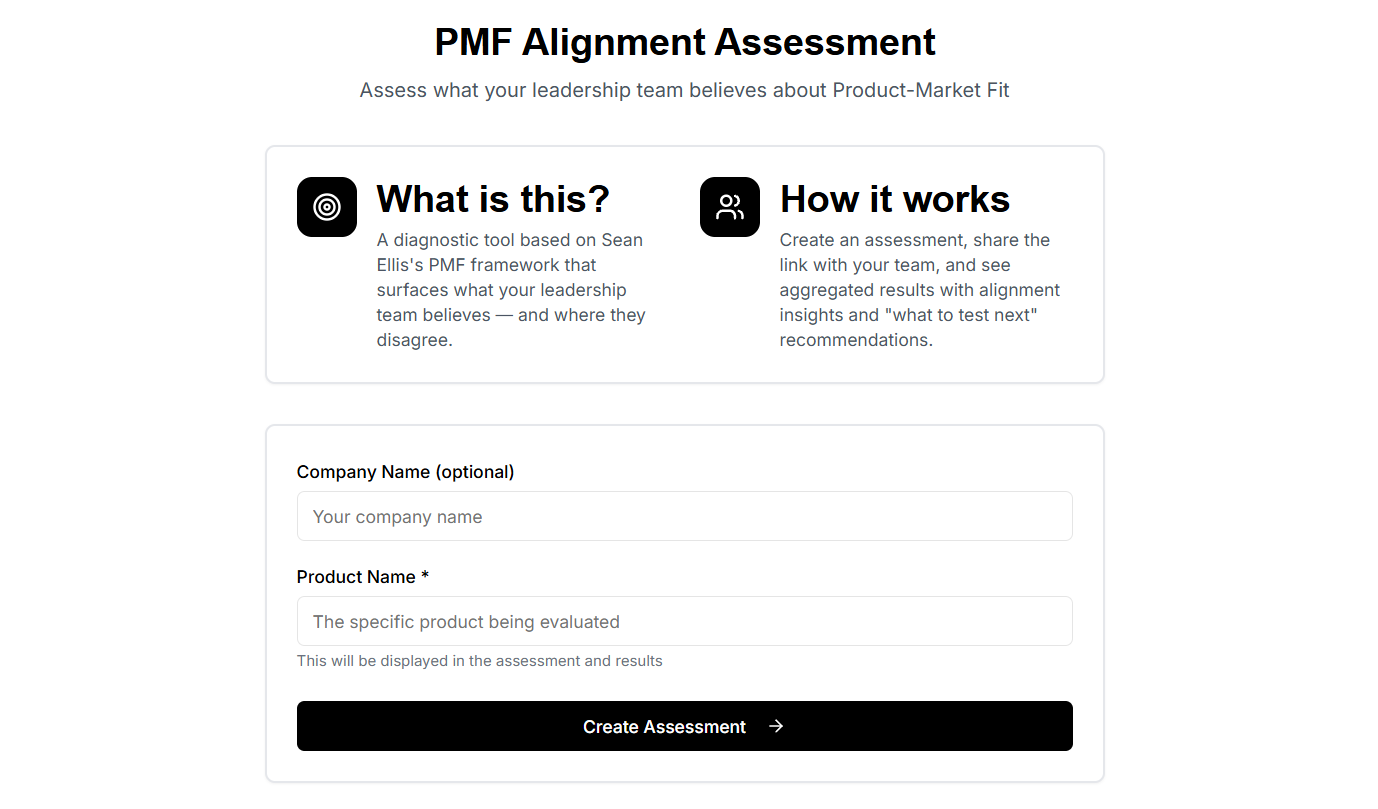
Step 1: Create the Assessment
You enter your company and product name.
The tool generates a private link.
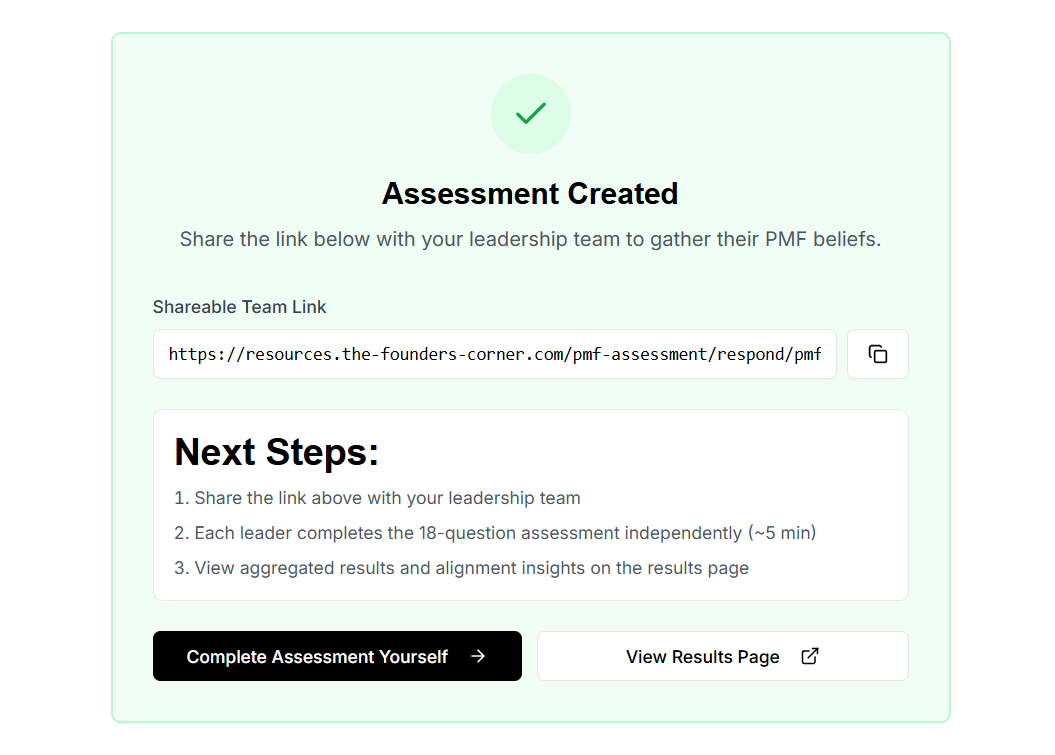
You send it to your leadership team.
Each person completes the 18-question assessment independently.
No discussion.
No calibration beforehand.
This matters more than it sounds.
Because alignment is meaningless if it’s rehearsed.
The Six PMF Dimensions
The assessment is structured around six themes.
Each isolates a different layer of Product-Market Fit belief.
Together, they reveal where your internal model of the company is cohesive… and where it fractures.
1. Customer Pain Clarity
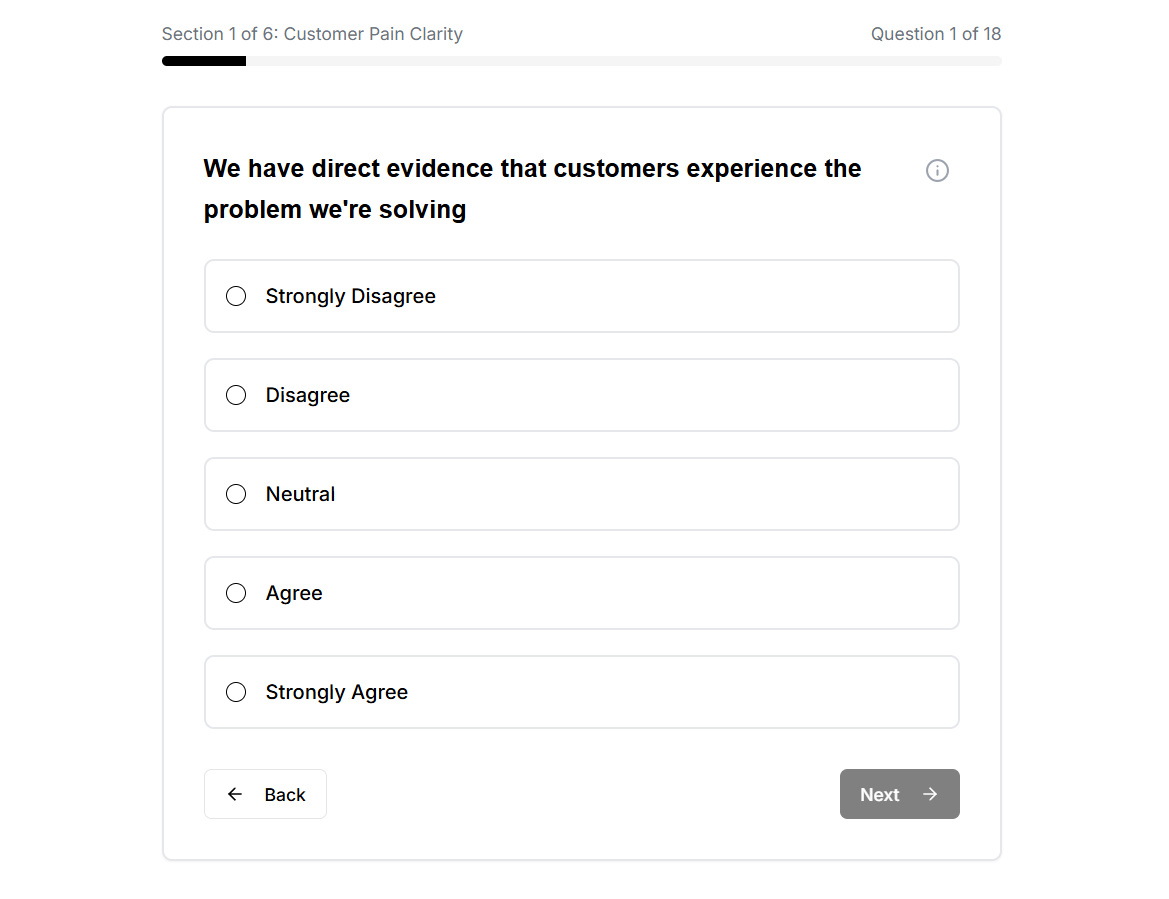
This dimension measures whether your leadership team shares the same conviction about the problem you are solving.
Not whether the product is impressive.
Not whether the TAM is large.
Whether the pain is:
Real.
Clear.
Urgent.
When teams misalign here, roadmap debates become philosophical instead of practical.
Engineering builds.
GTM reframes.
Leadership reinterprets.
True PMF always starts with shared clarity on pain.
2. Target Customer Alignment
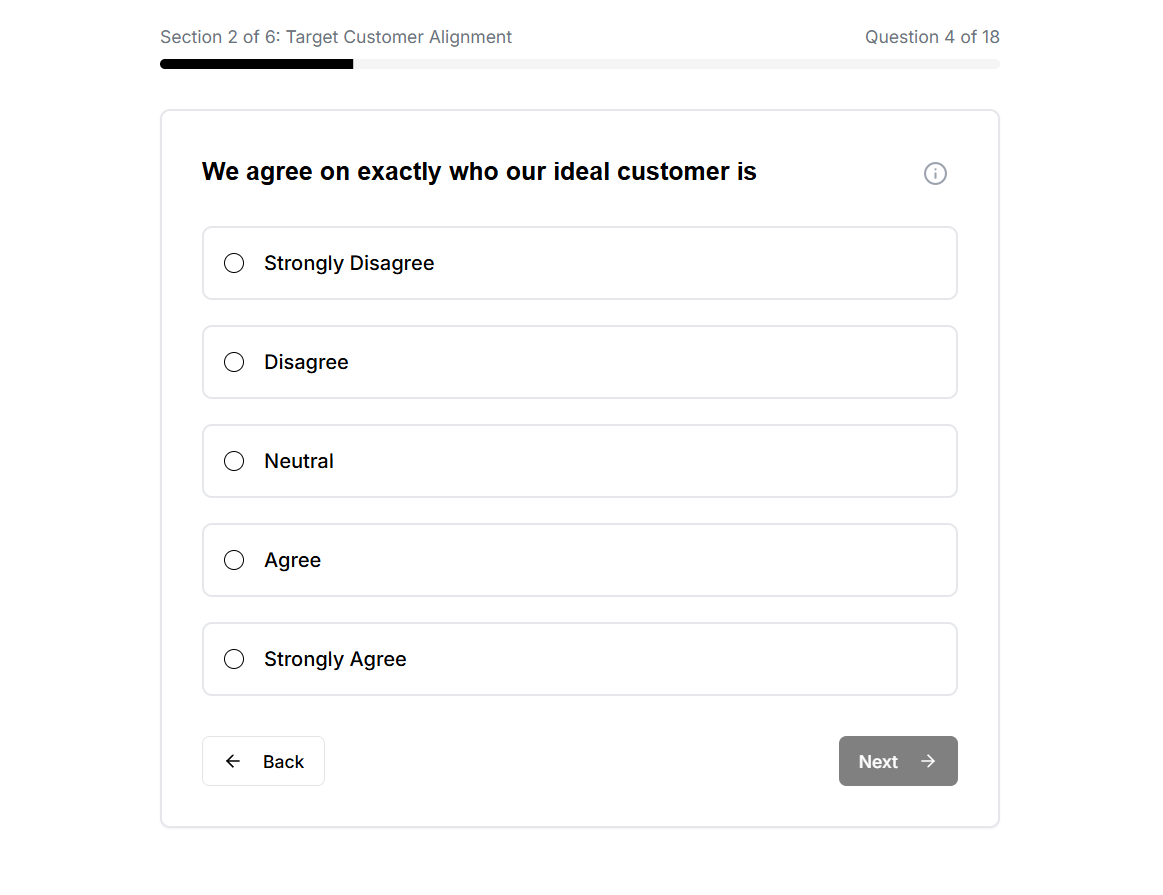
This section tests precision.
Do you agree on exactly who your ideal customer is?
Most teams believe they do.
The data often says otherwise.
Small ICP misalignments compound:
Sales cycles lengthen
Messaging fragments
Feature prioritisation drifts
CAC quietly rises
When this dimension scores unevenly, it explains far more than people expect.
Because clarity of customer determines clarity of everything else.
3. Value & Differentiation
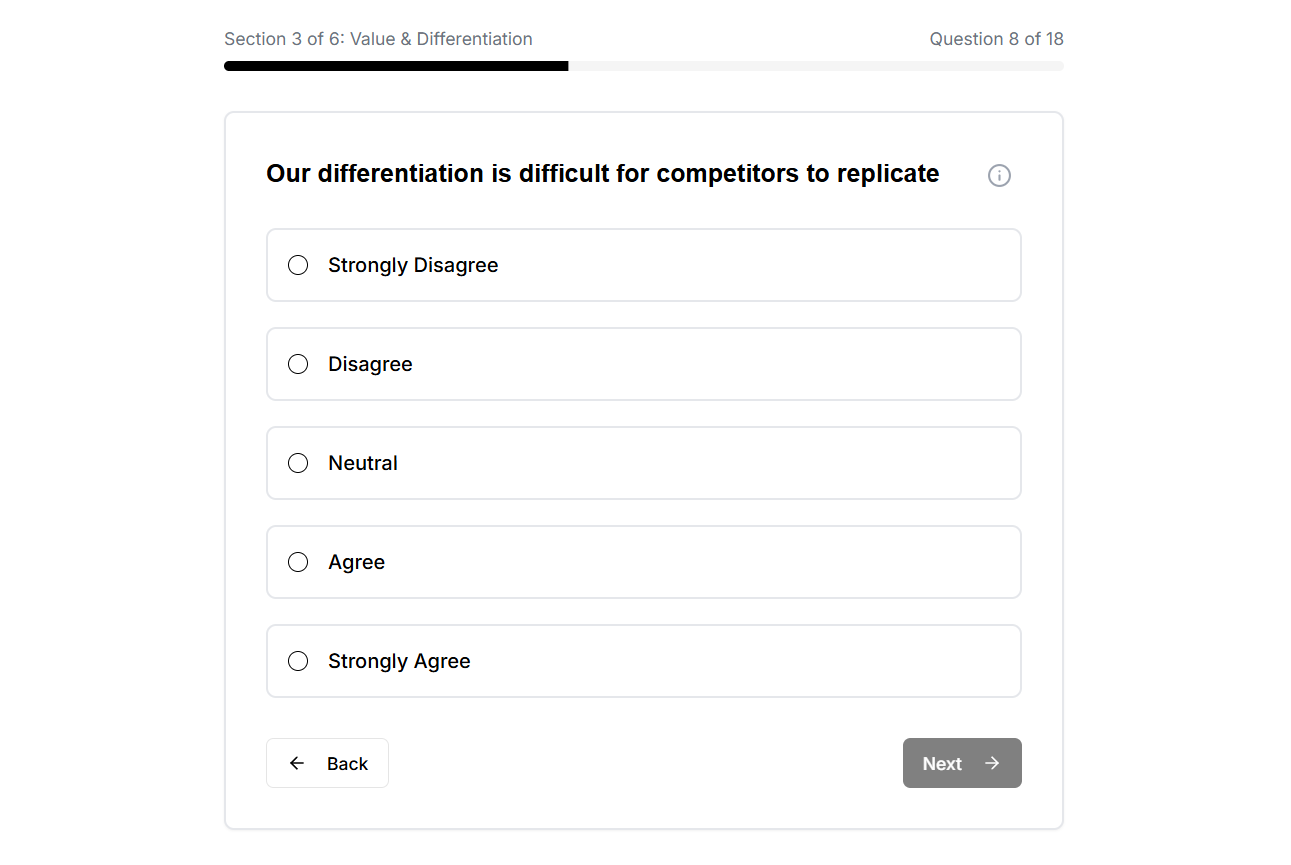
Here the tool examines whether your leadership team shares the same understanding of why you win.
What is your core value?
What makes it defensible?
What makes it hard to replace?
If belief varies across leadership, your competitive narrative collapses under pressure.
Differentiation is not what appears on your website.
It is what your entire team instinctively agrees is irreplaceable.
Misalignment here often reveals hidden strategic fragility.
4. Usage & Dependency
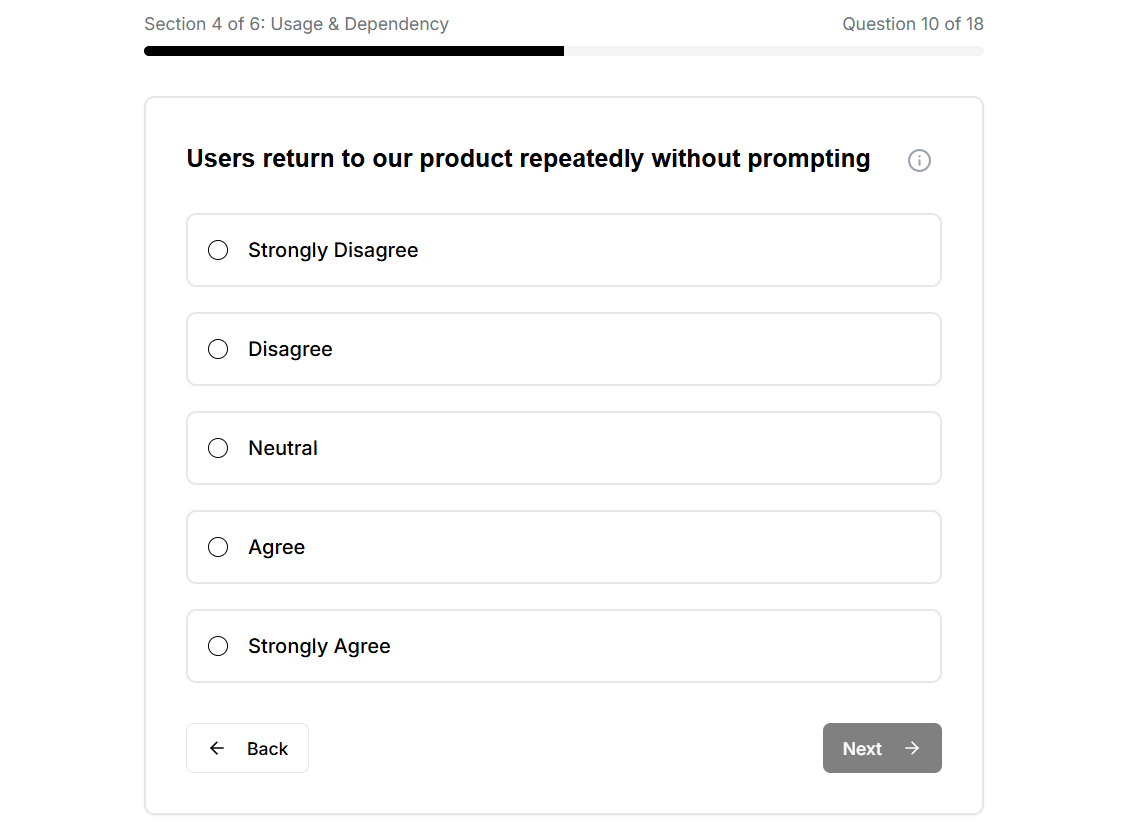
This dimension focuses on behavioural reality.
Are users returning?
Are they relying on you?
Is your product embedded in workflow?
Founders often rely on highlight examples.
This section surfaces whether leadership shares a grounded view of consistent usage.
Alignment here separates:
Emotional conviction
from
Behavioural evidence
And that difference matters.
5. Evidence vs Assumption
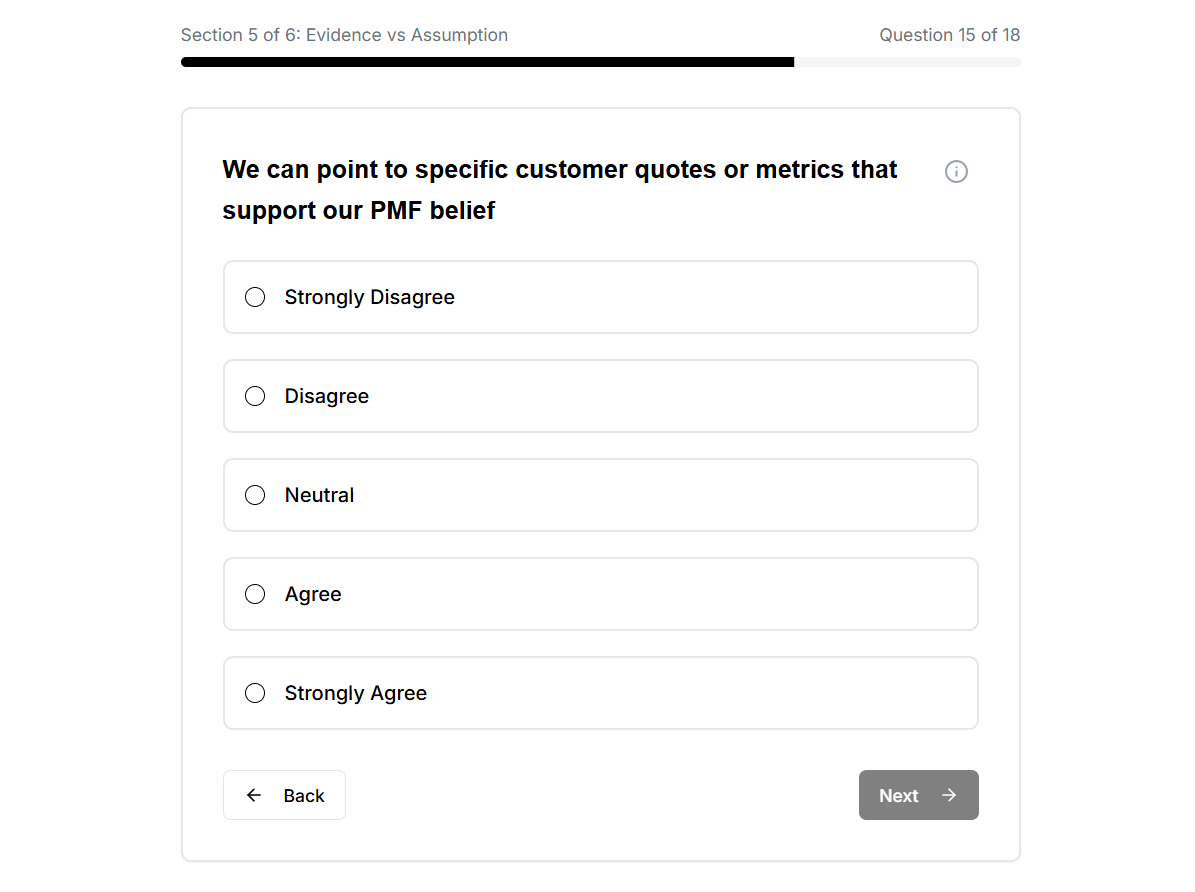
Every startup operates on assumptions.
The question is whether your leadership team knows which beliefs are validated… and which are narrative.
This dimension exposes the gap between:
Confidence
and
Proof
It is usually the most revealing section in the entire assessment.
Because teams rarely realise how differently they weigh evidence.
And unexamined assumptions compound silently.
6. Momentum Signals
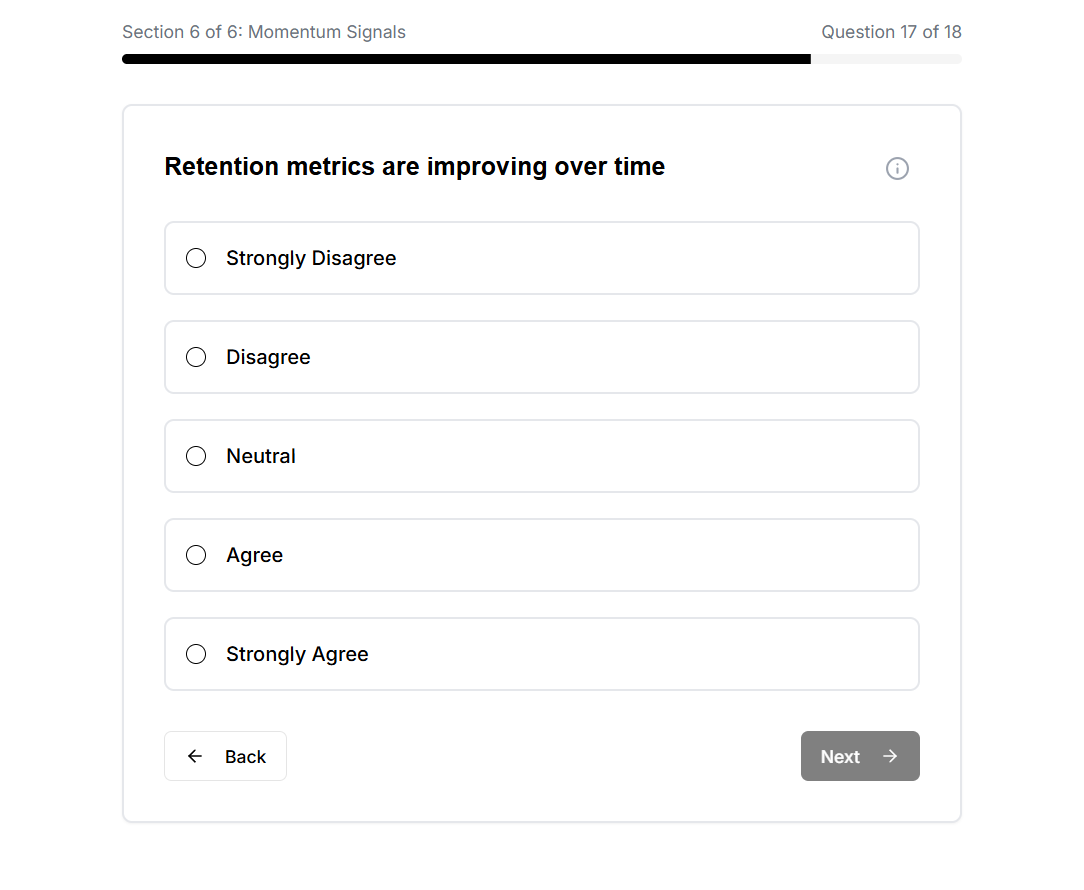
Momentum is subtle.
It’s not just revenue.
It’s slope.
Friction.
Acceleration.
This section measures whether your leadership team senses the same trajectory.
When belief in momentum diverges:
Hiring slows.
Roadmaps hedge.
Experiments stall.
Alignment here creates conviction.
Conviction creates speed.
The Results Page
When everyone completes the assessment, the dashboard unlocks.
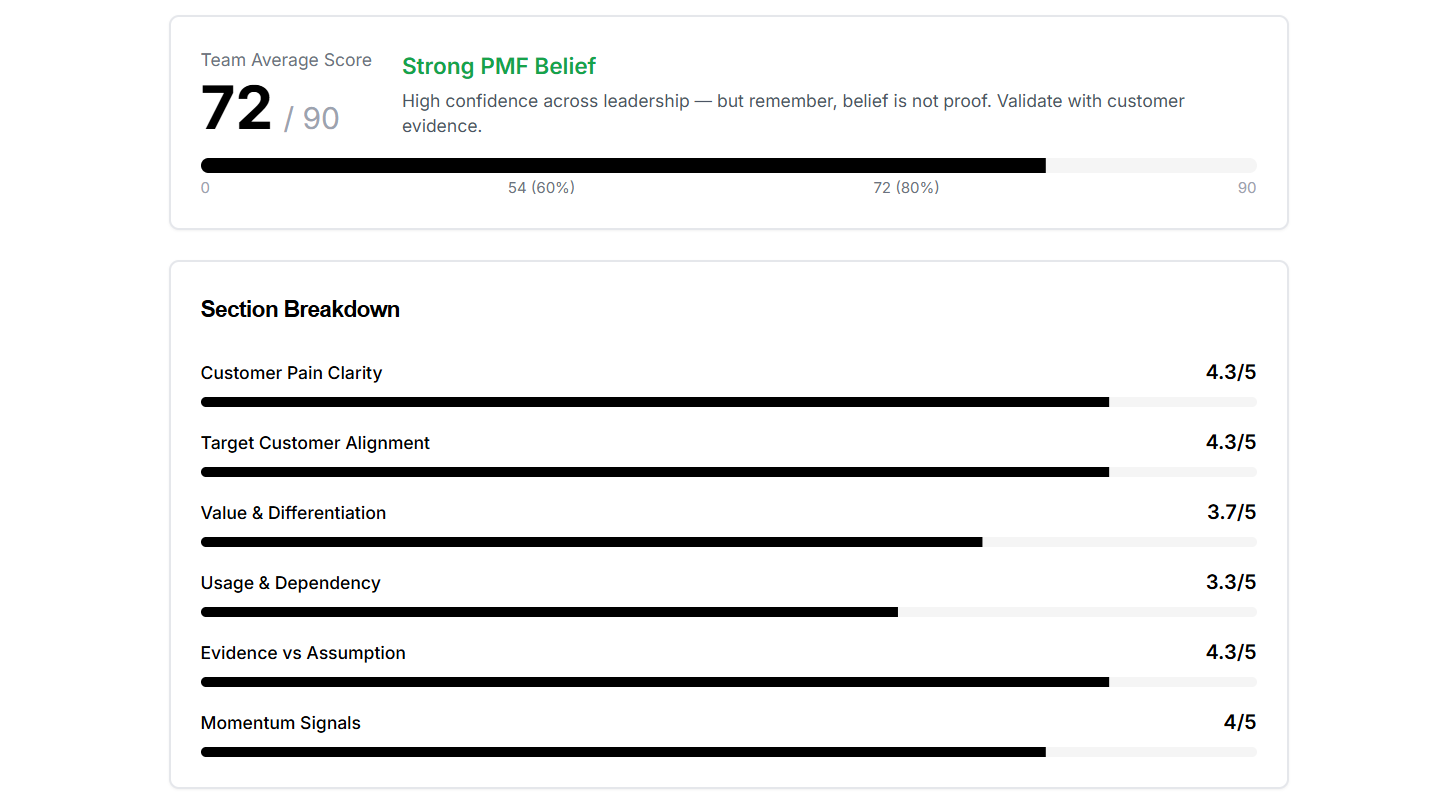
You see:
A total PMF Belief Score
A breakdown across all six dimensions
Alignment gaps across leadership
AI-powered analysis highlighting divergence patterns
This is where things get interesting.
Because PMF isn’t just about whether your score is high.
It’s about whether your beliefs cluster tightly… or scatter.
Tight clusters signal strategic cohesion.
Wide spreads signal hidden instability.
Most founders discover something here they did not expect.
And that discovery is usually worth more than the score itself.
Why This Matters
PMF is not a binary state.
It is a shared conviction grounded in evidence.
When leadership alignment is high and grounded in data, decisions accelerate.
When alignment is low, even subtly, friction compounds quietly until growth slows and no one can explain why.
This tool makes the invisible visible.
And once alignment becomes measurable, it becomes improvable.
That’s leverage.
If you’re serious about building with clarity instead of assumption, run the assessment with your leadership team.
Five minutes each.
One shared reality.
The difference between guessing and knowing is smaller than you think, but far more powerful.
Access the PMF Alignment Assessment below and see where your team really stands.