

A founder I worked with had a churn dashboard that said “too expensive” was the top cancellation reason for two straight quarters. He cut his price by fifteen percent. Churn did not move.
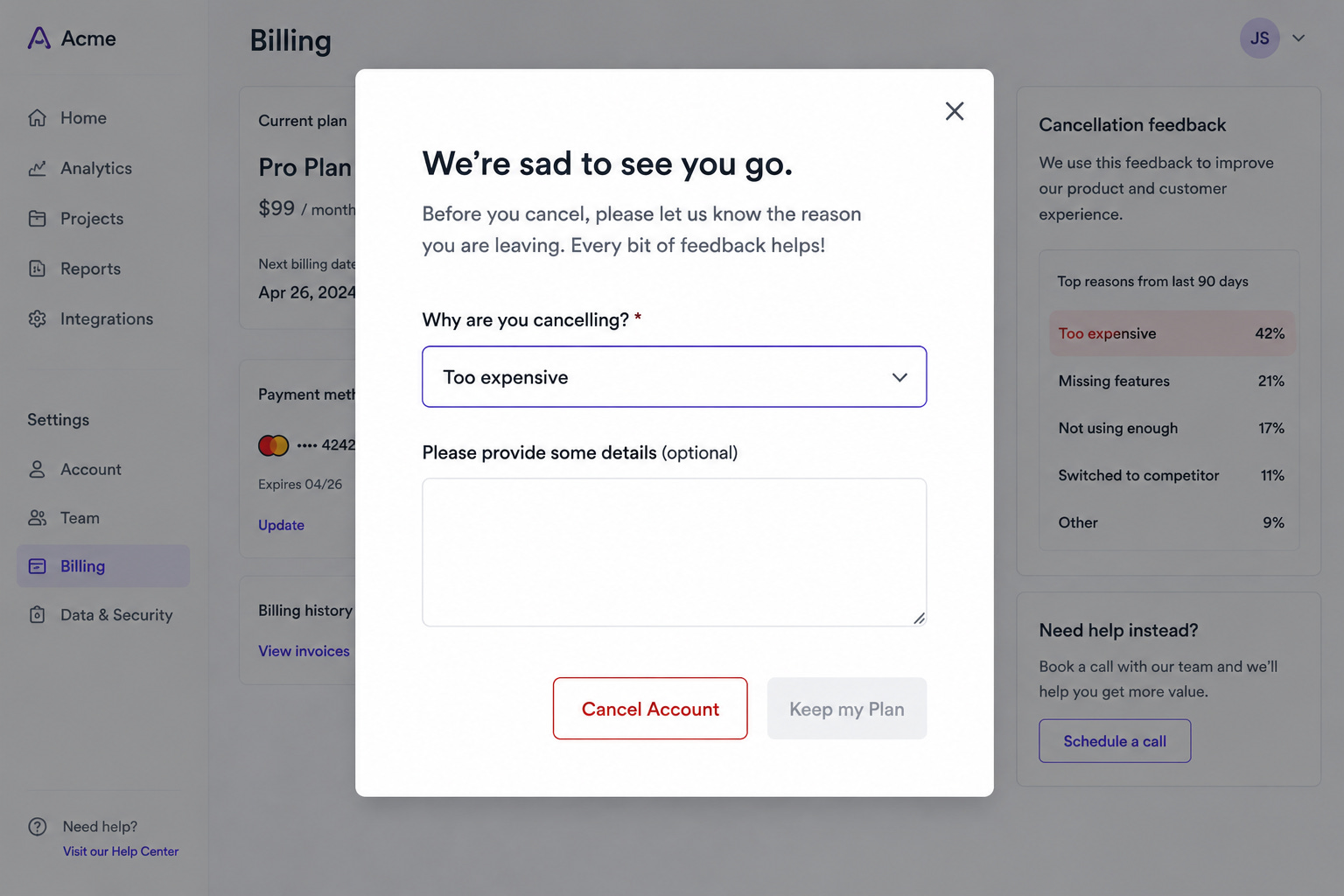
Three months later he finally sat down and actually talked to the next five customers who cancelled. None of them thought the product was too expensive. They thought it was not worth what they were already paying, because they had never gotten it properly set up. The cancellation form had one dropdown and “too expensive” was the easiest box to tick when what you actually mean is “I never saw the value.”
This happens constantly. Founders read churn reasons off a feedback form and treat them as data. They are not data. They are the path of least resistance a departing customer takes to end an awkward conversation as fast as possible.
The real reason is almost always one layer beneath the one they give you. Finding it requires an actual conversation, asked in a specific order, by someone who is genuinely trying to understand rather than trying to save the account.
Why the Cancellation Form Lies to You
Three things make a dropdown survey almost useless as a diagnostic tool.
It rewards the easy answer. “Too expensive” requires no further explanation and ends the interaction quickly. “I never figured out how to get my team to actually use it” invites a follow-up conversation the customer does not want to have. Given an exit, most people take the exit that closes the door fastest.
It happens at the wrong moment. By the time someone is filling in a cancellation form, they have already disengaged emotionally from the relationship. They are not trying to help you improve. They are trying to leave. The information you get at this stage is the minimum required to complete the transaction, not the maximum they actually know.
It cannot ask a follow-up question. A human conversation can hear “too expensive” and ask “expensive relative to what you expected, or expensive relative to what you actually used?” Those are completely different problems with completely different fixes. A dropdown cannot tell the difference, and neither can you, looking at the dashboard afterward.
The Cancellation Is Not the Decision. It Is the Paperwork.
Most founders treat the cancellation date as the moment of churn. It is not. It is the administrative end of a decision that was made weeks or months earlier.
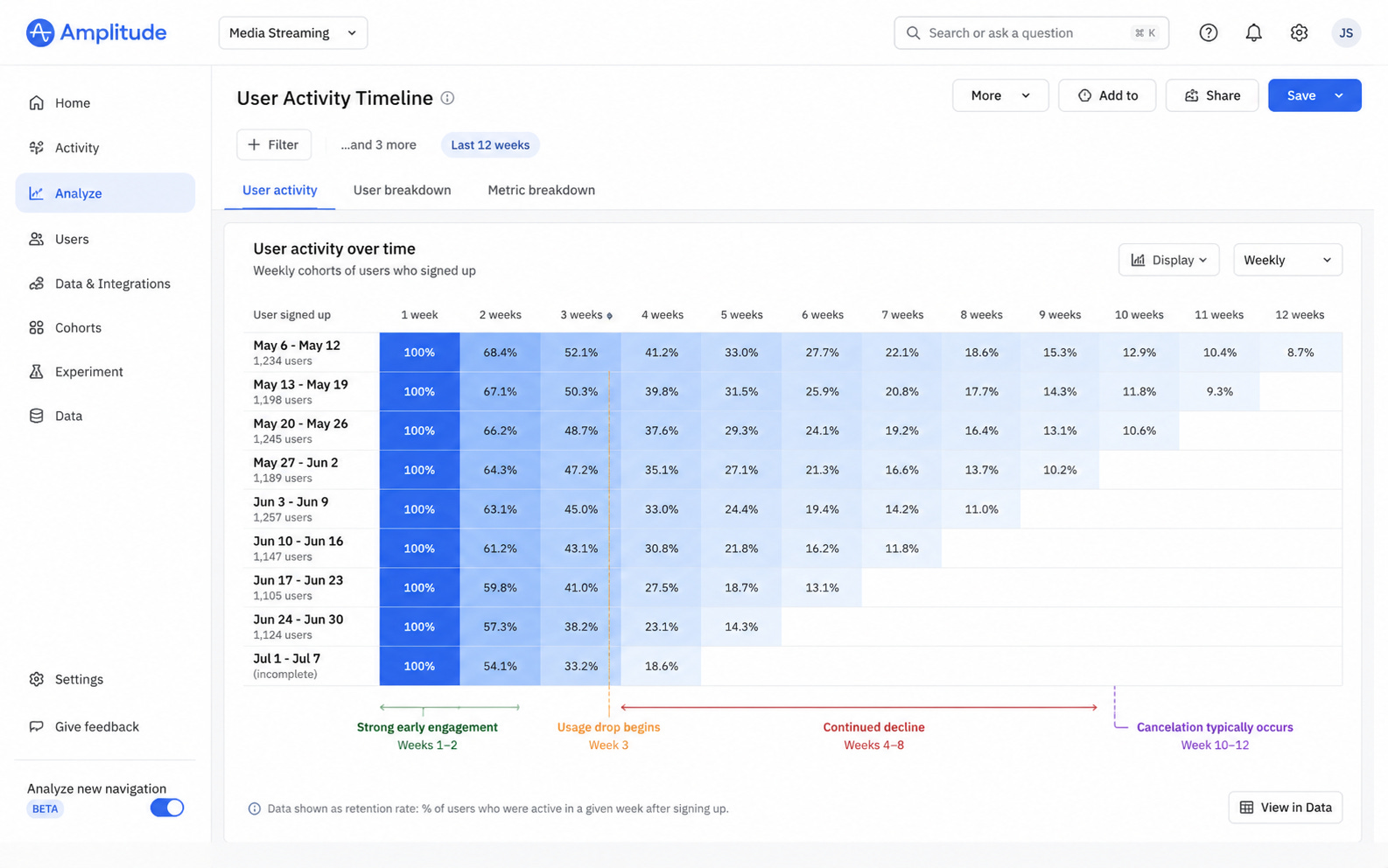
The customer who cancels in month six usually stopped getting real value somewhere around week three. Between week three and month six, nothing dramatic happened. They simply stopped opening the product as often, stopped recommending it internally, stopped mentioning it in team meetings. By the time they fill in the cancellation form, they are not deciding to leave. They are formalising a decision their behaviour already made.
This matters because it changes what you should be asking about. A founder who asks “why are you cancelling today” is asking about the wrong moment. The useful question is about the earlier moment, the one the customer themselves may not have consciously registered as significant at the time.
I look at this the same way I look at investor churn in a fundraising process. Nobody decides to pass on a deal in the final meeting. They decide somewhere in meeting two, when a specific answer did not land, and everything after that is the slow administrative process of confirming a decision already made. Customer churn works the same way. The cancellation email is the term sheet rejection. The real decision happened earlier, quietly, and almost never gets investigated.
What I Actually Listen For
I have sat in on more churn conversations than I can count, across more companies than I can count. The pattern is remarkably consistent.
The real reason is usually about value, not price. When a customer says a product is too expensive, the question that actually matters is whether they ever experienced the value the price was supposed to buy. A customer who used the product daily and got real value from it rarely cancels over price alone. A customer who barely used it will cancel over price because price is the only cost they can point to. The product cost them money. It is much harder to say out loud that it cost them time and they never got around to using it properly.
Silence is not satisfaction. The customers who give you the most useful exit interviews are the ones who bothered to explain themselves at all. The ones who say nothing and simply stop logging in are telling you something more important and you will never hear it unless you go looking. An exit interview process that only catches people who cancel through the proper channel misses the customers disengaging silently, who are often the larger and more dangerous group.
The first answer is rarely the real one, but it is rarely a lie either. Most customers are not trying to deceive you when they say “too expensive” or “we switched to a competitor.” They genuinely believe that is the reason, because it is the most recent and most concrete thing they can point to. The actual cause sits one or two layers underneath, in a moment they have not consciously connected to the outcome. Your job in the conversation is not to catch them in an inconsistency. It is to help them notice what they have not yet noticed themselves.
The Signal Most Founders Never Look For
Before you even get to the conversation, there is a pattern worth checking in your own usage data, because it tells you who to prioritise calling.
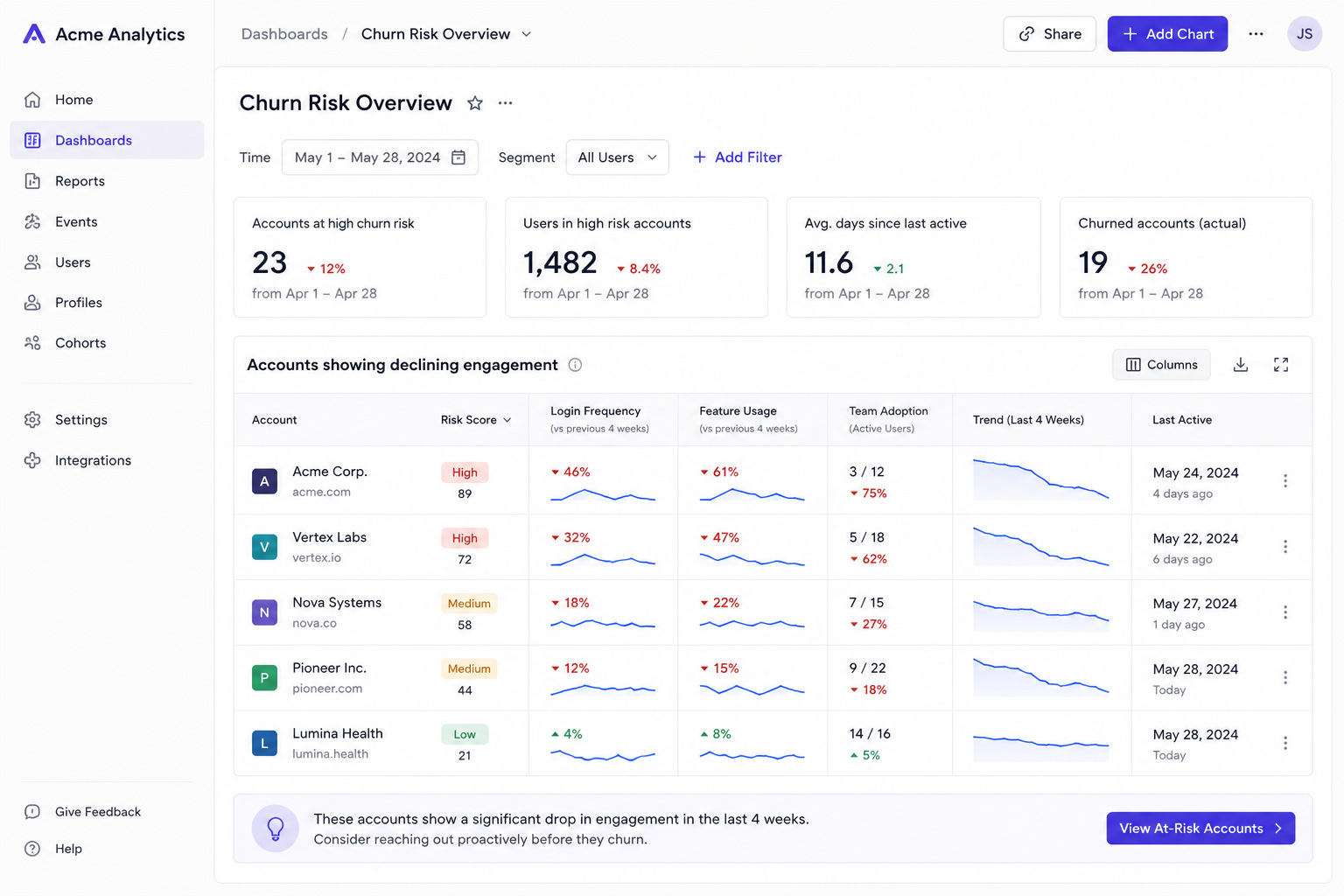
Pull up the last ten accounts that churned and look at their product usage in the four weeks before they cancelled, not the week of cancellation itself. In most SaaS businesses, you will find a visible drop in login frequency, feature usage, or team-wide adoption that predates the cancellation by three to six weeks. That drop is the actual churn event. The cancellation is just the paperwork catching up to it.
This is useful for two reasons. First, it tells you which of your current active accounts are showing the same early pattern right now, which is your most valuable list for a proactive check-in before they ever reach the cancellation form. Second, it gives you something concrete to ask about in the exit interview itself - “I noticed your team’s usage dropped off around early March, can you tell me what was happening then” is a far more productive question than “why are you leaving,” because it points the customer directly at the moment that mattered instead of asking them to reconstruct it from memory.
If you are working on retention or preparing your numbers for fundraising, these are the articles that will do the most work alongside this one.
→ I asked Claude to reject my pitch until it couldn't. Then I raised. - the adversarial prep system that puts you in front of a VC who has already seen 500 versions of your pitch, before you're actually in the room
→ How to Build Your Fundraising Narrative with Claude - the five-prompt sequence that turns your raw company story into a persuasive argument structured to move a sceptical investor from doubt to conviction in under four minutes
→ 10 Questions We Always Ask Founders - after 400+ partner meetings, the financial questions that separate founders who understand the machine they're building from founders who know their dashboard
The free section above gives you the principles behind why most exit interviews fail and what to look for before you even pick up the phone. The paid section below gives you the asset itself - a complete Word document with the exact interview script, the question sequence that surfaces the real reason rather than the polite one, and the categorisation framework to turn five conversations into a pattern you can act on.
✅ The Churn Exit Interview Script (Word) - the full question sequence, in the right order, with the specific follow-up prompts that get past the first answer to the real one
✅ The reason categorisation framework - a structure for sorting every cancellation into one of six root categories, so ten conversations become a pattern instead of ten anecdotes
✅ The silent churn outreach template - how to reach customers who disengaged without ever formally cancelling, and the specific framing that gets a meaningfully higher response rate than a generic “we miss you” email
✅ The internal debrief template - a one-page format for turning what you heard into a decision, so the interview produces an action rather than just a quote for the next board pack
This is what a paid subscription to The Founders Corner gets you every week.
Not frameworks to screenshot and store. 50+ tools you open, use, and walk away from with something concrete, built for the decisions founders are actually making.
The Churn Exit Interview Script is available exclusively to premium subscribers of The Founders Corner.
