

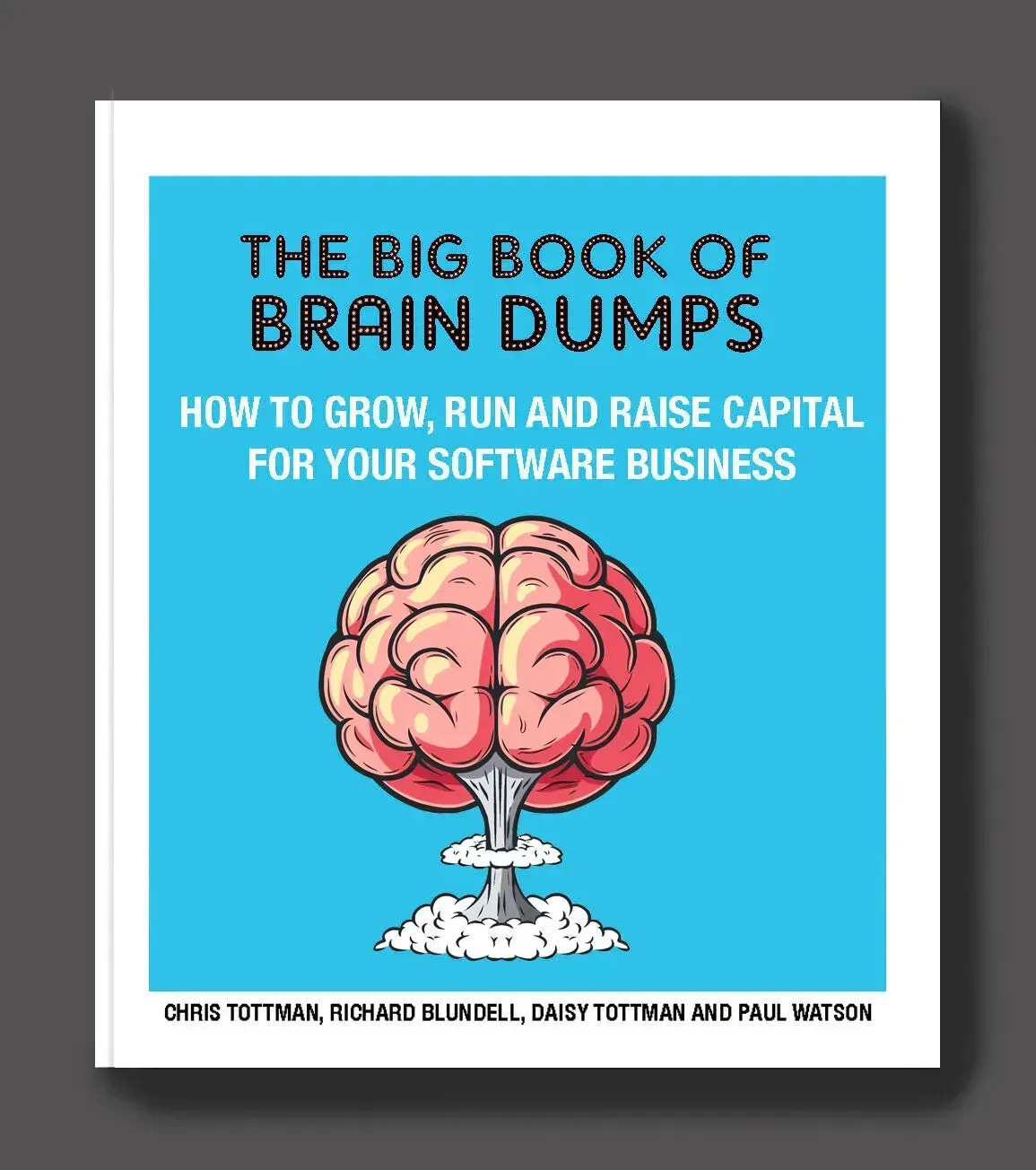
👋 Hey, Chris here! Welcome to BrainDumps—a weekly series from The Founders Corner. If you’ve been reading along, you know this series is a preview of a bigger project. Well, it’s finally here: The Big Book of BrainDumps is out now!
It isn’t a theory book—it’s the founder’s field manual. Inside, you’ll find 70 powerful frameworks distilled from 30+ years scaling software companies to hundreds of millions in ARR, 20+ years investing in 500+ B2B tech startups, and over $1B of shareholder value created. From raising capital to hiring your first VP of Sales, this book turns scars and successes into practical playbooks you’ll return to again and again. I expect most copies will become well-worn, scribbled on, and dog-eared—because it works.
Now let’s get uncomfortable.
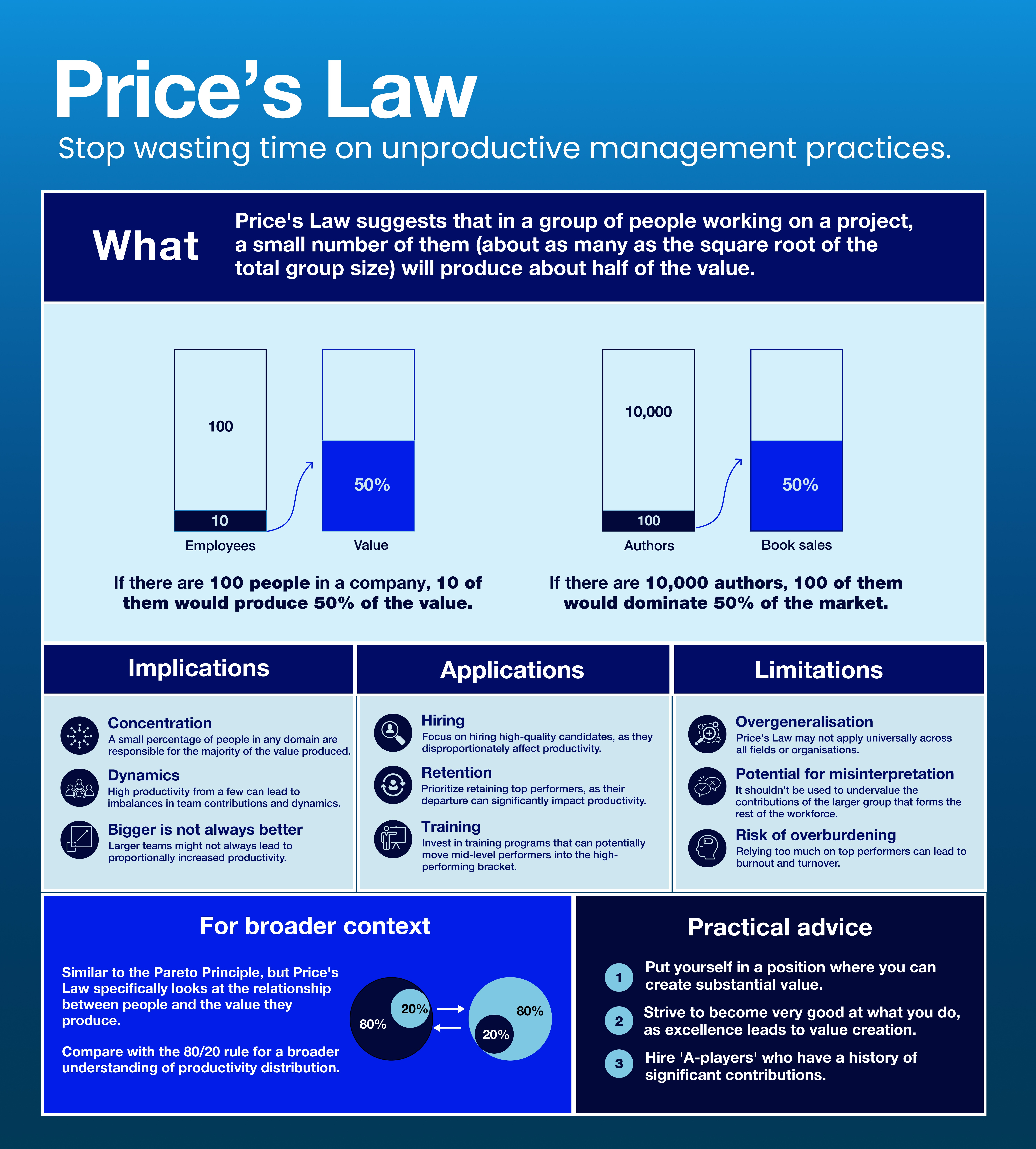
Price’s Law states:
In any group, the square root of the total number of contributors produces half the output.
In a team of 100 — 10 people drive 50% of results.
In a team of 10,000 — 100 people drive half the value.
This isn’t cruel. It’s statistical.
And it has enormous implications.
Table of Contents
Headcount ≠ Productivity
The Risk
The Balanced Scorecard: Don’t Fly Blind
The Bigger Picture
The Compounding Effect Nobody Talks About
The Founder Trap
The Talent Equation
The Urgency Problem
Closing Thoughts
Headcount ≠ Productivity
Adding 10 average performers rarely equals adding 1 exceptional one.
This law forces you to rethink:
Hiring
Compensation
Talent density
Resource allocation
Performance management
Your job is not to build a large team.
Your job is to build a high-leverage team.
The Risk
Misinterpretation.
Price’s Law is not a justification to ignore everyone else.
Nor is it a license to burn out high performers.
It’s a reminder to:
Identify impact players
Protect them from bureaucracy
Align them to high-leverage work
Develop others toward that level
Scale is built on concentrated excellence.
The Balanced Scorecard: Don’t Fly Blind
Finally — measurement.
Revenue alone is not strategy.
The Balanced Scorecard forces you to assess your business through four lenses:
Financial
Customer
Process
Learning & Growth
Financial metrics tell you what happened.
Customer metrics tell you whether your market still believes in you.
Process metrics tell you whether you can deliver efficiently.
Learning metrics tell you whether you’ll survive five years from now.
A SaaS business obsessed only with revenue growth can quietly rot operationally.
A SaaS business obsessed only with product can quietly die commercially.
Balance is strategy.
The Bigger Picture
Delegation increases leverage.
Reducing meetings increases focus.
Price’s Law increases talent density.
The Balanced Scorecard increases clarity.
Together, they form an operating system.
Scaling is not magic.
It’s not hustle.
It’s not inspiration.
It’s disciplined execution built on structural clarity.
And the founders who win are not the ones who work hardest.
They’re the ones who build systems that work hardest for them.
The Compounding Effect Nobody Talks About
Here’s what the textbooks don’t tell you.
These frameworks don’t add.
They multiply.
Delegate effectively — your top performers stop drowning in decisions beneath their level.
Cut meetings ruthlessly — those same people get their focus back.
Apply Price’s Law to compensation — you stop haemorrhaging your 10x players to a competitor who saw them clearly before you did.
Run a Balanced Scorecard — and every one of these decisions gets made on signal, not instinct.
Each lever amplifies the next.
That’s not theory. That’s compounding operational clarity.
The Founder Trap
Now for the hardest part.
The biggest obstacle between you and this operating system isn’t your team.
It’s you.
Most founders intellectually accept these frameworks.
And emotionally resist every single one.
Because Price’s Law means confronting uncomfortable truths about hires you championed.
Because cutting meetings means surrendering the illusion of control.
Because a real Balanced Scorecard will surface metrics you’d rather not face.
Scaling doesn’t ask you to be strategic first.
It asks you to be honest first.
The Talent Equation
Let’s be direct about something most founders avoid saying out loud.
Not everyone on your team is playing the same game.
Some people are building. Some are maintaining. Some are consuming.
And the dangerous ones? They’re doing all three while looking busy.
Price’s Law doesn’t care about effort. It doesn’t reward presence.
It rewards output.
Which means your job — right now — is to know exactly who is driving your results and whether they have everything they need to drive more of them.
Remove the blockers. Clear the path. Protect the time.
Because your top performers won’t wait forever for an environment worthy of their capability.
And when they leave, they rarely announce it before they’re already gone.
The Urgency Problem
Here’s a pattern that kills more scaling companies than bad product ever will.
Everything feels urgent. Nothing gets prioritised.
Your highest-leverage people spend their days context-switching between tasks that could have been delegated, meetings that could have been emails, and decisions that should never have reached them.
That’s not a team problem. That’s a systems problem.
Urgency is the enemy of excellence.
And a culture of permanent urgency is simply a culture that has never been forced to think structurally.
The founders who scale build filters — between noise and signal, between reactive and strategic, between what feels important and what actually is.
Discipline is the operating system. Urgency is just the virus trying to corrupt it.
Closing Thoughts
These aren’t new ideas.
Price’s observation is decades old. The Balanced Scorecard was published in 1992. Leverage is older than business itself.
The frameworks aren’t the secret.
Execution is.
The founders who scale aren’t reading things nobody else has read.
They’re doing things everyone else read — and quietly shelved when it got uncomfortable.
So ask yourself one question:
Which of these are you applying? And which are you just agreeing with?
Because agreement without action is just expensive procrastination.
Build the system.
Or watch someone else build it faster.
-Chris Tottman
Behind the free content is a library built from 30 years in the trenches. A paid subscription unlocks 50+ tools and playbooks distilled from 500+ investments - so you raise smarter, not harder."
📊 The Homepage Messaging Test That Every Founder Is Afraid To Run - see exactly how your messaging stacks up against competitors.
📧 The Only Cold Email Format Mark Cuban Actually Reads - the outreach structure that gets replies from investors who never reply.
⚠️ The Most Dangerous Document a Founder Will Ever Sign - every term that quietly shapes your outcome after the round closes.
🔍 The Due Diligence Playbook: What VCs Actually Analyse Before They Invest - run this before investors do. Surface the blind spots first.
🎯 The Quiet Filter That Decides Your Entire Fundraise - find the investors who can actually say yes to your raise.
These aren’t frameworks to screenshot. They’re tools you open, use, and walk away from with something concrete.