

There is a question experienced investors ask themselves about every founder they meet.
Not “is the market big enough?”
Not “is the product defensible?”
Not even “do I believe the numbers?”
Those questions come later.
The first question, the one that everything else flows from, is quieter than any of those.
“Does this person have what it takes?”
It is the hardest question to answer from a pitch deck. It is surprisingly answerable from a psychometric assessment.
After decades of backing companies, the investors who have seen enough failure and enough success start to notice the same thing. Markets shift. Products pivot. Strategies change. What stays constant, what determines whether a company finds a way through the hard chapters or collapses under them, is the founder.
Not their idea.
Not their network.
Not even their timing.
Them.
Their grit when the obvious move is to stop. Their discipline when momentum creates the illusion that everything is working. Their self-belief when the evidence is thin and the doubt is loud. Their ability to execute relentlessly in the face of ambiguity. Their capacity to lead people who are smarter than them in the directions that matter. And the clarity of their vision, not as a slide in a pitch deck, but as a deeply held sense of purpose that sustains them through the years between idea and outcome.
These are the traits that make founders special.
They are also the traits that most founders have never had objectively measured.
That changes with the Founder DNA Profile. A 135-question psychometric assessment built around six core dimensions, Grit, Discipline, Self-belief, Execution, Leadership, and Vision and Purpose, that surfaces exactly where you are strong, exactly where you are not, and exactly what that means for the company you are trying to build.
The tool does two things: it sends you your full scored results by email, a level of forensic self-knowledge that most founders never access, and it enters your profile into a database that investors across multiple firms actively search when looking for founders to back.
But before we get to either of those things, let us talk about what twenty years of watching founders build, and a growing body of investor research, actually tells us about the traits that matter.
What Actually Separates Founders Who Last
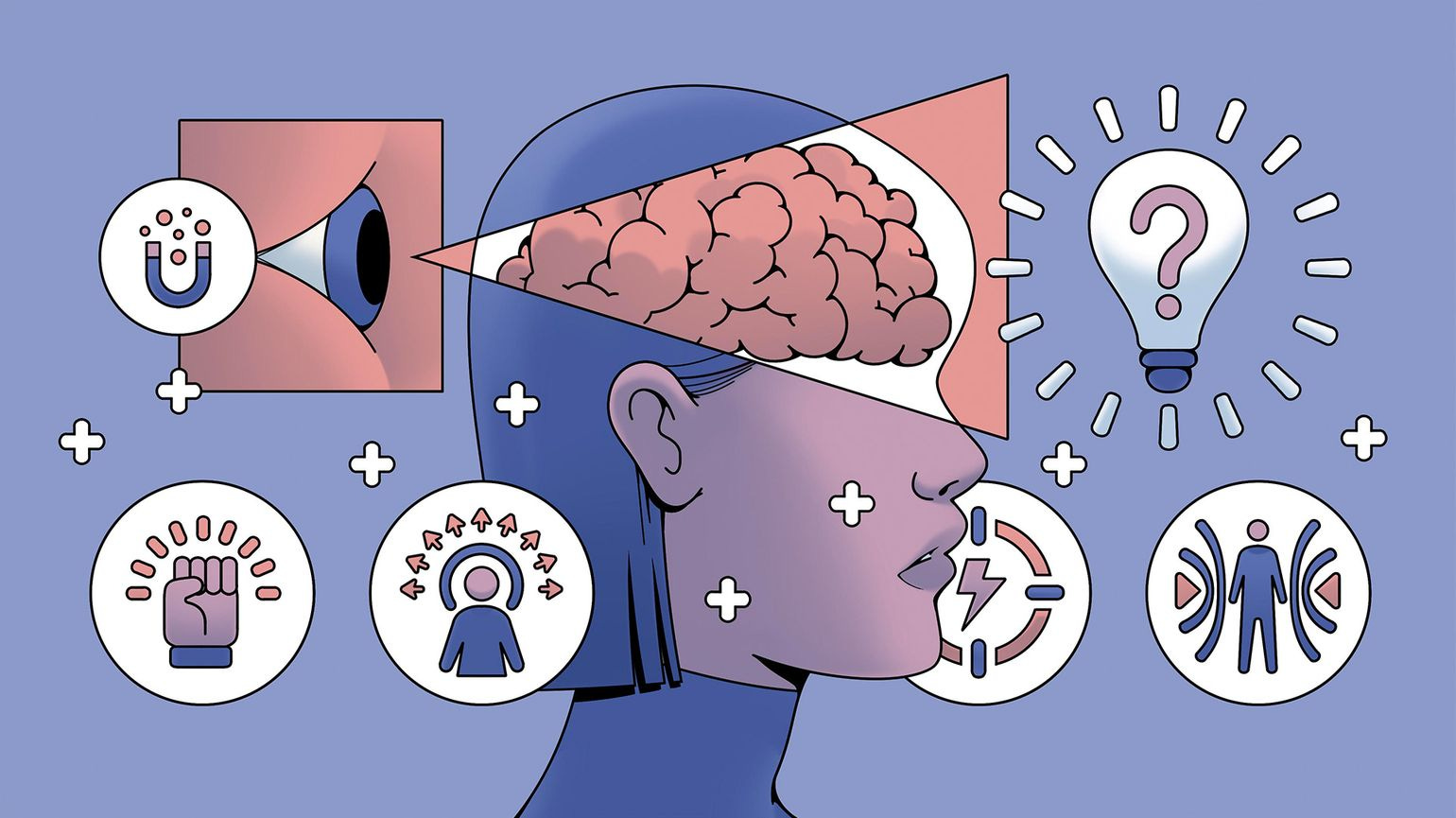
EQT Ventures spent five years psychometrically profiling thousands of founders across their global portfolio. What they found was not surprising to anyone who has spent time around great builders. But it was striking in how consistently the same traits appeared - regardless of sector, geography, or stage.
Antler, one of the most active early-stage investors in the world, with over 8,000 founders through their programmes, found similar patterns. The founders who succeeded were not always the most technically gifted. Not always the most articulate. Not always the most experienced.
They were the most psychologically equipped for what building a company actually demands.
The Founder DNA Profile is built around that same body of research and insight, structured around six dimensions that capture the full psychological architecture of how a founder operates under the conditions of building something real.
Below is a deep look at each one.
The Six Traits That Define Great Founders
1. Grit
Ask any experienced investor what they are really looking for in a founder and, if they are being honest, grit comes before almost everything else.
Not the word. The thing itself.
Because building a company is, at its core, an extended act of irrational persistence. The rational move, at many points in a startup’s life, is to stop. Revenue stalls. The product does not convert the way the model said it would. A well-funded competitor enters the market. The thesis that felt clean at the start looks messy in practice. The early team that believed starts to wobble.
Most people, facing that accumulation, would stop.
The founders who build something lasting do not.
But grit is more nuanced than simple refusal to quit, and the assessment is designed to measure that nuance. Because there are two very different versions of what looks like grit from the outside.
The first is genuine. The founder who leans in harder when things get difficult, who draws energy from adversity rather than being depleted by it, who finds the next move when the obvious moves have run out. This is the trait that carries a company through the chapters that do not appear in the origin story.
The second is brittle. The founder who cannot stop not because of resolve but because stopping would require acknowledging something they are not ready to acknowledge. Who mistakes forward motion for progress. Who confuses persistence with avoidance.
Understanding which version is natural to you, and where on that spectrum your grit genuinely sits, is among the most valuable things this assessment surfaces.
No founder is infinitely resilient. The ones who build great companies are not the ones who pretend otherwise. They are the ones who know where their grit is structural and where it frays, and who build accordingly.
2. Discipline
Discipline in the context of the Founder DNA Profile is not about whether you have a morning routine or stick to your calendar.
It is something more fundamental than that.
It is the consistent ability to hold yourself accountable to outcomes rather than effort. To close the gap between what you said you would do and what you actually did, not occasionally, when conditions are favourable, but systematically, including when the conditions are not.
This trait shows up in the accountability dimension most clearly. The question of whether a founder takes full responsibility for outcomes, not just credit when things go right, but genuine ownership when they do not, is one of the most commercially significant things the assessment measures.
When things go wrong in a startup, and they will, the founders who attribute failure outward rarely course-correct quickly enough. They spend energy constructing explanations that protect their self-image but do nothing to change the outcome. The cycle repeats.
Founders with high discipline do something categorically different. They look inward first. They ask what they could have done differently. They update their model. Then they move.
The time between setback and course correction is shorter.
The quality of learning from each failure is higher.
The culture they build, one where problems surface quickly because no one is afraid of being blamed, is healthier and more robust.
Discipline also has a compounding effect on team dynamics. A founder who models consistent accountability creates a culture where accountability becomes the default. A founder who is inconsistent in this area, rigorous about others’ commitments but less so about their own, creates a culture of quiet resentment that compounds until it becomes a leadership crisis.
The profile surfaces where you genuinely sit on this dimension.
Not where you believe you sit. Where the data says you do.
→ Take the Founder DNA Profile - free, no paywall. Receive your full scored results by email.
3. Self-Belief
Self-belief is the trait that almost every founder thinks they have until the moment it is genuinely tested.
The early version, the belief required to leave a stable job, to tell friends and family what you are building, to make the first hires, is real. But it is relatively easy to access when the story is still clean and the optionality feels infinite.
The self-belief that actually determines outcomes is something different.
It is the belief that persists when the evidence is thin. When the growth curve does not look like the model. When a well-respected investor passes and their reason sounds uncomfortably plausible. When your own leadership team is looking at you for a certainty you are not sure you have.
In those moments, the question is not whether you feel confident.
The question is whether you can act with clarity despite not feeling confident.
The best founders are not the ones who experience less doubt. Research consistently shows that high-performing founders experience significant doubt, often more than founders who do not make it, because they are paying closer attention to what the evidence is actually telling them.
What separates them is not the absence of doubt.
It is a stable, grounded self-belief that does not depend on external validation to function.
This is the distinction the assessment is built to measure. Because there are two different things that can look like self-belief from the outside. The first is genuine, a durable internal foundation that allows a founder to hold uncertainty without it compromising their ability to lead and decide. The second is performance, confidence that is dependent on positive signals and that becomes brittle when those signals stop.
Knowing which version is natural to you is one of the most clarifying things a founder can understand about themselves.
4. Execution
Execution is the trait that converts everything else into outcomes.
A founder can have extraordinary grit, genuine self-belief, and a profound sense of purpose and still build nothing if they cannot translate those things into consistent, high-quality action that moves the company forward.
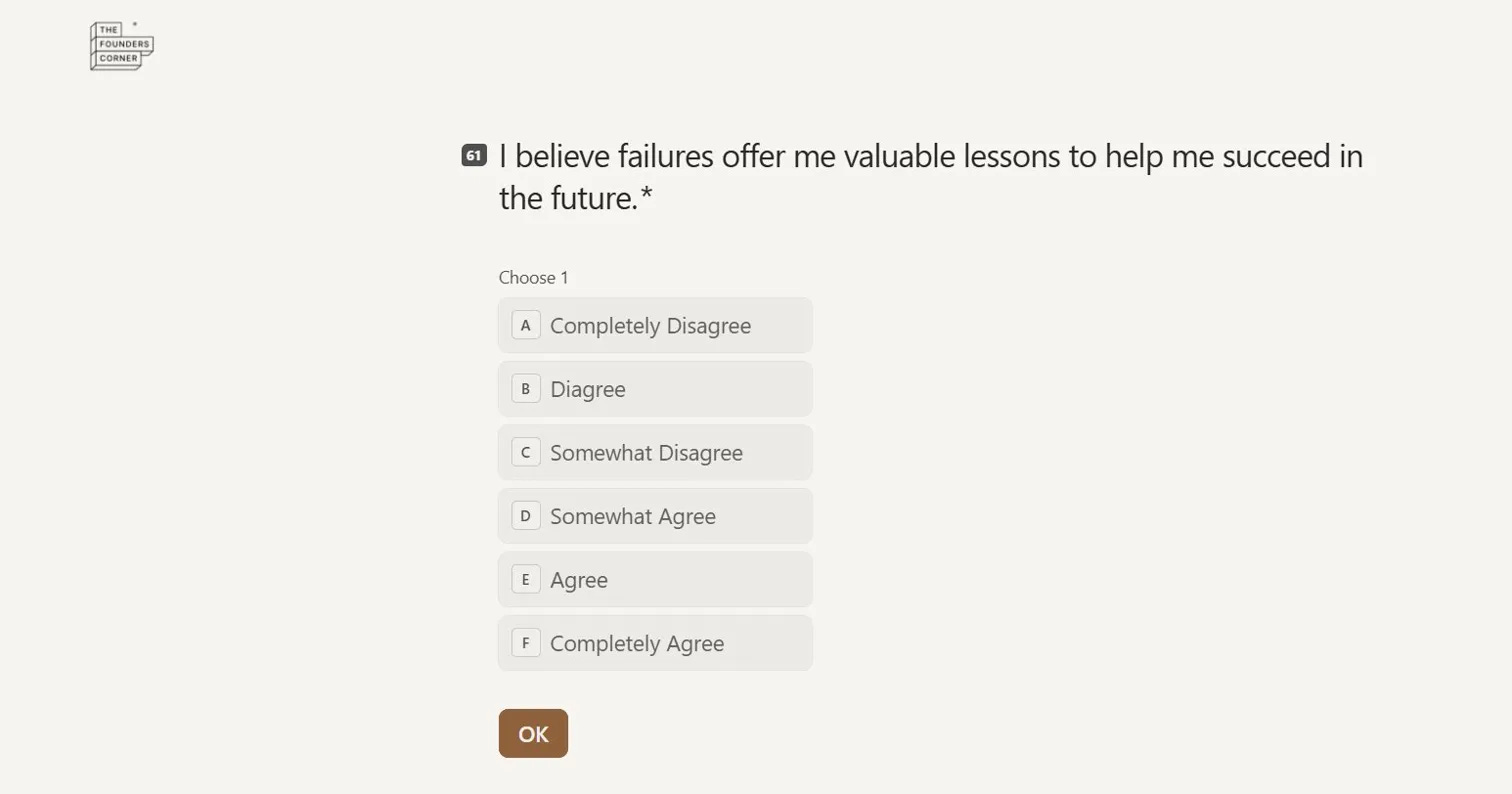
But execution in a founder context is more than pace. It is more than output. It is the quality of the loop between action and learning - whether you move, absorb what the movement reveals, adjust based on what you learn, and move again faster and with better information than before.
This is why the assessment probes how founders process failure as a core component of execution. Because the founders who execute at the highest level over the full arc of building a company are not the ones who move fastest in a straight line. They are the ones who course-correct most efficiently - who treat every outcome, including the bad ones, as data that improves the next decision.
A founder with strong execution and a learning orientation moves through product iterations faster. Through failed hires faster. Through strategic pivots faster. Not because they are less affected by setbacks, but because the time from setback to adjustment is compressed by a genuine willingness to see clearly what happened and why.
The founders who score lower on this dimension typically fall into one of two patterns. Some move fast but without integration; high output, low learning, repeating the same mistakes at scale. Others integrate deeply but move slowly - reflective and precise but unable to generate the velocity that early-stage companies require.
Both patterns have a ceiling.
The profile tells you honestly which is more natural to you.
That honesty is the starting point for changing it.
→ See exactly where you score across all six dimensions. Free. 15 minutes. Results sent to you by email.
5. Leadership
There is a version of the solo founder myth that does enormous damage to how founders think about their own leadership.
The image of the visionary who builds through sheer force of individual will - who sees what others cannot, who executes faster than others can follow, who does not need others because no one operates at their level.
Some of this is real. The best founders do see things others do not. They are relentless in ways most people cannot sustain.
But the myth has a dangerous corollary: that needing others is a weakness. That leadership is something you develop when you scale, not something that determines whether you get there.
The data does not support this.
The founding teams that build the most durable companies are not the ones where one exceptional founder pulls everyone along. They are the ones where the founders genuinely make each other better - where the combination of leadership profiles across the team covers more of the range than any single individual could.
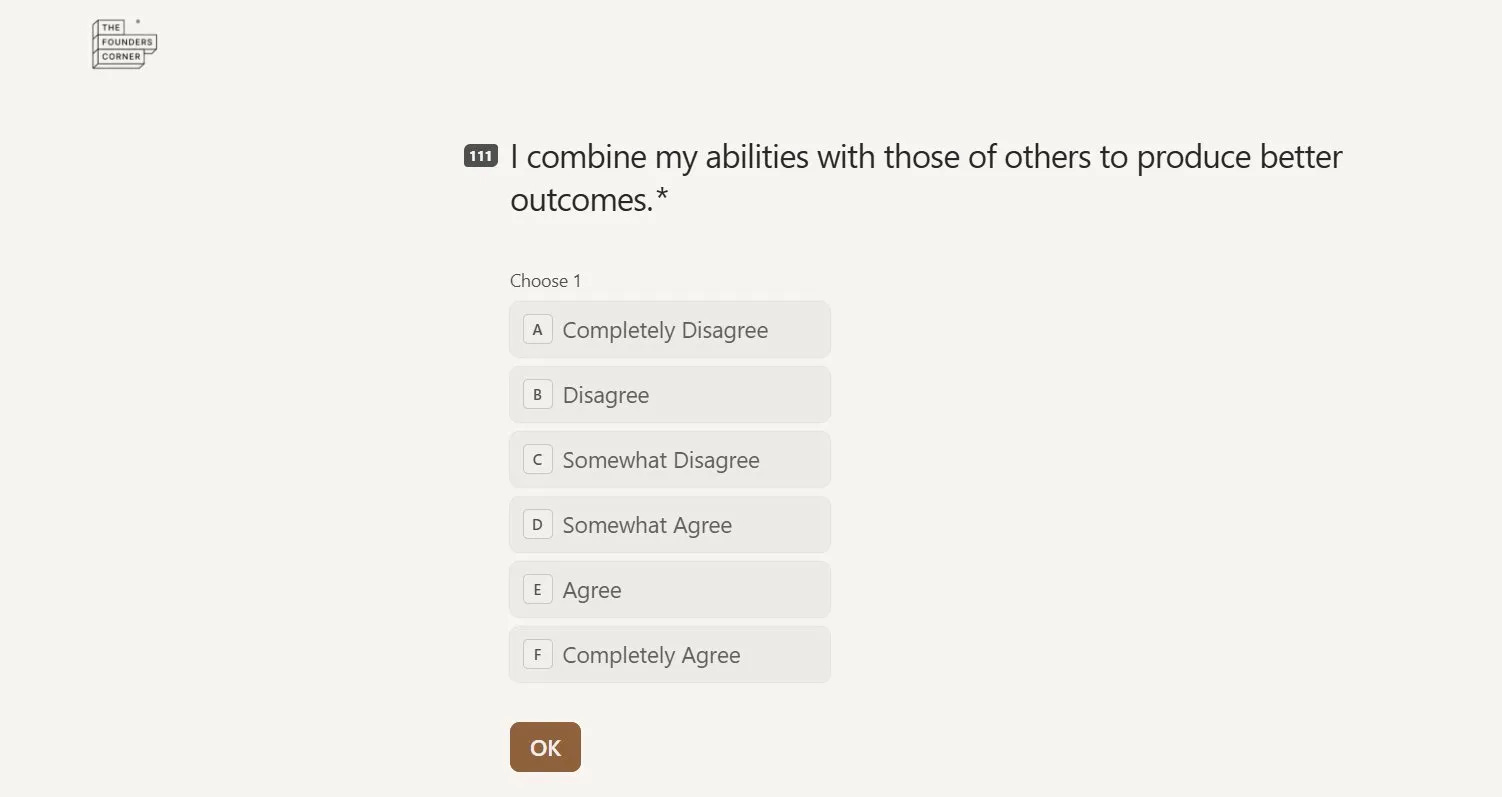
The leadership dimension in the Founder DNA Profile is probing something specific and structural: whether a founder instinctively believes that combining their abilities with others produces better outcomes than operating alone. Whether their default, under pressure, is to bring people in or to close off. Whether the ceiling they hit as an individual is something the team raises, or something the team bumps into alongside them.
This dimension also has the most direct implications for co-founder fit and senior hiring.
Because the question is not just how strong your leadership instincts are in isolation.
It is whether the people you are choosing to build with complement where you are on that spectrum and whether the gaps in your leadership profile are being filled deliberately or left to chance.
6. Vision and Purpose
Vision and purpose is the dimension that holds all the others together.
Grit without direction is exhausting and ultimately aimless.
Discipline without purpose becomes rigidity.
Self-belief without a genuine north star is just confidence - useful, but not enough.
What gives all the other traits their power is a founder’s clarity about why they are building and the depth to which that clarity is genuinely felt rather than performatively expressed.
This is a distinction the assessment measures carefully.
Because there is an enormous difference between a founder who can articulate a compelling vision and a founder who is genuinely driven by one. The first can be trained. Pitch coaches exist. Narrative consultants exist. The TED talk version of founder vision is learnable.
The second is something different. It is the sense of purpose that sustains a founder through year three when the original story has been complicated by reality. That carries them through the pivots that feel like losing the plot but are actually getting closer to the truth. That makes it possible to hold a long-term view when everything around them is demanding short-term decisions.
This is also the trait with the most interesting relationship to adaptability.
Because the founders who hold their vision most rigidly are often the ones who struggle most with pivoting when the route needs to change. They conflate the destination with the path. When the path changes, it feels like the destination is being abandoned and the psychological cost of that conflation can be enormous.
The best founders hold something different. A clarity about why they are building that is stable and deeply held, combined with genuine flexibility about how - the ability to update the approach, the product, even the market, without losing the thread of purpose that makes the whole endeavour worth doing.
The profile measures where you sit on this spectrum honestly.
How clear your purpose is. How deeply it is felt. Whether your vision is a genuine driver of your decisions or a story you have learned to tell well.
That distinction matters more than almost anything else in the assessment.
The Real Magic: Building the Right Team Around Your Profile
Most founders take the Founder DNA Profile thinking about investors.
They finish it thinking about their team.
Because what the scored results reveal, a dimensional picture of exactly where you are strong and exactly where you are not, across all six traits, creates an entirely new lens through which to think about who should be sitting next to you.
No founder is complete across all six dimensions. The best ones know it.
The best founding teams are not made up of people who are identical in their profile. They are made up of people whose profiles are deliberately complementary.
One founder scores high on grit and execution but lower on vision and purpose - a relentless builder who needs a partner who never loses the thread of why.
The other carries the mission at full strength but needs someone whose discipline and execution will close the gap between the idea and the reality.
Together they cover the full range. Separately, each has a visible ceiling that will eventually become the company’s ceiling.
The same logic applies to your first key hires.
A CTO who scores low on leadership but high on execution and self-belief will build fast and struggle to scale the team that sustains it.
A CFO who scores high on discipline but low on vision and purpose will protect the business brilliantly and quietly pull it towards conservatism when boldness is required.
A VP of Sales who is high on self-belief and grit but low on discipline will generate early momentum and leave a trail of under-managed commitments behind them.
These are not character flaws.
They are human profiles.
And knowing them before the hire, before the equity is split, before the co-founder agreement is signed, before the culture is set, is the difference between building deliberately and discovering the problem eighteen months too late.
The Founder DNA Profile is the starting point for building that combination with intention.
What Happens After You Complete the Assessment
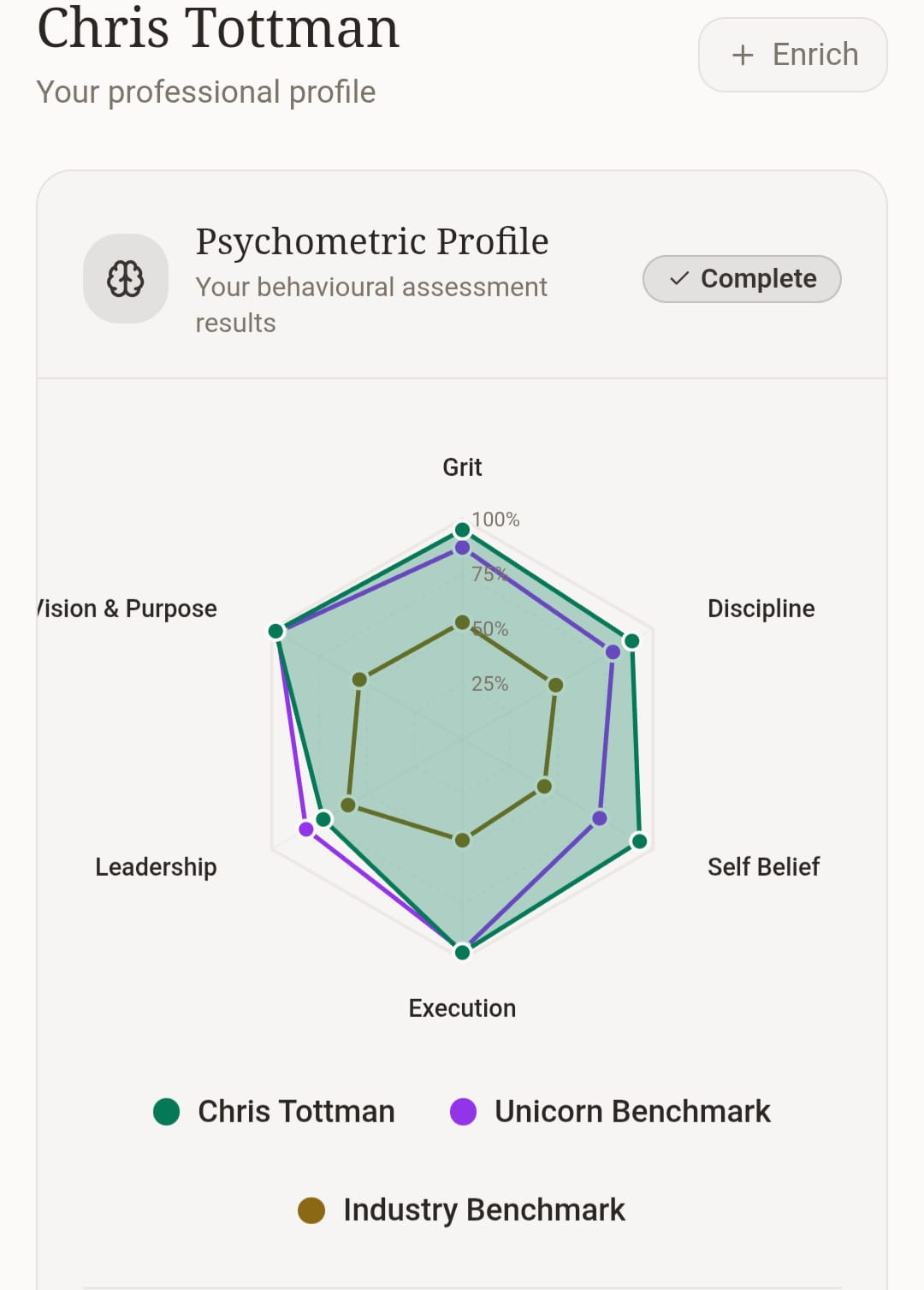
After you complete the Founder DNA Profile, you receive your full results by email.
A scored breakdown across all six dimensions - Grit, Discipline, Self-belief, Execution, Leadership, and Vision and Purpose. Your strengths, clearly identified. Your weaker areas, named honestly. The context to understand what each means for the way you lead, hire, and make decisions.
Most founders who complete it say the same thing: they knew some of it intuitively. But seeing it scored, dimensionally, in black and white is different. That is the level of clarity that changes how you think about your co-founder, how you approach your next hire, and how you walk into your next investor conversation.
After completing the Founder DNA Profile, you will understand your own psychological make-up with more precision than 99% of the founders currently raising capital.
That is not a small edge.
That is the difference between building on assumption and building on knowledge.
A Word on Honesty
The most common mistake people make with psychometric assessments is trying to answer strategically.
Do not do that here.
The questions are designed so that attempts to present a socially desirable version of yourself produce inconsistent patterns that experienced analysts can identify. There are built-in guardrails specifically designed to detect and flag this. But more importantly, gaming the assessment defeats the entire purpose.
The value, the self-knowledge, the team matching clarity, the investor visibility, only exists if the picture the profile creates is accurate.
Answer from instinct, not from calculation.
The profile that comes back will be the most honest picture of you as a founder that you have ever seen.
Knowledge is power.
This is the knowledge most founders never get.
What to Expect
135 questions. Around fifteen to twenty minutes, uninterrupted. A six-point response scale, Completely Disagree to Completely Agree, applied consistently across every dimension.
No trick questions. No branching logic. Just an honest progression through the six traits that determine how you build.
Your full scored results will be sent to you by email.
Closing Thoughts
The best founders are not the ones who score perfectly across all six dimensions.
Nobody does.
What separates the founders who build something lasting is not that they have everything. It is that they know themselves well enough, across grit, discipline, self-belief, execution, leadership, and vision and purpose, to build the team that makes them complete.
The Founder DNA Profile gives you that knowledge.
It is free. It is not behind a paywall. It takes fifteen minutes.
And the clarity it creates, about who you are as a founder, about who you need around you, and about the investors who are actively looking for your kind of profile, may be the most useful thing you do this month.
→ Take the Founder DNA Profile here. Free. No paywall. Your profile enters the investor database immediately upon completion.
For founders who want to go deeper into the fundraising process, these pieces are worth reading:
The One Fundraising Mistake Every First-Time Founder Makes — understanding the silent equity loss baked into early-stage fundraising.
The Quiet Filter That Decides Your Entire Fundraise — the tool that shows who is a real fit and who was never going to reply.
How Investors Decide If You Are Ready to Raise — understand the real signals behind investor decisions so you know exactly what to fix before you raise.
There is a concept called the Penrose triangle, also known as the impossible triangle. It is a figure that appears to be a solid object, but in reality it cannot exist in three-dimensional space because its geometry is inconsistent.
In a similar way, the founder who possesses all six ideal qualities may not actually exist. However, within the hexagon formed by these six qualities, there is always a point that represents a feasible balance among them. 🤠
I once met a behavioral economist who spoke to me about overconfidence bias in solo founders. Despite extremely high failure rates, many keep going convinced they’re cut from a different kind of tree.
And maybe they are.
I admire founders deeply. The odds are stacked against them from day one. Statistics don’t favor them. Structure doesn’t favor them. Stability doesn’t favor them.
Until they make it.