

Most founders spend more time picking a font for their pitch deck than they do on their pricing strategy.
That is not an exaggeration. Research puts the average time spent on pricing at under six hours over the life of a company. Six hours to define, test, and optimise the single decision that touches every other part of the business.
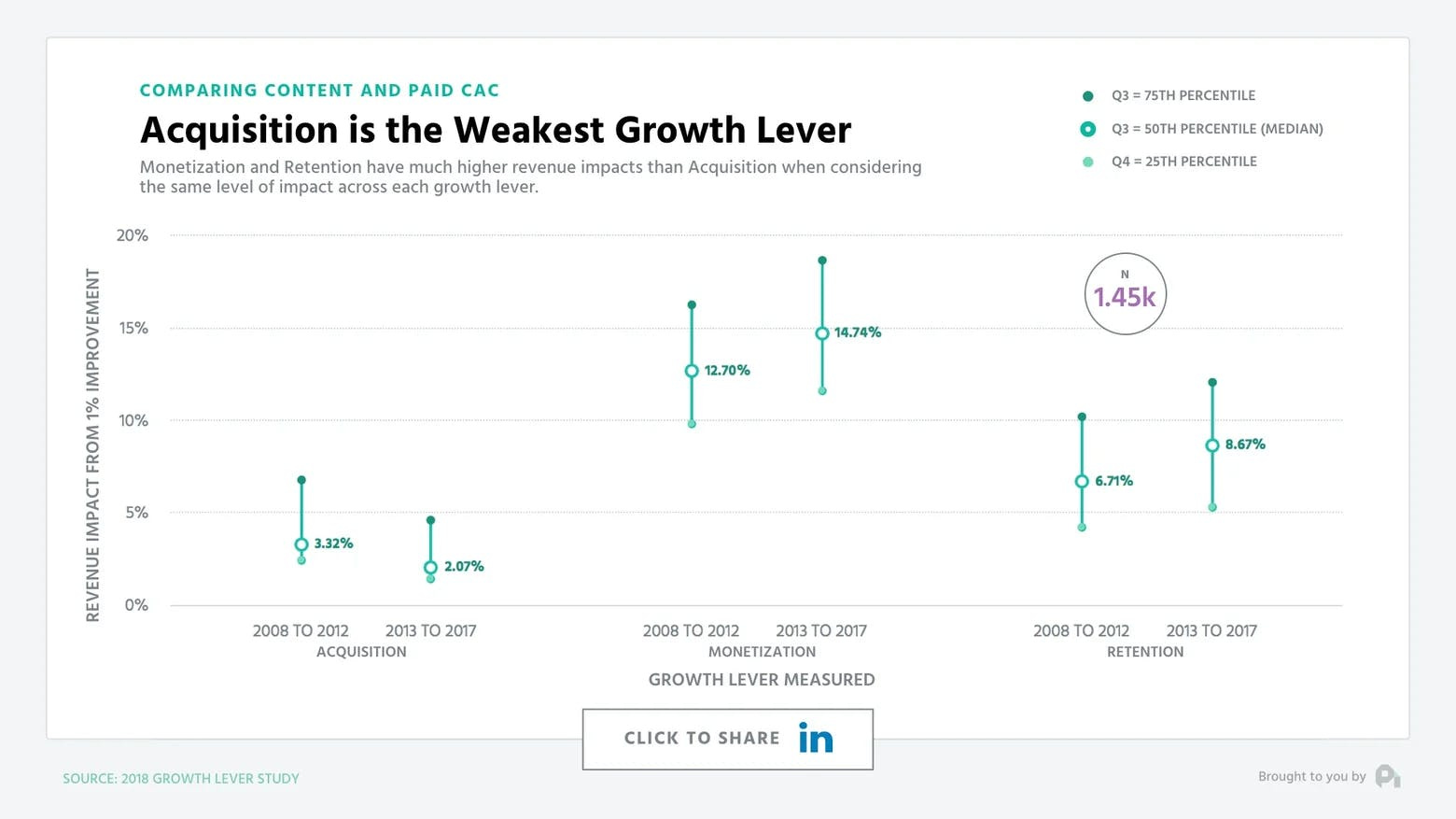
Pricing has more impact on your growth than acquisition or retention. Most founders never touch it.
I have seen pricing destroy truly brilliant companies. And I have seen smart pricing turn plodding startups into runaway machines. The difference is never the product. It is almost always the method behind the number.
This is the pricing playbook I wish I had when I was building.
Table of Contents
The One Decision That Touches Everything
Step 1: Start With Value, Not Cost
Step 2: The Most Important Pricing Decision You Will Ever Make
Step 3: Pick the Model That Fits How Value Flows
Step 4: Your Price Is Saying Something. Make Sure It’s Saying the Right Thing.
Step 5: How to Actually Set the Number
Step 6: Build the Tier Architecture That Sells Itself
The Pricing Maturity Checklist
What I’ve Learned Pricing a $150M Business
The Maths That Changes the Conversation
How to Raise Prices Without Losing a Single Good Customer
Pricing Is Never Done
The One Decision That Touches Everything
Pricing is not just a revenue decision. It is a signal to your market about what kind of company you are.
Get it wrong and you will attract the wrong customers: price-sensitive, high-churn, high-support, and they will undermine your positioning with every referral they give. Get it right and you will attract customers who stay longer, refer more, demand less, and give you the feedback that actually makes your product better.
The founders who build category-defining companies treat pricing like a product. They iterate on it, test it, and never apologise for it. The founders who struggle treat it as a number set once and forgotten.
McKinsey studied the S&P 1500 and found that a 1% improvement in pricing delivered an 8% increase in operating profit. More than a 1% improvement in volume. More than cutting variable costs. More than cutting fixed costs. Combined.
You are almost certainly undercharging right now. This playbook is about changing that.
Step 1: Start With Value, Not Cost
The golden rule: price is a reflection of value.
Your job as a founder is to understand how your product creates value, and price accordingly. Not what it costs to deliver. Not what competitors charge. Not what feels comfortable. What the customer gets.
Here’s how to find it:
Talk to your best customers. Sit with them. Ask:
“What feature would you miss most if we took it away?”
“How does this product save you time or money?”
“What’s the ROI of using our product?”
One founder I worked with discovered that a feature they thought was a minor addition actually saved enterprise clients 10+ hours a week. It was not priced accordingly. That single conversation led to a 40% price increase, without a single customer churning.
Use your product analytics. Mixpanel, Amplitude, and Pendo will show you what features are used most, where users spend time, and which workflows repeat across your top accounts. The features used most and valued most are the ones you build your pricing around.
Most founders build pricing around what they find easiest to explain. The best founders build it around what customers cannot live without.
Step 2: The Most Important Pricing Decision You Will Ever Make
Before you set a price, you need to find your value metric: the unit of measurement that best captures the value your product delivers. The thing you charge for that scales as your customer succeeds.
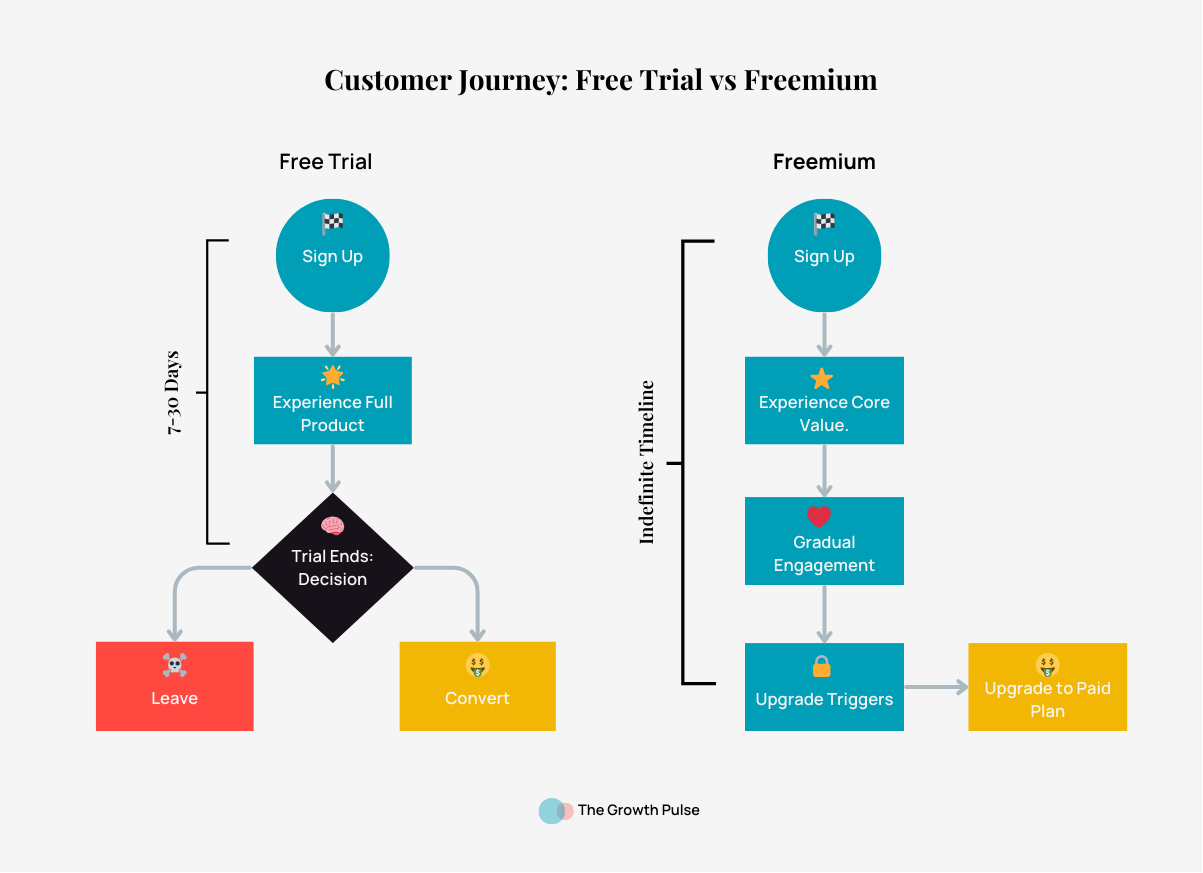
How you structure the entry point into your product shapes everything that follows: conversion, virality, and the long-term revenue potential of every customer who walks through the door.
Patrick Campbell of ProfitWell: “If you get everything else wrong in pricing, but you get your value metric right, you’ll do ok.”
Here’s how the best SaaS companies think about it:
Stripe charges per transaction. As your revenue grows, so does the value Stripe provides.
Intercom charges per active user. As your customer base grows, so does the value of their platform.
HubSpot charges per contact. As your contacts grow, so does the value of their marketing engine.
Snowflake charges per compute unit. As usage grows, so does the value delivered.
The pattern is the same every time. When the customer wins, the price grows.
To find yours, ask ten active users: “When you get more value from our product, what increases?” Then track where power users consistently expand. The answer is almost always sitting in plain sight. You have just been charging for the wrong thing.
Avoid charging for inputs like integrations or time spent. Charge for outcomes.
Step 3: Pick the Model That Fits How Value Flows
There is no universally best pricing model. There is only the model that fits how value moves through your product.
Free Trial (7 to 30 days) Best when the value moment happens quickly and users feel urgency to decide. Notion, Superhuman, and Calendly all built on this. The trial must be long enough to prove recurring value, short enough to force a decision.
Freemium Works when users naturally share what they create: Loom links, Figma files, Notion pages. Your user base becomes your distribution engine. Keep the free plan generous enough to build habits, but put the collaboration, automation, and admin features behind the paywall. Those are what growing teams need. One test: if a user can get full value from your product without ever inviting a colleague, freemium will fill your funnel with people who will never pay you.
Usage-Based The model that most consistently produces net revenue retention above 120%. Price grows with usage, so customers only pay more as they succeed more. The objection is revenue unpredictability. The fix is a committed minimum: a floor that guarantees baseline revenue, with overages on top. Twilio, Snowflake, and AWS all operate this way.
Tiered / Good Better Best The most widely adopted model. Captures customers across multiple willingness-to-pay levels. Only works when your tiers have genuinely distinct value for genuinely distinct segments, not when they are just feature lists with prices attached.
Flat Rate Simple, memorable, and leaves an enormous amount of money on the table. The moment you charge a ten-person team the same as a thousand-person team, you have an economics problem.
Most scale-ups end up with a deliberate blend of two or more models. The question is not which one. It is which combination, and in what order you layer them as you grow.
Step 4: Your Price Is Saying Something. Make Sure It’s Saying the Right Thing.
The moment a prospect sees your price, they form an immediate unconscious judgement. Are you enterprise or SMB? Premium or commodity? A serious long-term partner or a disposable tool?
A £9/month price tag tells a completely different story than £900/month, even if the underlying product is identical. The lower price signals: “We are probably not that valuable. We are probably not that reliable.” The higher price signals: “We work with serious companies. If you are not ready to invest, this is probably not for you.”
When Salesforce launched, they charged more than any comparable CRM. Everyone thought they were mad. But that premium price sent one clear signal to enterprise buyers: “We are the serious option.” The price itself became the competitive moat.
The anchor effect is just as powerful.

Show your highest tier first. When a prospect sees Enterprise at £2,000/month and then looks at Pro at £400/month, £400 suddenly feels reasonable. Even cheap. Show £400 first with no anchor and it feels expensive. Same number. Completely different perception. This is why you always lead with your most expensive option.
Step 5: How to Actually Set the Number
Anchor to the value you create, not the cost you incur.
If your product saves a customer £50k a year, £5k pricing feels like a steal. If it saves £5k, £500 feels reasonable. The price should always be a fraction of the measurable value you deliver. Never a multiple of your cost.
Know who is actually making the decision.
A CFO needs ROI. A Head of Ops wants time saved. A product lead wants reliability and depth of integration. The same price lands completely differently depending on who is signing the contract and what budget line they are spending from. One HR tech founder I backed raised prices 3× after discovering their customers were spending from consulting budget, not software budget. Same product. Completely different conversation.
Research willingness to pay before you guess.
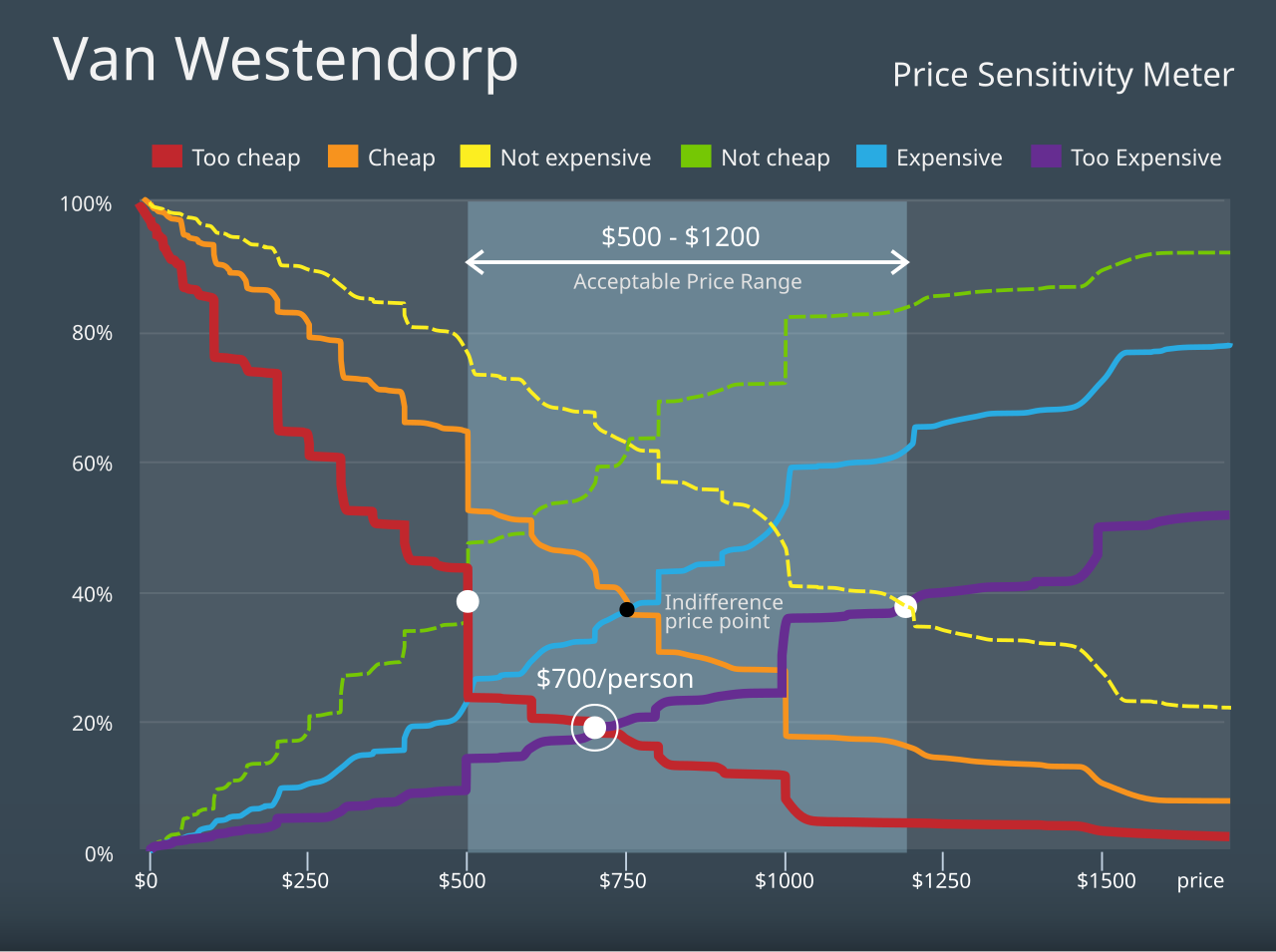
The Van Westendorp Price Sensitivity Meter gives you four price curves: too cheap, cheap, expensive, too expensive. Their intersections show you the optimal price range before you commit to anything. Two days of structured customer conversations using this method will tell you more than six months of internal debate ever will. Run it before any major pricing change.
Use competitors as a reference, not a ceiling.
Their pricing tells you what the market expects. It does not tell you what the market will pay for something meaningfully better. If you are 10× better, do not be afraid to charge 2 to 5× more.
Step 6: Build the Tier Architecture That Sells Itself
Three tiers. Each one has exactly one job.
Map every feature on two axes: value to customer, and customer adoption. High value and high adoption is your core offering. High value and low adoption is your premium upsell. Low value across the board is your starter tier. This exercise will change how you see your product.
One startup I advised discovered their invoice audit tool, used by just 20% of clients, was the most loved feature in the product. It became a separate upsell and grew to 25% of ARR.
Starter tier: Its job is not to make you money. Its job is to make your mid-tier look like the obvious choice. Price it low enough to be accessible, feature-gate it hard enough that any growing team immediately feels the ceiling.
Pro tier (your target): This is where 60 to 70% of customers should land. It should feel inevitable: well-featured, well-priced against the anchor above it, with a clear upgrade trigger built in.
Enterprise tier: Its job is to make Pro feel safe. The psychological relief of choosing Pro over Enterprise is a conversion driver. Price it as “talk to us”, not because you are hiding the number, but because enterprise deals are always custom and a public price only caps the conversation upward. I have seen founders leave 60 to 70% of enterprise contract value on the table because they anchored too early with a public price.
The upgrade trigger is everything. Build something into your Pro tier that customers will reliably hit as they grow: a seat limit, an API call threshold, a storage cap. When they hit it, the upgrade conversation handles itself. No selling required. The customer comes to you.
The Pricing Maturity Checklist
✅ Do we know which features our users actually value most?
✅ Have we defined our value metric, the one unit that scales with customer success?
✅ Can we describe our customer segments clearly?
✅ Is our packaging aligned to usage and outcomes?
✅ Have we spoken to at least 20 customers about willingness to pay, properly, not “would you pay X?”
✅ Have we tested different price points in real sales conversations?
✅ Is pricing reviewed monthly, not just annually?
If you cannot tick those boxes, you have work to do before you set a single number.
Most founders stop here.
This is where the money is lost.
Because knowing pricing frameworks does not increase revenue.
Applying them does.
Below is exactly what that looks like in practice:
The night we 4×’d our price and what happened to revenue, churn, and close rates.
How one decision moved 80% of customers to annual and locked in cash flow.
The negotiation rule that protects pricing power and why breaking it destroys margin.
What investors are really testing when they push on pricing and how to pass instantly.
This is the difference between pricing that “sounds right” and pricing that compounds.
And if you want the output without the iteration:
The Founders Corner AI Pricing Tool is on the other side.
Input your model, customer, and positioning.
Get your value metric, pricing architecture, tier structure, and willingness to pay, in minutes.
What I’ve Learned Pricing a $150M Business
I have made almost every pricing mistake in the book. Here are the ones that cost the most, and what they bought.