

Founders often feel the urge to launch in every market at once. Every new customer feels like progress, and every added region looks like momentum.
But the companies that appear everywhere usually won one place so decisively that everything else became follow on.
The winners do not launch everywhere.
They win somewhere then sequence the rest.
Brought to you by Cloudways
The hosting platform trusted by teams who genuinely care about performance.
I use Cloudways because it delivers fast, secure, worry-free hosting—no server wrangling, no DevOps overhead. It just works, and it stays fast even when traffic spikes.
Top-tier cloud providers (AWS, GCP, DigitalOcean)
Automatic backups, security, and caching
One-click staging and effortless scaling
No lock-in, no hassle
It’s streamlined, reliable, and built for the way founders ship today.

Cloudways have given The Founder’s Corner readers access to a super exclusive Black Friday deal - click here for 50% off for 3 months.
Brought to you by Lebesgue
If you’re running paid acquisition, Lebesgue is basically your unfair advantage.
Instead of juggling half a dozen ad dashboards, Lebesgue pulls everything into one place and tells you, plainly, what’s performing, what’s broken, and where you’re overspending. No guesswork. No optimisation rabbit holes. Just clarity.
What makes it so useful:
Real-time performance insights across all major ad platforms
Competitor intelligence that shows exactly how you stack up
Automated checks that flag wasted spend before it burns your budget
Concrete, step-by-step recommendations you can act on immediately
It feels less like a tool and more like having a performance marketing analyst sitting next to you.

Table of Contents
🌍 Why Go To Market Sequencing Matters
💣 The Cost of Launching Everywhere
🏖 The Beachhead Rule
🧭 Step One Narrow The Map
⚔️ Step Two Win The Beachhead
🌐 Step Three Sequence The Expansion
🧠 Founder Wisdom: A Braindump On GTM Loops
✏️ Patterns From Notion And Figma
🌎 How Deel Sequenced The World
🚨 Signals You Picked The Wrong Beach
💡 Founder OS: The Beachhead Sequencing Canvas
🚀 Closing Thought Depth Before Distance
🌍 Why Go To Market Sequencing Matters
There is a moment in every company where the numbers look fine but something feels off. Topline is rising, the pipeline is full and activity is high, yet the engine feels misaligned.
This is often the early sign of a sequencing problem rather than a sales or product issue.
Most founders chase speed. Sustainable companies protect slope. Sequencing is how slope is preserved, because it forces a team to concentrate energy in the place where learning compounds fastest.
💣 The Cost of Launching Everywhere
Launching everywhere creates the illusion of momentum. You gain logos from different sectors, partners cheer the reach and new opportunities arrive weekly.
Inside the business, coherence begins to fade.
Your roadmap becomes a patchwork of unrelated requests. Your teams lose the ability to spot patterns because every customer behaves differently. Your metrics look steady in aggregate but fractured in reality.
Early symptoms include:
Customer conversations that diverge rather than align
Retention curves that flatten despite acquisition rising
Deals that look similar on paper but behave differently in practice
When your surface area grows faster than your insight, you lose your ability to steer.
You cannot learn patterns when every customer is an exception.
🏖 The Beachhead Rule
A beachhead is not a small segment. It is the single market where your product earns the right to expand.

A strong beachhead has three traits:
The pain is immediate and concentrated
Value can be proven inside one decision cycle
Adjacent customers pay attention to what happens there
It is not about choosing something easy. It is about choosing the place that clarifies everything else you should do next.
The beachhead is where momentum begins, not where ambition ends.
🧭 Step One Narrow The Map
Step one is simple in theory and uncomfortable in practice. Narrow the map until your team begins to worry you have gone too far.

A well defined first market focuses on:
One role
One job to be completed
One workflow with a clear trigger
It will feel smaller than your ambition. That is the point. Narrowing forces precision. Positioning sharpens. Demos become predictable. Onboarding becomes tailored instead of generic.
If your ideal customer description could apply to half the room, it is not a beachhead.
⚔️ Step Two Win The Beachhead
Narrowing creates the theory. Winning creates the evidence.
Winning the beachhead means reaching a point where deals begin to rhyme. Conversations follow familiar arcs, objections repeat, activation happens along recognisable lines.
A practical way to test whether you have reached this point is to examine four loops:
Lead to qualified
Qualified to value moment
Value moment to closed won
Go live to expansion or referral
If every deal is bespoke, you have not won the beachhead. If the motion becomes predictable, even if not perfect, you are closing in.
🌐 Step Three Sequence The Expansion
Once the beachhead feels predictable, you have earned the right to expand. Expansion is not an explosion outward. It is a sequence of carefully chosen adjacencies.
Thoughtful sequencing often follows three moves:
Extend to a neighbouring customer type with similar workflows
Expand inside existing accounts into adjacent use cases
Enter verticals that closely resemble your early winners
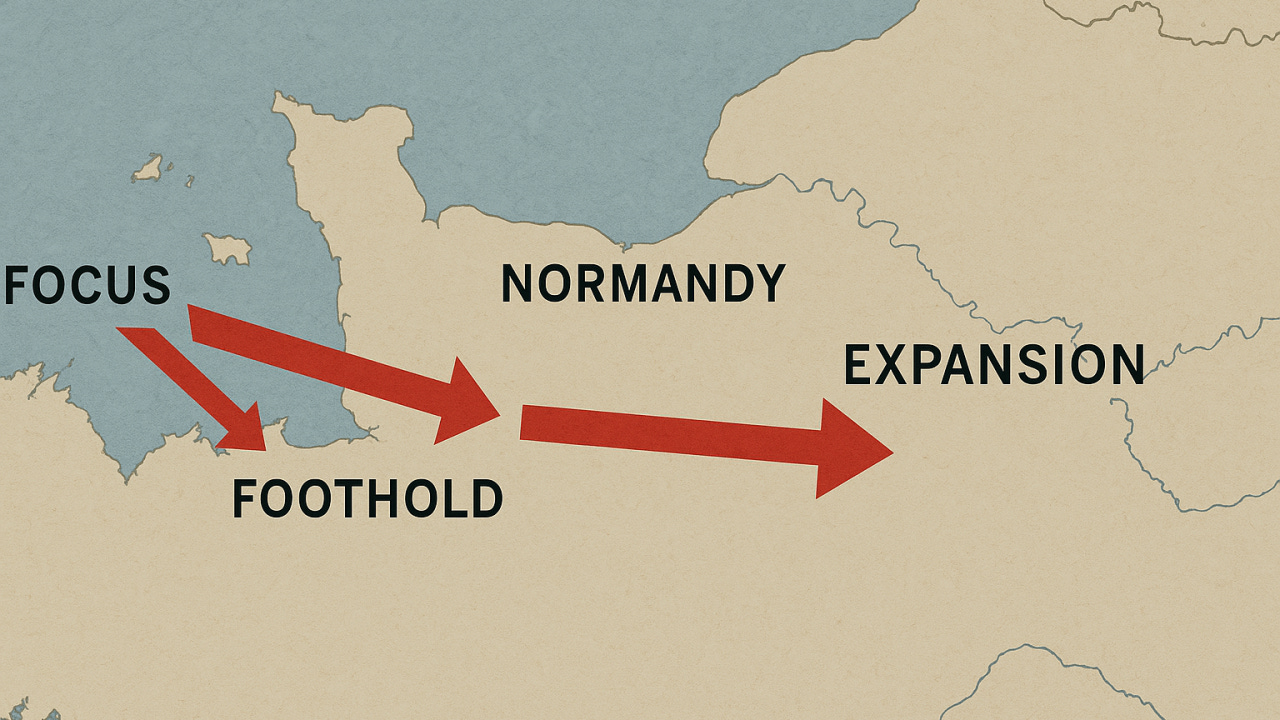
The key question is always the same. What carries across unchanged, and what must be rebuilt for this new market.
Good sequencing does not feel dramatic. It feels inevitable.
🧠 Founder Wisdom: A Braindump On GTM Loops
I wrote about this in one of my LinkedIn Braindumps in The Big Book of Braindumps series. It is the one where I broke down why the classic funnel model misleads founders, and why loops are a far more honest way to understand growth. You can read it here:
What I argued there is something I have seen repeatedly across the companies I work with. Most founders expand too early. Going wide feels exciting. Activity rises. New users appear. Different segments show interest. On the surface it looks like acceleration.
But excitement is not rhythm.
The truth is that distribution is the loud part of growth. Retention is the quiet part. One makes you feel busy. The other makes you durable.
In the Braindump I wrote that real growth happens when product usage creates more product usage. That is the loop. That is the engine. And you cannot force a loop into existence. You cannot spend your way into it. You cannot treat motion as proof.
If activation, retention and engagement are not compounding, every pound you invest only enlarges the leak.
The best founders understand that depth comes before scale. They earn the right to go wide. They build the loop first so expansion is supported, not improvised.
Because rhythm is not something you find by speeding up.
Rhythm is something you build by sequencing.
✏️ Patterns From Notion And Figma
Notion and Figma appear universal, but their early focus was extremely narrow.
Notion began with creative, design aware teams and early stage companies who were open to rebuilding workflows from scratch. Their template ecosystem amplified these early wins.
Figma solved a singular headache for designers. Version chaos, file silos and friction. Their browser based collaborative canvas won one role completely before spreading sideways into teams and upward into enterprise.
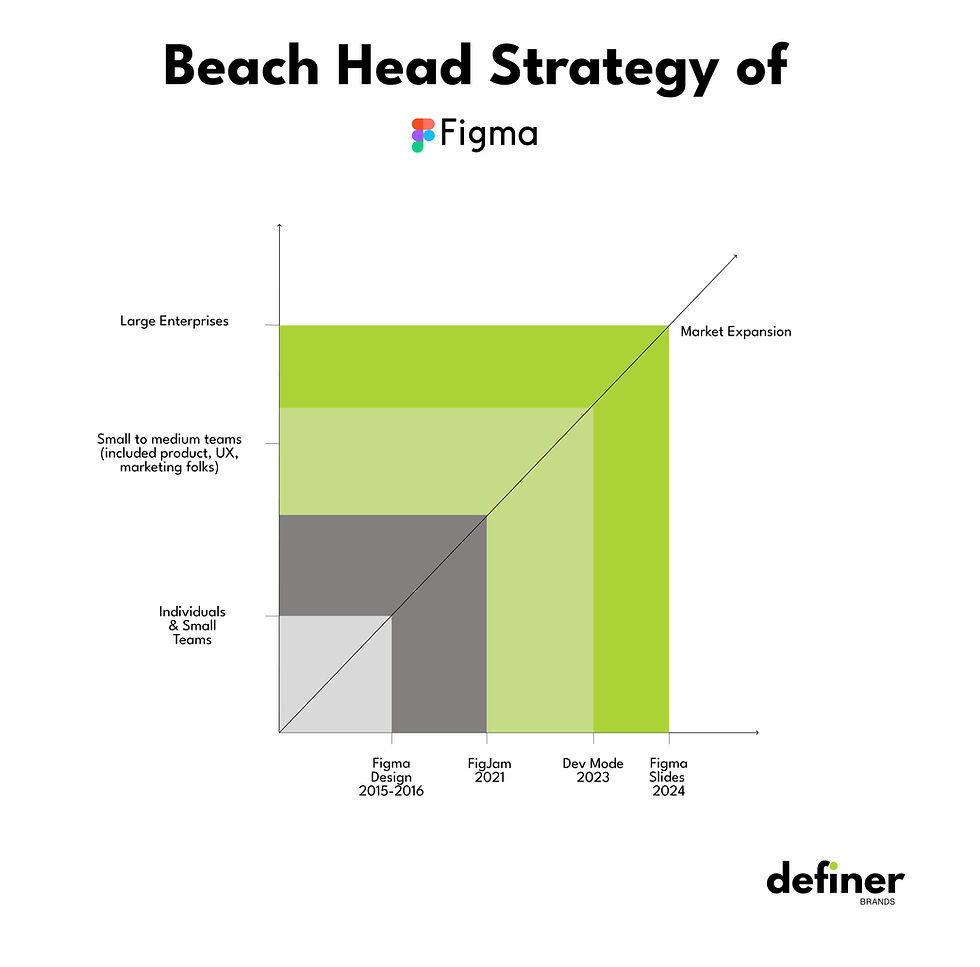
From the outside it looked broad. From the inside it was disciplined sequencing.
🌎 How Deel Sequenced The World
Deel appears to have expanded globally from day one, but the real story is a sequence of precise moves.
The company began by solving one painful job. Enable companies to hire a small number of remote employees without creating local entities. The compliance risk was heavy, and the value was immediate.
With that wedge proven, they expanded in clear steps:
Build infrastructure in more countries
Add products that extend the same core promise
Grow from startups to larger enterprises with identical pains
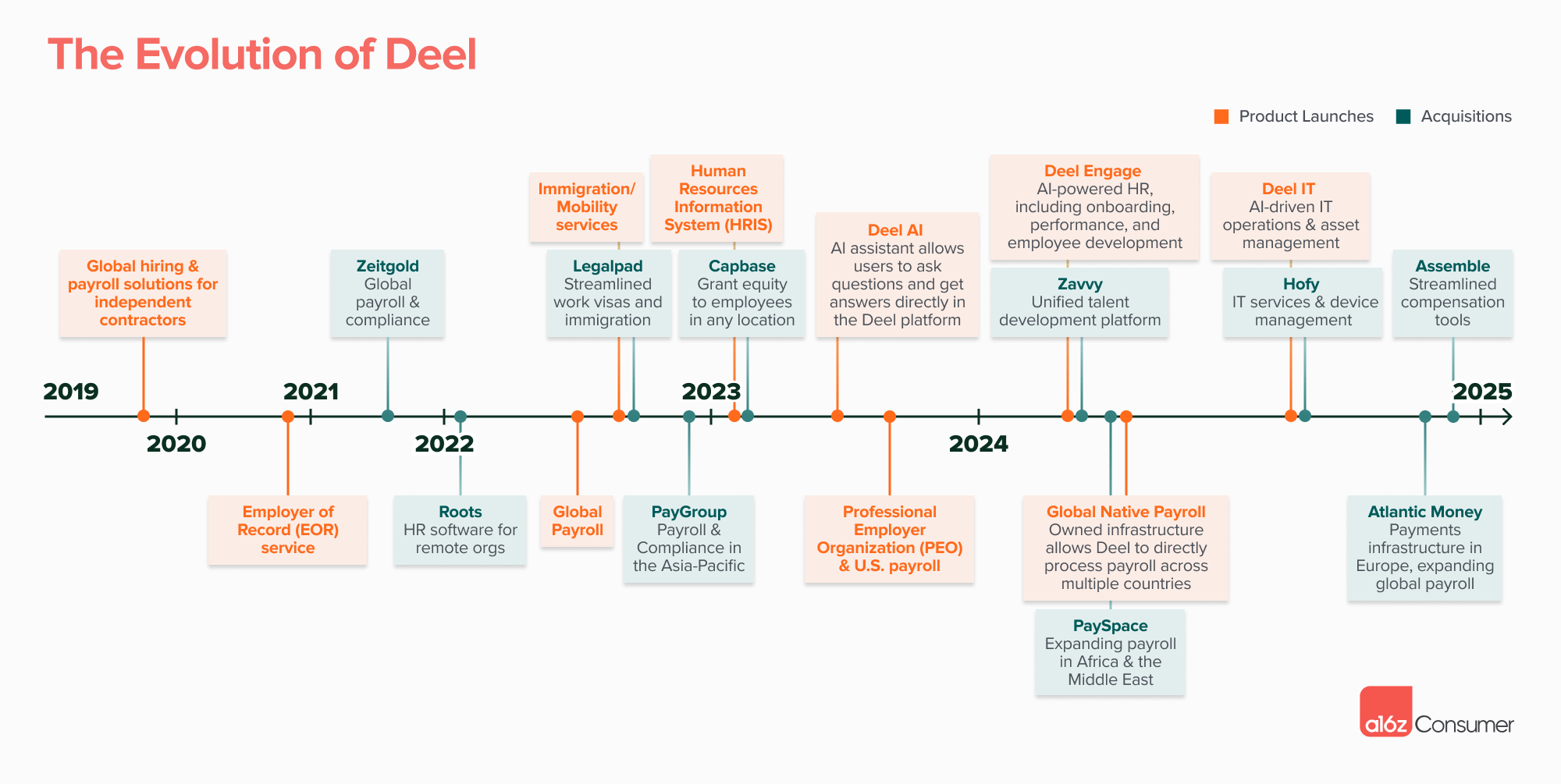
Global ambition. Local sequencing.
Global success usually starts with one wedge that the world cannot ignore.
🚨 Signals You Picked The Wrong Beach
Even with discipline, some beachheads will not hold. The task is to recognise this early.
Watch for these signs:
Champions who love you but cannot secure budget
Implementations that look like different products
Customers who do not introduce you to more of their kind
These signals tell you the motion cannot compound. When you see them, you have two options.
Narrow further and find the pocket that does work.
Or deliberately reset the beach and start again.
Ignoring the signs is always more expensive than starting again with clarity.
💡 Founder OS: The Beachhead Sequencing Canvas
If you want to run this discipline inside your company, the Beachhead Sequencing OS makes it operational.
This is the system I use to force focus when expansion pressure starts to creep in.