

👋 Hey, Chris here! Welcome to BrainDumps—a weekly series from The Founders Corner. If you’ve been reading along, you know this series is a preview of a bigger project. Well, it’s finally here: The Big Book of BrainDumps is out now!
It isn’t a theory book—it’s the founder’s field manual. Inside, you’ll find 70 powerful frameworks distilled from 30+ years scaling software companies to hundreds of millions in ARR, 20+ years investing in 500+ B2B tech startups, and over $1B of shareholder value created. From raising capital to hiring your first VP of Sales, this book turns scars and successes into practical playbooks you’ll return to again and again. I expect most copies will become well-worn, scribbled on, and dog-eared—because it works.

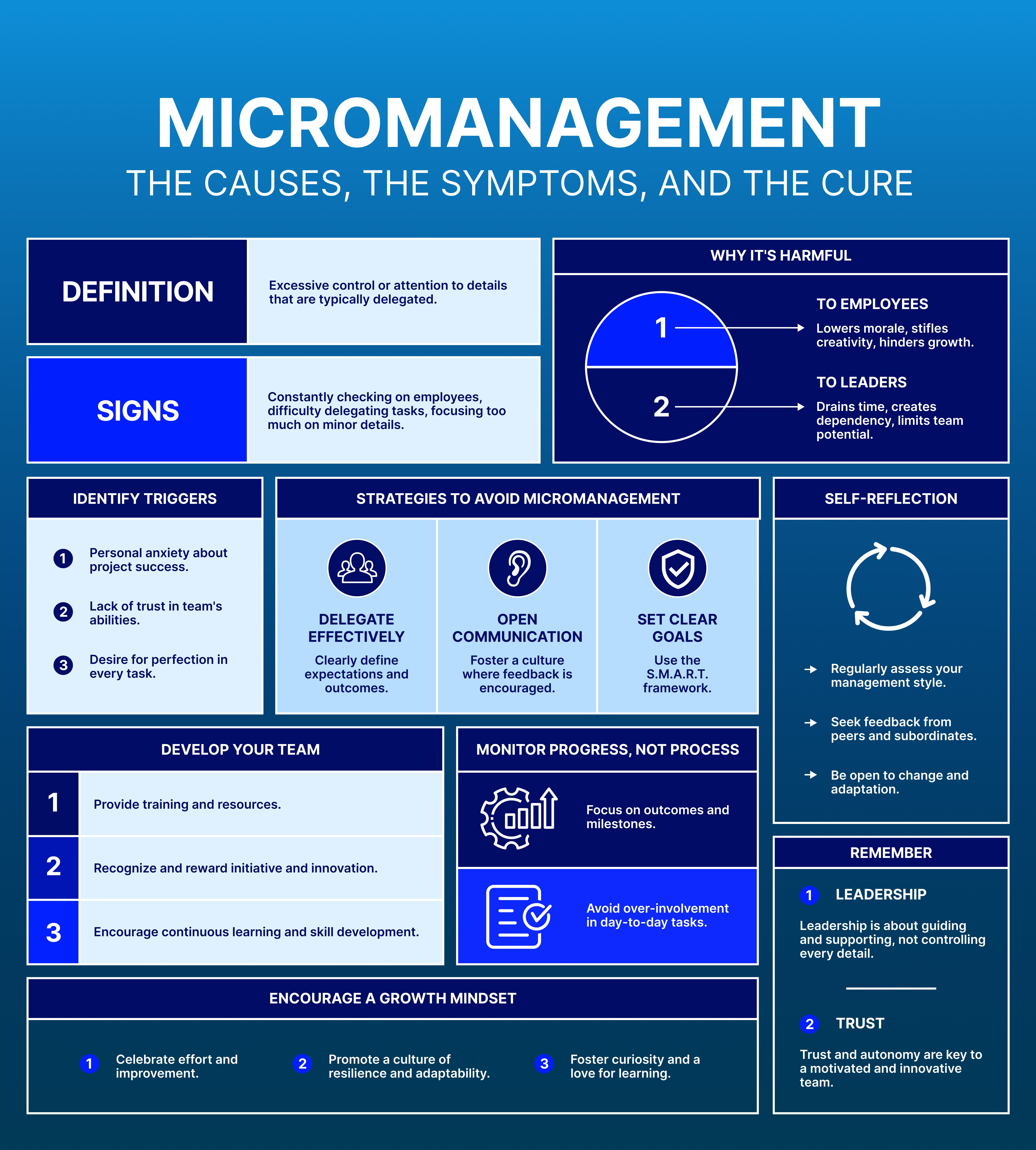
It rarely announces itself as a problem. It often masquerades as diligence, high standards, or “just making sure things are done properly.” But beneath the surface, micromanagement is almost always a symptom of misplaced control — and control, when overextended, becomes a growth inhibitor.
If you’re building a serious company, this is a leadership habit you cannot afford to ignore.
Table of Contents
What Micromanagement Really Is
The Hidden Damage It Causes
Why Founders Micromanage (Even When They Know Better)
The Shift From Control to Leadership
The Role of Self-Awareness
Develop the Team, Then Trust the Team
Culture: The Long-Term Cure
The Bigger Picture
What Micromanagement Really Is
At its core, micromanagement is not about caring too much.
It’s about controlling too much.
It shows up when leaders involve themselves in details that should have been delegated. When they rewrite work instead of reviewing it. When they sit in meetings where their presence isn’t required. When they check progress daily, not because it’s necessary, but because it soothes their own anxiety.
Most founders fall into this trap unintentionally. After all, you built the early version of the company. You wrote the copy. You sold the first customers. You reviewed every invoice. Your fingerprints are on everything.
But what makes you effective at 5 people will suffocate you at 50.
Scaling demands evolution.
The Hidden Damage It Causes
Micromanagement doesn’t just slow things down — it reshapes behaviour across the organisation.
When people feel overly monitored, they stop thinking independently. Initiative shrinks. Risk-taking disappears. Creativity narrows.
Instead of solving problems, they wait for permission.
Over time, this erodes confidence. Talented individuals begin to doubt their judgement. High performers disengage. The very people you hired for their capability start operating below their potential.
And from the leader’s perspective?
You become the bottleneck.
You spend your time reviewing minor decisions instead of shaping strategy. You operate permanently in the weeds. Burnout creeps in because everything still feels like your responsibility.
It’s exhausting. And it’s unnecessary.
Why Founders Micromanage (Even When They Know Better)
Micromanagement rarely stems from ego. More often, it stems from fear.
Fear that a project will fail.
Fear that standards will slip.
Fear that investors will notice weakness.
Fear that mistakes will cost the company time or credibility.
Add perfectionism into the mix — something many founders share — and you have a dangerous combination.
Perfectionism can drive excellence. But unmanaged, it drives interference.
There’s also a deeper psychological layer. Letting go of detail feels like letting go of control. And letting go of control feels risky — especially when you’ve sacrificed so much to build the business.
But here’s the truth: holding on too tightly creates the very fragility you’re trying to avoid.
Strong organisations are built on distributed ownership, not centralised control.
The Shift From Control to Leadership
Breaking the micromanagement cycle requires a deliberate leadership upgrade.
Not less care — better care.
Not less involvement — smarter involvement.
There are three fundamental pillars to making that shift.
1. Delegation as a Strategic Tool
Delegation is not about dumping tasks.
It’s about transferring ownership.
When you delegate properly, you do four things:
Define the outcome clearly
Set expectations and success criteria
Assign authority alongside responsibility
Step back
Too many leaders delegate responsibility but retain control. That tension creates confusion and undermines trust.
True delegation means accepting that someone else may approach the task differently than you would — and that’s not a flaw. It’s growth.
Effective delegation frees you to focus on strategic priorities while building capability beneath you. It multiplies your impact instead of stretching your bandwidth.
2. Replace Oversight With Alignment
Micromanagers check constantly.
Great leaders align deliberately.
There’s a difference.
Instead of hovering, establish structured rhythms:
Weekly outcome reviews
Clear milestone check-ins
Defined escalation protocols
When expectations are clear, constant monitoring becomes unnecessary.
Alignment replaces anxiety.
Communication should create clarity, not surveillance. Regular conversations about progress, blockers, and priorities ensure visibility without suffocation.
The goal is transparency — not control.
3. Focus on Outcomes, Not Process
One of the most transformative mindset shifts in leadership is this:
You are accountable for results, not for personally dictating the method.
Define measurable outcomes.
Agree what “good” looks like.
Clarify deadlines and constraints.
Then allow autonomy in execution.
If someone achieves the result differently than you would have, that’s not a loss of control. It’s a gain in capability.
When leaders obsess over process, they constrain innovation. When they obsess over outcomes, they unlock it.
The Role of Self-Awareness
Escaping micromanagement requires reflection.
Ask yourself honestly:
Am I intervening because it’s necessary — or because it makes me comfortable?
Do I trust this person’s ability — or have I failed to develop it?
Am I building leaders — or reinforcing dependency?
Leadership insecurity often hides behind busyness.
Self-awareness is the antidote.
Invite feedback from your team. Encourage them to challenge unnecessary involvement. Psychological safety must apply upward as well as downward.
Develop the Team, Then Trust the Team
If you feel compelled to micromanage, it may signal a capability gap — but the solution isn’t tighter control. It’s stronger development.
Invest in training.
Clarify roles.
Upgrade systems.
Strengthen accountability frameworks.
The more capable your team becomes, the easier it is to release control without anxiety.
Trust is not blind optimism. It’s built on clarity, competence, and shared standards.
And once trust is established, scale accelerates.
Culture: The Long-Term Cure
Micromanagement is rarely just a personal flaw. It often reflects organisational design.
If your systems lack clarity, if accountability is fuzzy, if communication is inconsistent — leaders compensate with control.
The cure is cultural.
Build an environment where:
Initiative is recognised
Mistakes are framed as learning
Accountability is peer-driven
Ownership is expected
In high-trust cultures, micromanagement becomes unnecessary because performance is internally regulated.
And here’s the paradox:
The more control you relinquish strategically, the more control you actually gain over outcomes.
The Bigger Picture
Micromanagement is both a symptom and a signal.
It signals that leadership maturity needs to evolve. It signals that the organisation is transitioning from founder-led execution to team-led performance.
The companies that scale successfully are not those where the founder stays involved in every decision.
They are the ones where the founder builds leaders who no longer need supervision to win.
Great leadership is not about gripping tighter as complexity increases.
It’s about designing systems, building people, and trusting them enough to operate.
Control feels powerful.
Empowerment is powerful.
If you want growth, resilience, and long-term success, the choice is clear.
-Chris Tottman
One of the most difficult abilities for any leader to develop is the willingness to allow their team to make mistakes. If your team doesn't have the freedom to make mistakes, you haven't actually delegated anything.
And sometimes that means allowing your team to do something in a way that you're pretty sure won't work.
I still struggle with this at times, even after years of practicing it. But this is where the real magic happens. Because sometimes your team will surprise you and get better results with their own approach than the approach you were sure was better.
It's rare for people to truly take responsibility until they know they're responsible for both mistakes and successes. But at least on the teams I've worked with, once people understand they own both sides, they almost always step up and deliver far more than I would have been able to if I'd done it myself.
You build the early company by being in everything.
Then later you are supposed to delegate, step back, and stop yourself becoming the bottleneck.
In my experience as a founder, the hardest part is that there is no clean line for when that shift is meant to happen.
It's very hard to tell when staying close is still helping and when it starts getting in the way.