

Here is what a VC’s inbox looks like at 9am on a Tuesday.
Forty emails. Roughly thirty-five of them start with a variation of: “I’m the founder of [Company], building [product] for [market]. We’re raising $X and would love to connect.”
The other five look different. One of them references a specific investment the partner made eight months ago and draws a direct line to why it’s relevant. One opens by naming the exact thesis paragraph from the fund’s most recent LP letter. One identifies a gap in the portfolio and frames the company as filling it.
Those five get read. Maybe three get a reply. Maybe one leads to a meeting.
The thirty-five get archived. Not because the companies are worse. Because the emails are indistinguishable.
This is the problem that most fundraising advice gets wrong. It tells founders to “personalise” their outreach without telling them how. The result is outreach that has someone’s name in the subject line but reads as generic as everything else in the pile.
Genuine personalisation - the kind that makes an investor feel like you specifically researched them, not their fund category - requires knowing things that aren’t on the first page of a Google search. It requires reading the subtext of their portfolio decisions. Understanding which of their theses have played out and which haven’t. Knowing what they said at a conference two years ago that still shapes how they evaluate deals today.
That takes time. Most founders don’t have it.
What you’re actually up against
Before the prompts, the numbers. Not to discourage - to calibrate.
According to DocSend’s Startup Index, the average founder contacts 58 investors and holds 39 meetings to close a seed round. That process takes 12 to 16 weeks. You are not the only founder doing this. Every investor you want to meet is receiving versions of this same approach from dozens of people raising similar rounds, in similar markets, with similar decks.
The average cold email to a VC has a response rate of around 3%. One analysis of 11 million cold emails found that personalisation beyond a first name increases reply rates by 340%. Warm introductions convert at 10% or higher - meaning a single warm intro to the right person is worth four to five cold emails in expected value.
The difference between a 3% response rate and a 10% response rate isn’t luck. It’s the quality of the signal in your email that tells an investor: this founder did their homework. That signal is exactly what Claude can build in two minutes.
The before and after
Same company. Same round size. Same investor. Two completely different emails.
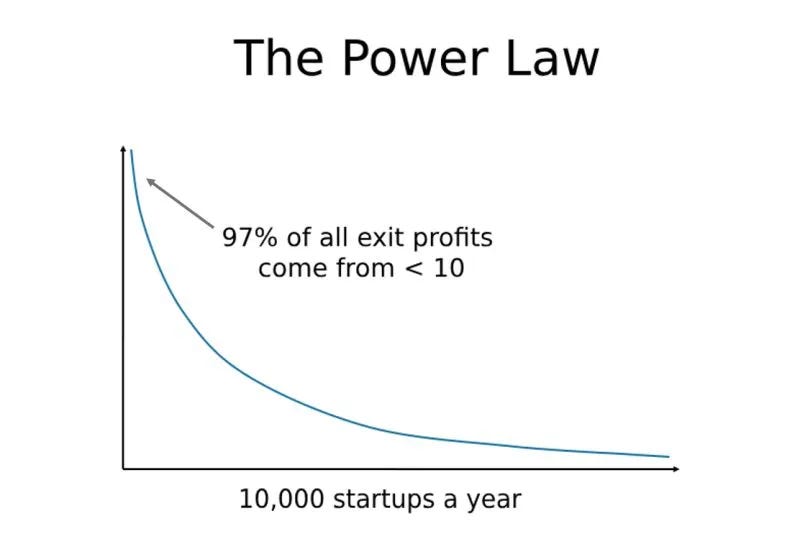
To understand why the second version converts, you need to understand the economic logic behind every VC’s inbox. According to the Power Lae, 97% of all VC returns come from fewer than 10 companies out of every 10,000 they consider. This creates a specific psychology: an investor who passes on the next Airbnb is remembered forever. Backing a failed bet is just part of the job. Your email doesn’t just need to be good - it needs to signal that you might be an outlier.
The email that signals you’re worth a meeting isn’t the one with the best writing. It’s the one that shows you understand this investor’s specific thesis and have built something that fits it.
What’s inside this guide
Five prompts covering the complete outreach system:
Fund thesis extraction - how to identify what a VC actually believes, in their own words, before you write a single line of outreach
The hook builder - turning their thesis into the opening line that makes them read the next sentence instead of archiving
The full email sequence - first touch, two follow-ups, with exact timing and transition language between each one
The warm-intro ask - how to identify and approach portfolio founders for introductions, using language that actually converts
The reply handler - four templates for the four types of VC response, from “tell me more” to “not for us right now”
Prompt 1: Fund thesis extraction
This is the foundation. Before you write a single word of outreach, you need to understand what this investor actually believes - not what’s on their website, which is marketing, but what they’ve revealed about their thinking through their investments, their writing, and what they say in interviews.
Run this prompt first. It takes sixty seconds. It changes everything that follows.
Copy this prompt into Claude. Replace the [brackets] with your investor’s details.
I'm preparing to reach out to [PARTNER NAME] at [FUND NAME] about my fundraise.

Before I write the email, I need to understand their actual investment thesis as deeply as possible - not the marketing version on their website, but what they genuinely care about based on their revealed preferences.

Please help me research:

1. Their portfolio signals: What do their last 8-10 investments have in common? Are there patterns in market, stage, business model, or founder profile that suggest what they're actually optimising for?

2. Their public thesis: What have they written, said in interviews, or posted publicly in the last 12-18 months? What specific views have they expressed about the market I'm in?

3. Their gaps: Based on their portfolio, what's missing? Where do they have exposure and where don't they? Is my company filling a gap or adding to existing exposure?

4. Their evaluation signals: Based on what they've said publicly about how they evaluate companies, what are the 2-3 things they care most about at my stage?

The fund is [FUND NAME]. The partner I'm targeting is [PARTNER NAME]. My company is [BRIEF COMPANY DESCRIPTION - one sentence]. I'm raising [ROUND SIZE] at [STAGE].

Give me a structured briefing I can use to write highly personalised outreach that references their actual views, not generic investor-speak.
What you’ll get back is a structured briefing - portfolio themes, on-record views, known gaps, and the evaluation signals that matter to this specific investor. Save it. You’ll use it in Prompt 2 and in your meeting prep.
🔒 You've got the research. Here's what you do with it.
Prompt 1 gives you the research. What comes next turns that research into a booked meeting.
What makes this work isn’t any single prompt. It’s the sequence: the briefing from Prompt 1 feeds the hook in Prompt 2, which feeds the email in Prompt 3. Run them in order, across your whole list, before you send anything.
✓ Prompt 2: The hook builder - five opening line options for the same investor, each using a different angle (their public writing, a portfolio connection, a thesis they’ve articulated, a gap they haven’t filled). You pick the one that’s most specific and most true.
✓ Prompt 3: The full email sequence - first touch, two follow-ups, with exact timing guidance and the transition language between each one. Built from your Prompt 1 briefing and Prompt 2 hook. Copy, fill in your numbers, send.
✓ Prompt 4: The warm-intro ask - the highest-converting outreach strategy most founders underuse. Identifies which portfolio founders to approach and gives you the exact LinkedIn message and follow-up blurb that turn a cold ask into a warm intro.
✓ Prompt 5: The reply handler - four response templates for the four VC reply types: “tell me more”, “send the deck”, “not typically our space”, and “can you send references”. The language that keeps momentum moving after the first reply lands.
✓ The full Founders Corner tool stack - every article from narrative building and pitch stress-testing to VC research, meeting prep, data room, and term sheet analysis. 50+ founder tools covering every stage of the fundraising process.
Prompt 2: The hook builder
You have the briefing. Now you need the opening line - the specific sentence that makes the investor keep reading instead of archiving.