

One of the hardest lessons founders learn is that a successful raise has very little to do with how many investors you contact, and almost everything to do with contacting investors who are actually able to say yes.
When I was a founder, this was the part that frustrated me most.
There was no clear way to see who invested at my stage, who understood my sector, who wrote the cheque size I needed, or whether they even invested in my part of the world.
I kept having conversations that were never going anywhere.
This tool fixes that.
It gives founders the clarity I wish I’d had: a simple way to know who is a realistic match before you spend hours chasing intros or writing messages.
Below is the tool that helps you read investor fit the same way an experienced VC would.
1. Where Your Fundraise Begins
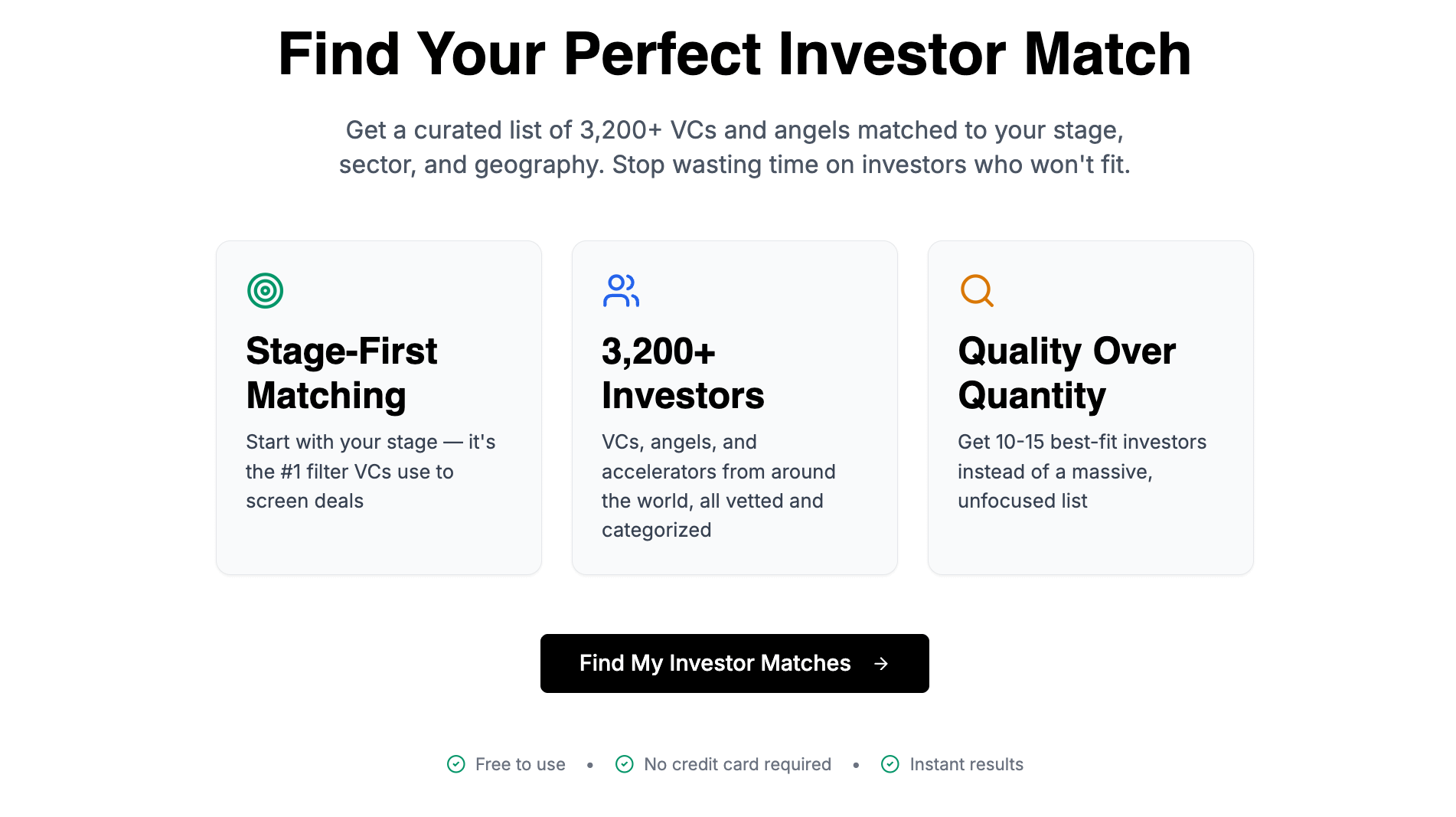
The opening screen sets the expectation.
You get a curated list of investors matched to your stage, sector, geography and raise amount.
Three ideas sit at the heart of the tool:
Stage first Investors sort deals by stage before anything else. If your stage doesn’t line up, nothing else matters.
Quality over quantity This tool doesn’t hand you hundreds of names. It gives you the right ten to fifteen.
A database that keeps moving 3,200+ investors, refreshed continuously. No stale websites. No outdated lists.
The point is clarity, not volume.
2. Company Stage
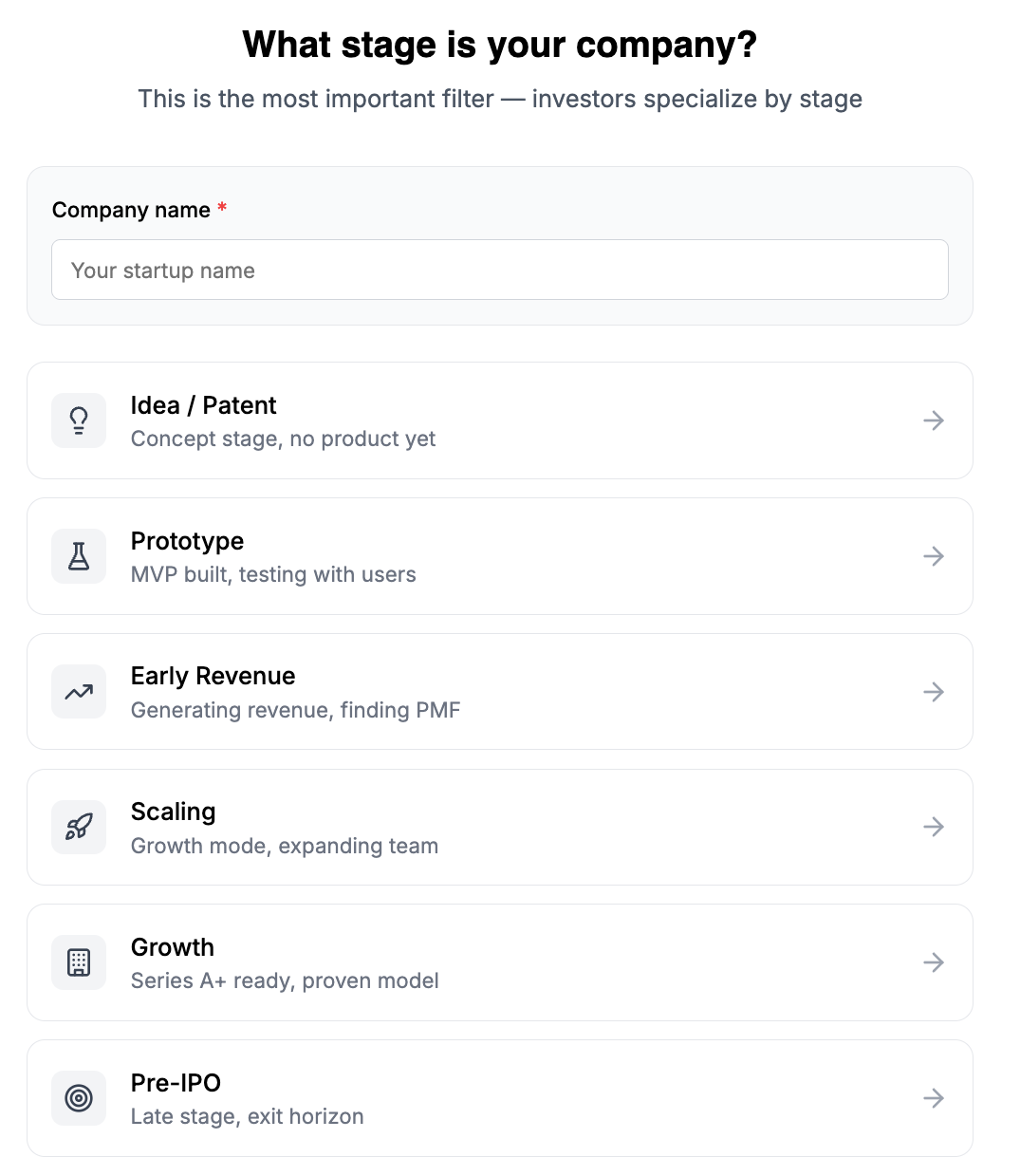
Next, you choose the stage of your company: Idea, Prototype, Early Revenue, Scaling, Growth, Series B or Pre-IPO.
This matters because investors specialise heavily by stage.
It shapes how they see risk, what traction they expect, how they read the team, and how big a cheque they write.
As a founder, I never had visibility on this.
I couldn’t tell who genuinely invested early and who only said they did.
This step removes the investors who were never going to be a fit.
It protects your time and sharpens your outreach.
Want to get in front of 250k+ founders and investors?
For sponsorship opportunities across The Founders Corner newsletter and LinkedIn (160k followers), email: founderscornermedia@gmail.com
3. Sector
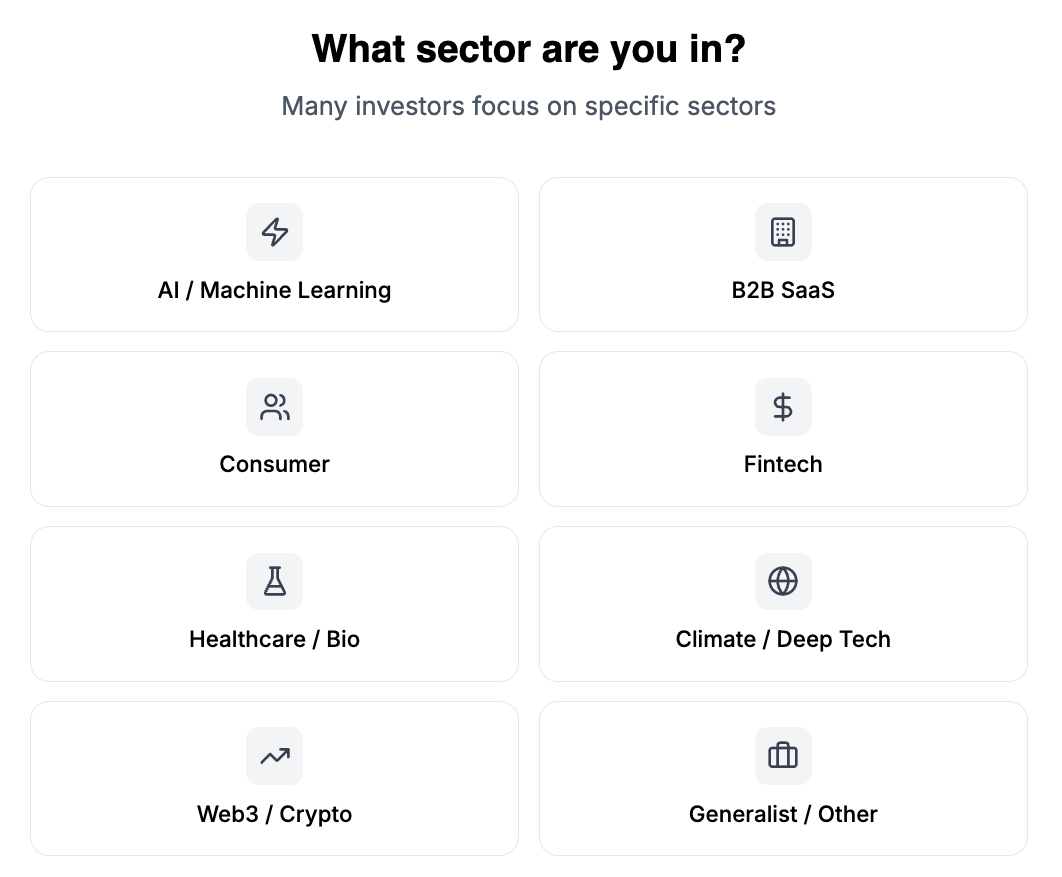
Here you pick your sector: AI, SaaS, consumer, fintech, healthcare, deep tech, web3 or generalist.
Investors rarely cover eight sectors at once.
They build deep expertise.
They understand the revenue model, the go-to-market motion, the customer, and the retention benchmarks for your category.
Sector alignment does more than lift reply rates.
It lifts the quality of the conversation.
This is where the tool filters for investors with real expertise in your market, not passing curiosity.
4. Raise Amount
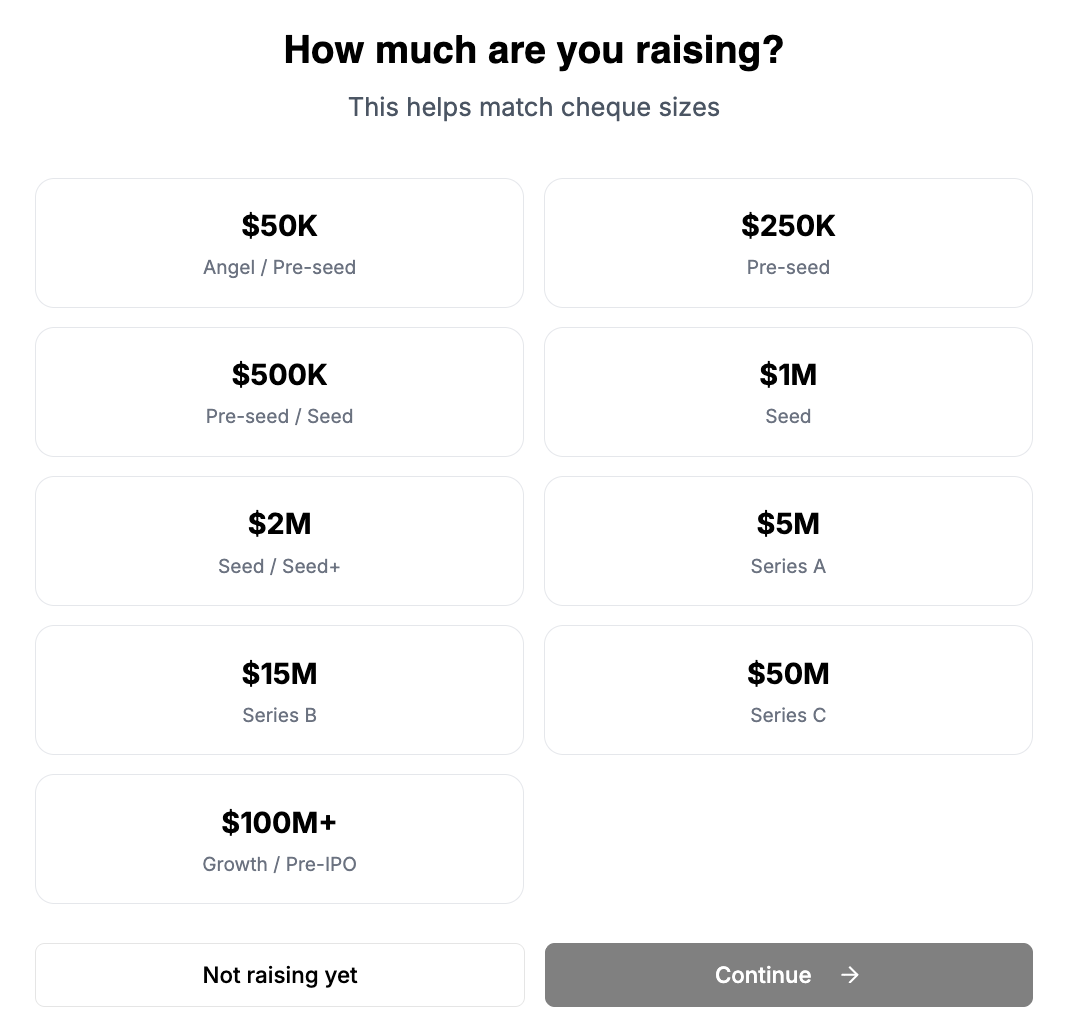
Then you choose how much you’re raising.
Cheque size is one of the least understood filters in venture.
Investors have minimums, maximums, fund allocation rules and portfolio construction limits.
If your raise falls outside their range, the conversation is over before it starts.
I learned this the hard way as a founder.
I spent far too long talking to funds that were never going to take part.
This tool stops that happening.
It lines your raise up with investors who can actually join your round.
5. Geography and Target Markets
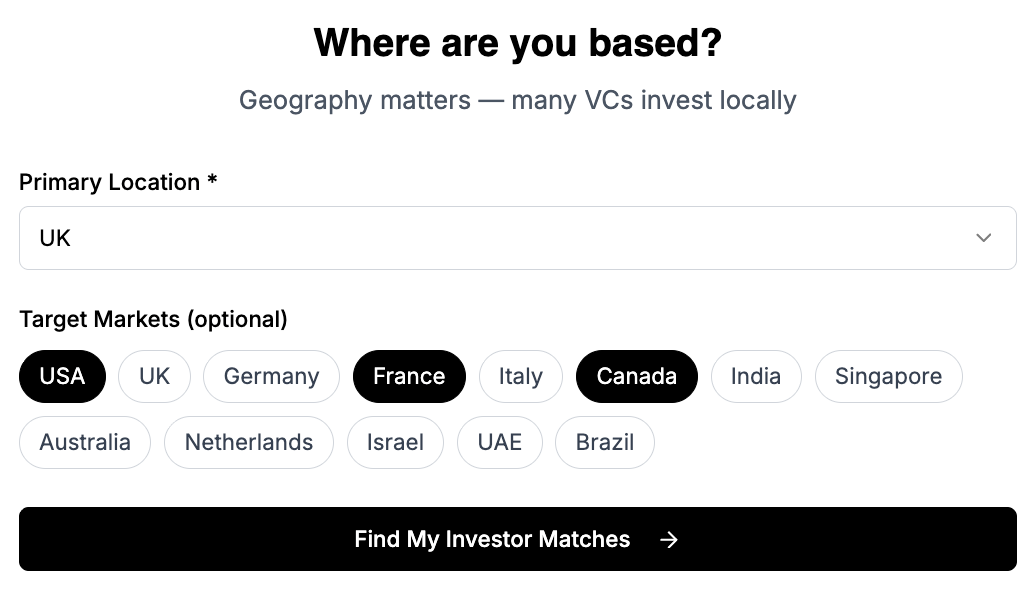
This step asks where you’re based and which markets you operate in.
Most funds invest locally, or close to it.
That isn’t just preference. It’s practical.
They understand the regulation, the hiring market and the competitive landscape.
Founders often overlook this.
Geography can quietly kill a deal.
This step makes sure you only speak to investors who realistically deploy capital in your region.
6. Your Investor Matches
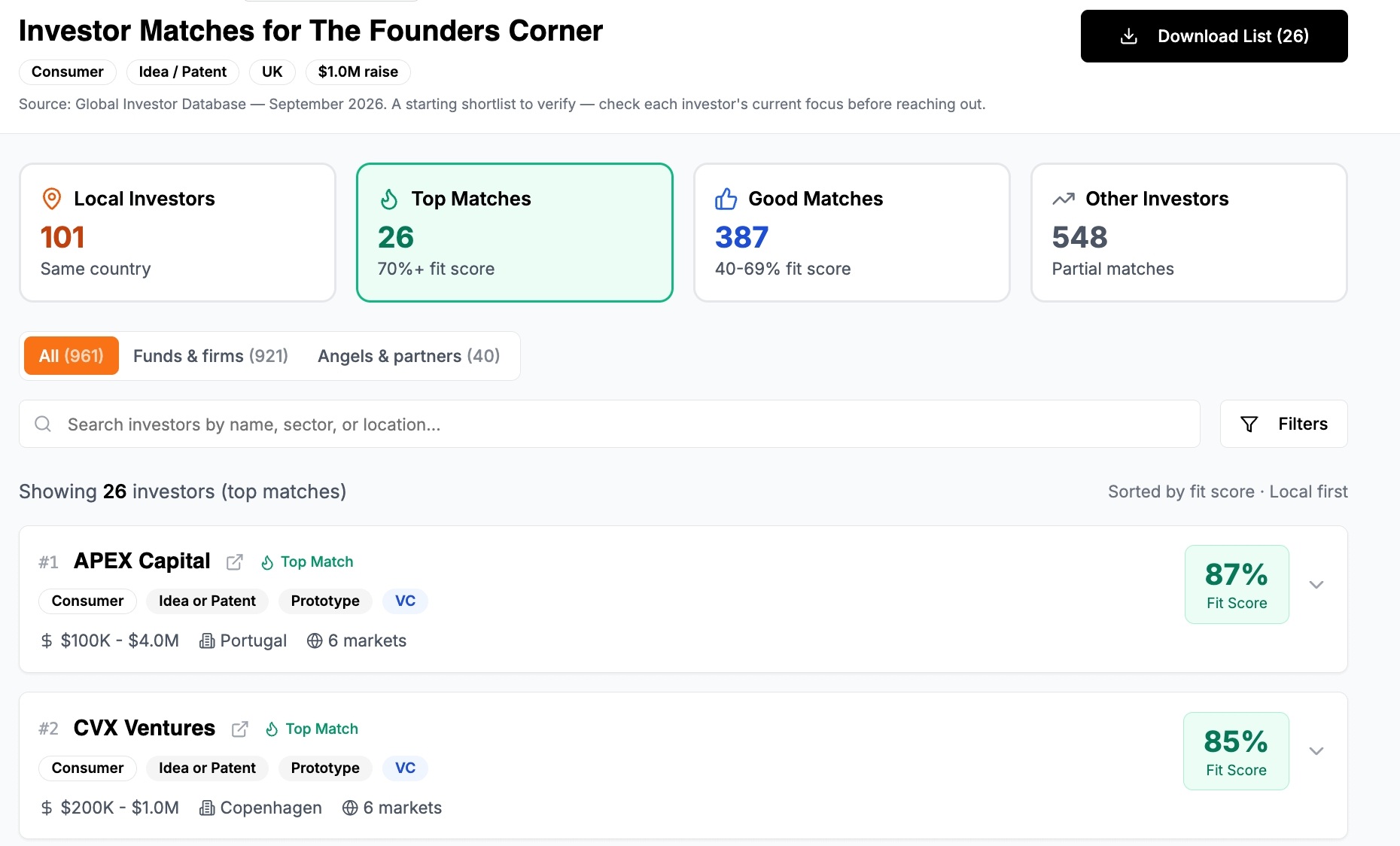
The final page gives you a personalised list of investors, ranked by fit score.
You see:
Top Matches
Good Matches
Partial Matches
And you understand why, through a clear breakdown of:
Sector fit
Stage fit
Geography alignment
Cheque size alignment
The markets they invest in
Each investor card opens into a transparent explanation of where the fit is strong and where it’s weaker.
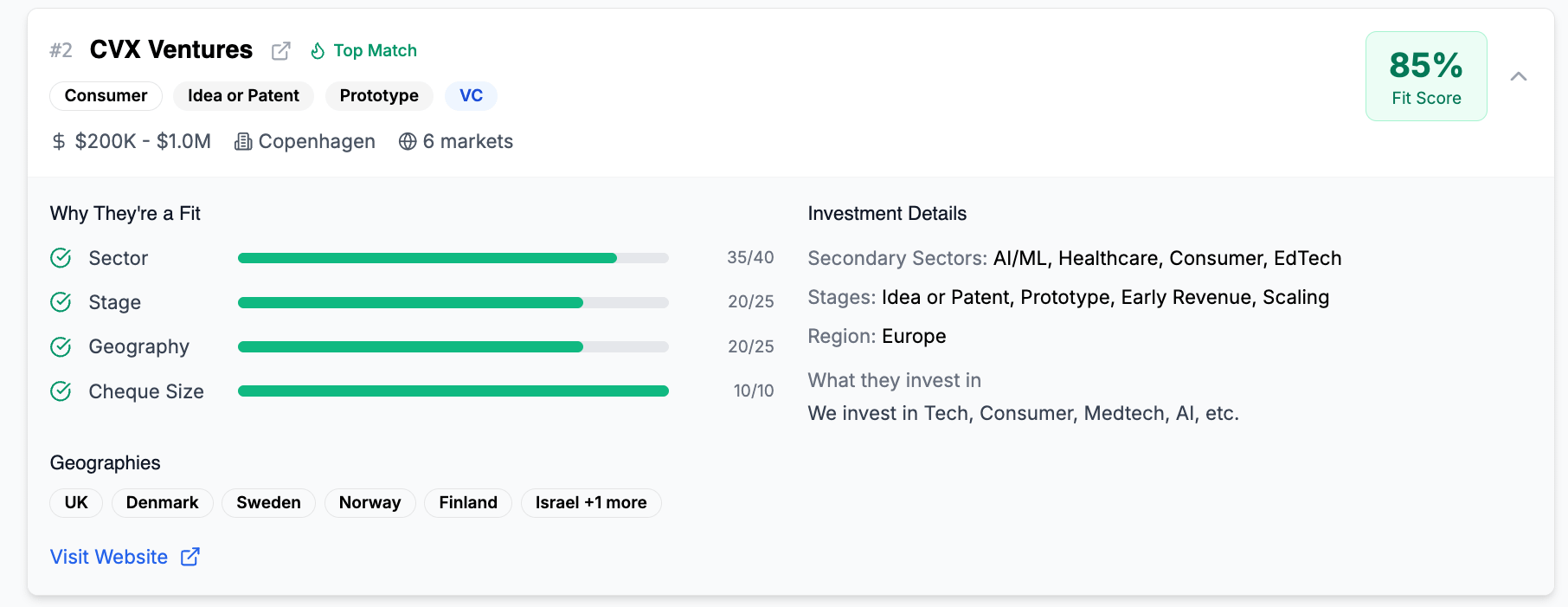
This is the part I wish had existed when I was raising.
Not just names. Insight.
Not just access. Understanding.
It makes outreach more deliberate, more focused, and far more productive.
Closing Thoughts
I built this because founders need a clearer way through the investor landscape.
Most fundraising mistakes aren’t about the product or the story. They come from talking to the wrong people at the wrong moment, and many founders only realise it after weeks of silence.
This tool removes that blind spot.
It shows you who is likely to care about your stage, your sector, your geography and your raise, from a pool of more than 3,200 investors.
If I’d had something like this when I was building, my fundraising would have been calmer and far more focused.
If you want to dig into the signals behind a successful raise, these are worth reading:
The Cold Outreach That Closed Mark Cuban - a real-world look at how elite founders win investor attention.
The Pitch Deck Test Investors Run In Thirty Seconds - the fast evaluation every VC runs before deciding whether to keep reading.
The Term Sheet Walkthrough - the terms that quietly shape founder outcomes long after the round has closed.
To see which of the 3,200+ investors match your company with the same clarity, the full tool is just below.
If you’re raising this year, you’ll want it.