

The Boston Fed reported in August 2026 that the share of BDC loans carrying payment-in-kind terms rose from roughly 6% in early 2022 to about 10% by early 2026. The researchers read that spread across industries, not concentrated in a few troubled sectors, as evidence of cash flow pressure right through the middle market.
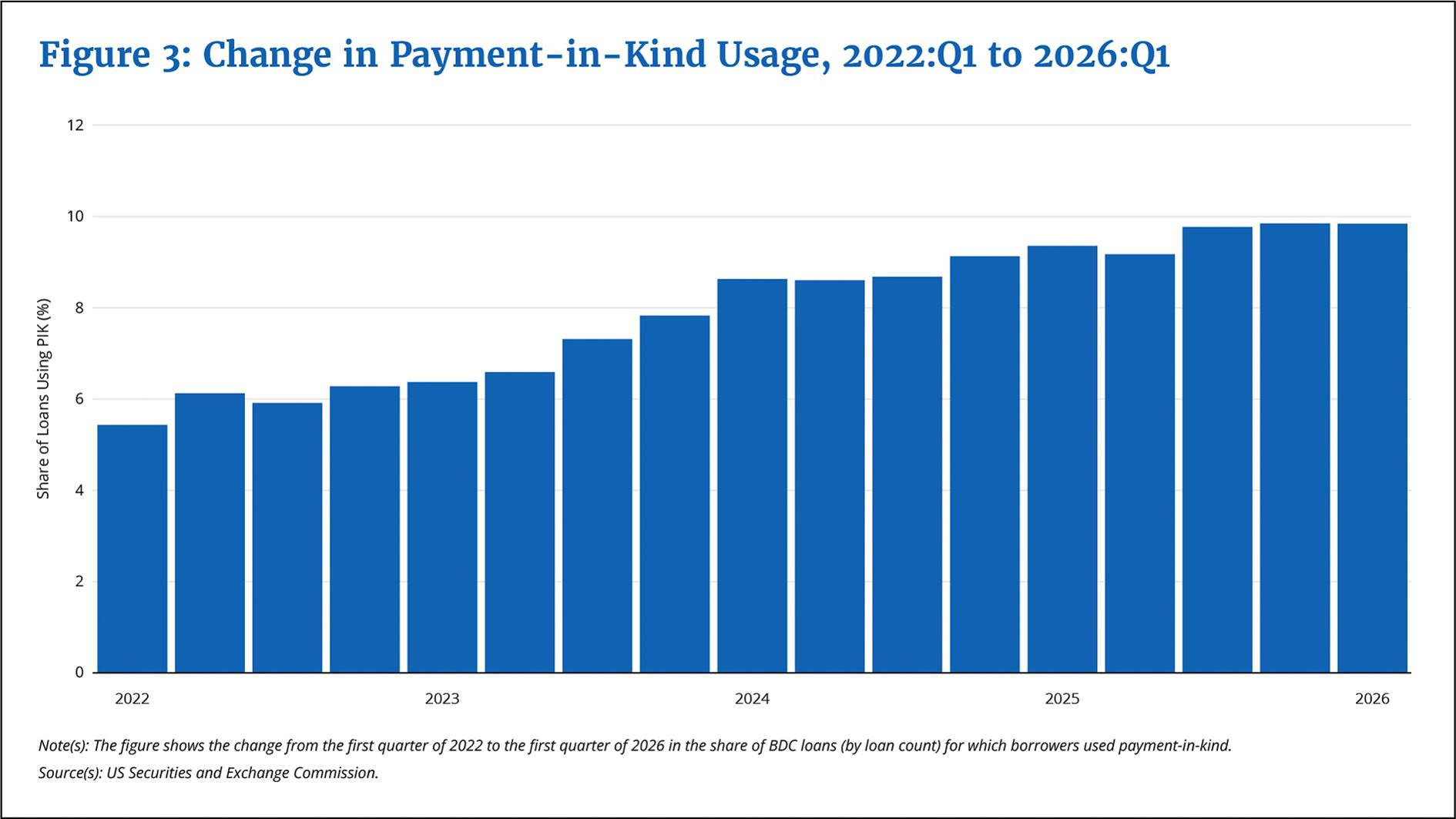
Translated out of credit-market language: more founders than ever are signing loans where the interest is not being paid, it is being added to the balance.
Most of them are looking at the wrong number when they sign.
A mezzanine fund does not decide what to charge you. It decides what it needs to earn, then reverse-engineers a term sheet that gets there. The target is well documented. Mezzanine and junior credit strategies aim at a blended 12% to 20% IRR, and per GF Data’s 1H 2026 figures the all-in cost of a lower-middle-market mezzanine tranche runs 12% to 15% in cash before any equity upside is counted.
Now look at what founders actually negotiate. They negotiate the coupon. One number out of four, and usually the one the lender cares about least.
Here is what that costs, worked end to end on a single deal.
A £10M facility quoted at “10%” costs 14.3% in cash and hands the lender 16.8% once warrants are counted. Every point of that gap is disclosed somewhere in the documents. None of it is in the headline.
Table of Contents
The lender builds a number, not a rate
Follow the money in the order it leaves
PIK is not cheap money. It is an option you wrote
The counterintuitive bit: repaying early costs you more
Warrants, the only lever priced on your success
The nine-line term sheet audit
The Mezzanine & Venture Debt Decoder, the full nine-tab model
Frequently asked questions
1. The Lender Builds a Number, Not a Rate
Mezzanine returns are assembled from four components, and the market ranges for each are stable enough to use as a checklist.
▫️ Cash coupon: 8% to 12%. Contractual, paid quarterly or semi-annually. The number on the front page.
▫️ PIK accretion: 2% to 4%. Interest added to the principal instead of being paid. No cash cost today.
▫️ Fees: 1% to 3%. Origination, structuring, arrangement, sometimes an original issue discount. Charged at close, at exit, or both.
▫️ Warrants or equity participation: worth 2% to 8% of additional IRR. The equity kicker.
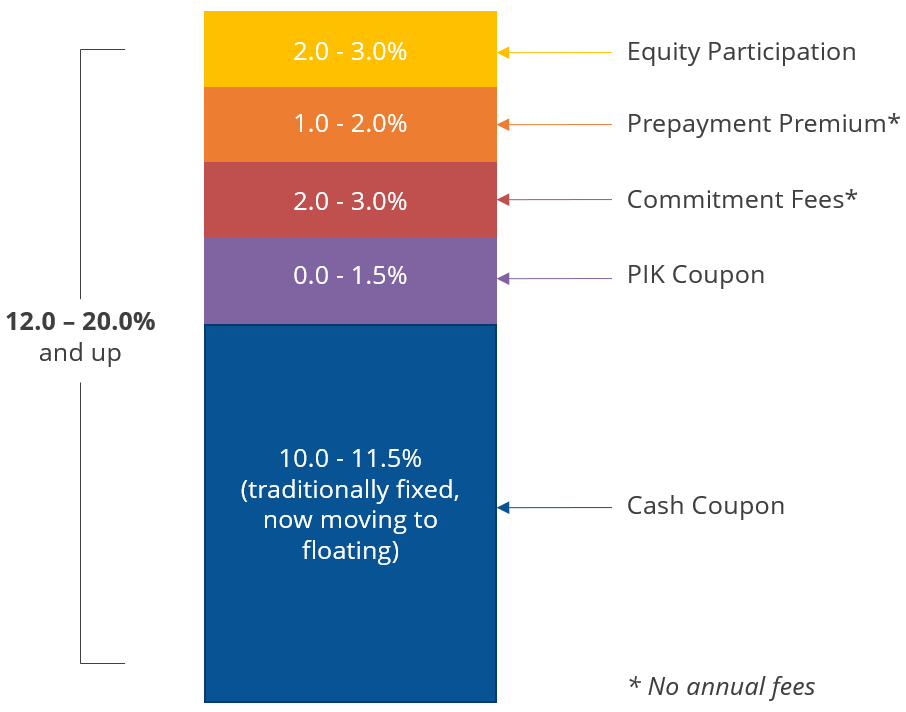
Read that list as a founder and three of the four look like rounding errors. Read it as a lender and it is a portfolio construction problem: how do I reach 17% while keeping this borrower solvent long enough to pay me?
That reframe is the entire negotiation. You are not asking for a discount. You are asking the lender to collect the same return in a different currency. And the four currencies cost you wildly different amounts depending on what happens next.
“You cannot negotiate the lender’s return down. You can only choose which of your futures pays for it.”
Want to get in front of 250k+ founders and investors?
For sponsorship opportunities across The Founders Corner newsletter and LinkedIn (160k followers), email: founderscornermedia@gmail.com
2. Follow The Money In The Order It Leaves
Take a facility priced the way most 2026 term sheets actually read.
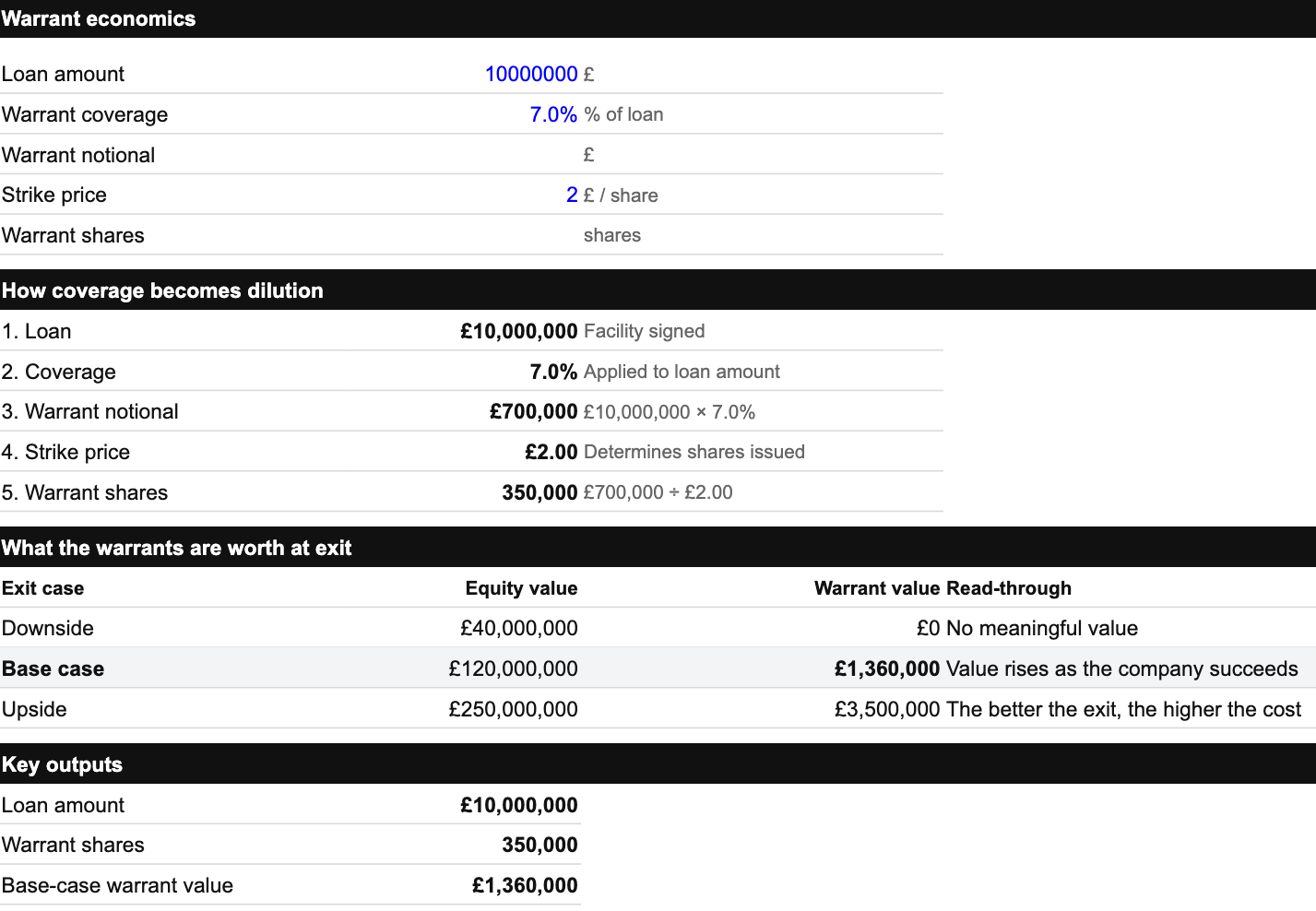
£10M principal. 10% cash coupon. 3% PIK. Four-year bullet. 2% upfront fee. 3% exit fee. Warrant coverage of 7% of the loan amount, struck at £2.00.
Do not read that as a stack of terms. Read it as a timeline, because the cost only reveals itself in the order the money moves.
Day one. You sign for £10M. £9.8M arrives. The 2% arrangement fee is deducted before the wire, and interest is charged on the full £10M regardless. You are paying for £200,000 you never touched, for four years.
Every year after that. You pay a 10% coupon. But the 3% PIK is quietly adding to the balance underneath it, and if the coupon is charged on the outstanding balance rather than the original principal, your interest bill climbs every year without a single term changing. Year one costs £1.00M. Year four costs £1.09M. Nobody sent you a letter about it.
Exit day. The balance you repay is not £10M. Four years of PIK have grown it to £11.26M. On top of that sits a 3% exit fee, another £300,000, agreed at signing by someone who assumed it was a rounding error and never modelled it.
Exit day, again. The warrants are exercised. On a £120M base case they are worth £1.36M to the lender.
Now price the whole thing as one number, the way the lender does.
▫️ Coupon alone: 10.00%
▫️ With the arrangement and exit fees: 11.28%
▫️ With the PIK accretion: 14.25%
▫️ With the warrants, from the lender’s side: 16.81%
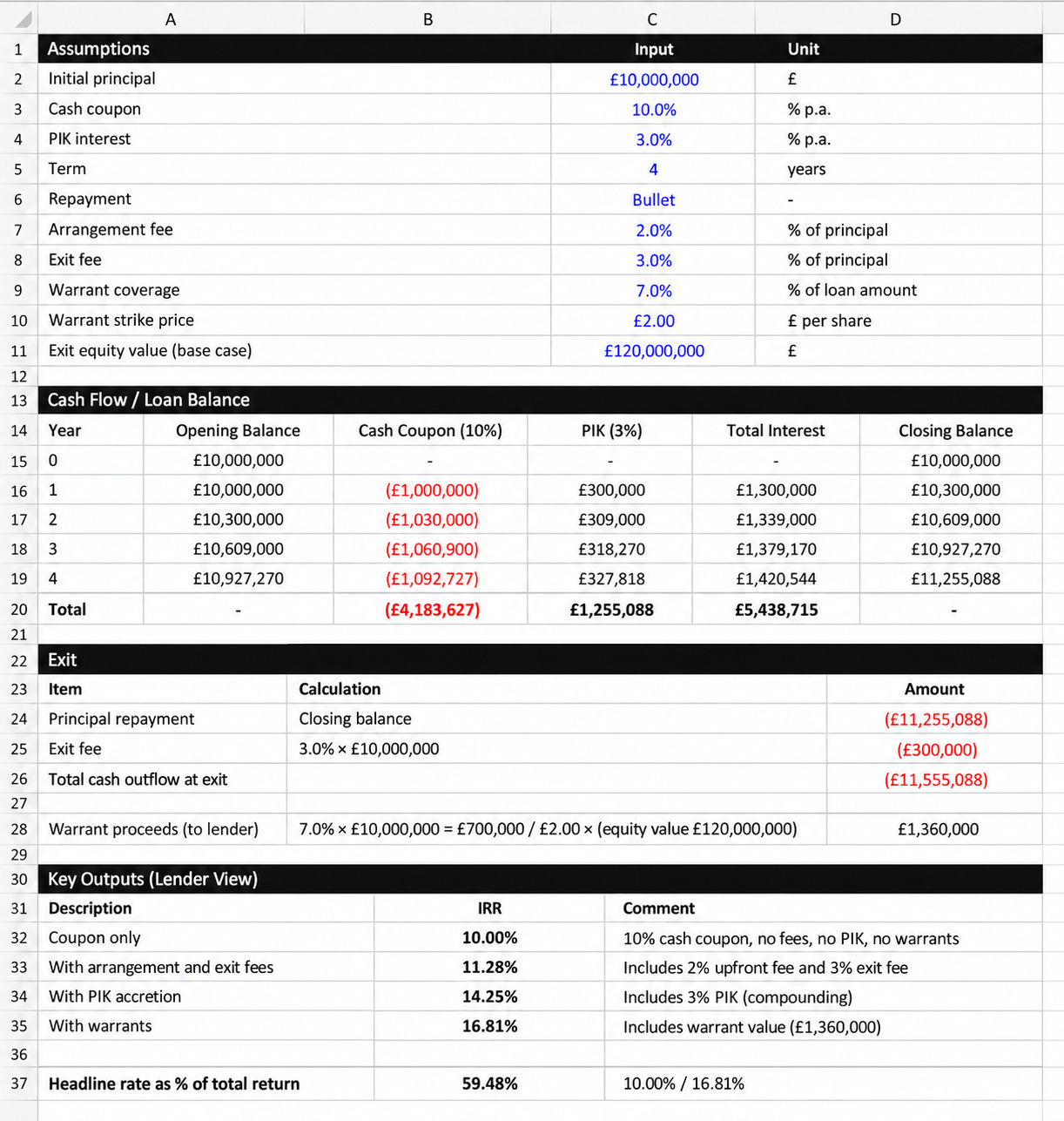
The headline rate accounted for 59% of the price. The rest arrived through the fee schedule, the compounding and the cap table, none of which appear on the front page of the term sheet.
The one-hour tell. Ask any lender to send you the same deal priced as a single blended IRR at your base-case exit. If it comes back within the hour, they have modelled their own deal and you are negotiating with someone competent. If it takes three days, they have never seen it end to end, which is a different and larger problem for you.
3. PIK Is Not Cheap Money. It Is an Option You Wrote.
PIK is the most seductive line in a mezzanine term sheet, because it converts a cash cost into a future cost and founders are structurally optimistic about the future.
It is also the line the entire credit market is currently watching. Alongside the Boston Fed data, PIK income at the fifteen largest listed BDCs fell to 8.2% of total interest income in Q1 2026, the lowest reading in two years, while PIK income across the nine largest non-traded BDCs rose roughly 42% year on year in the same quarter.
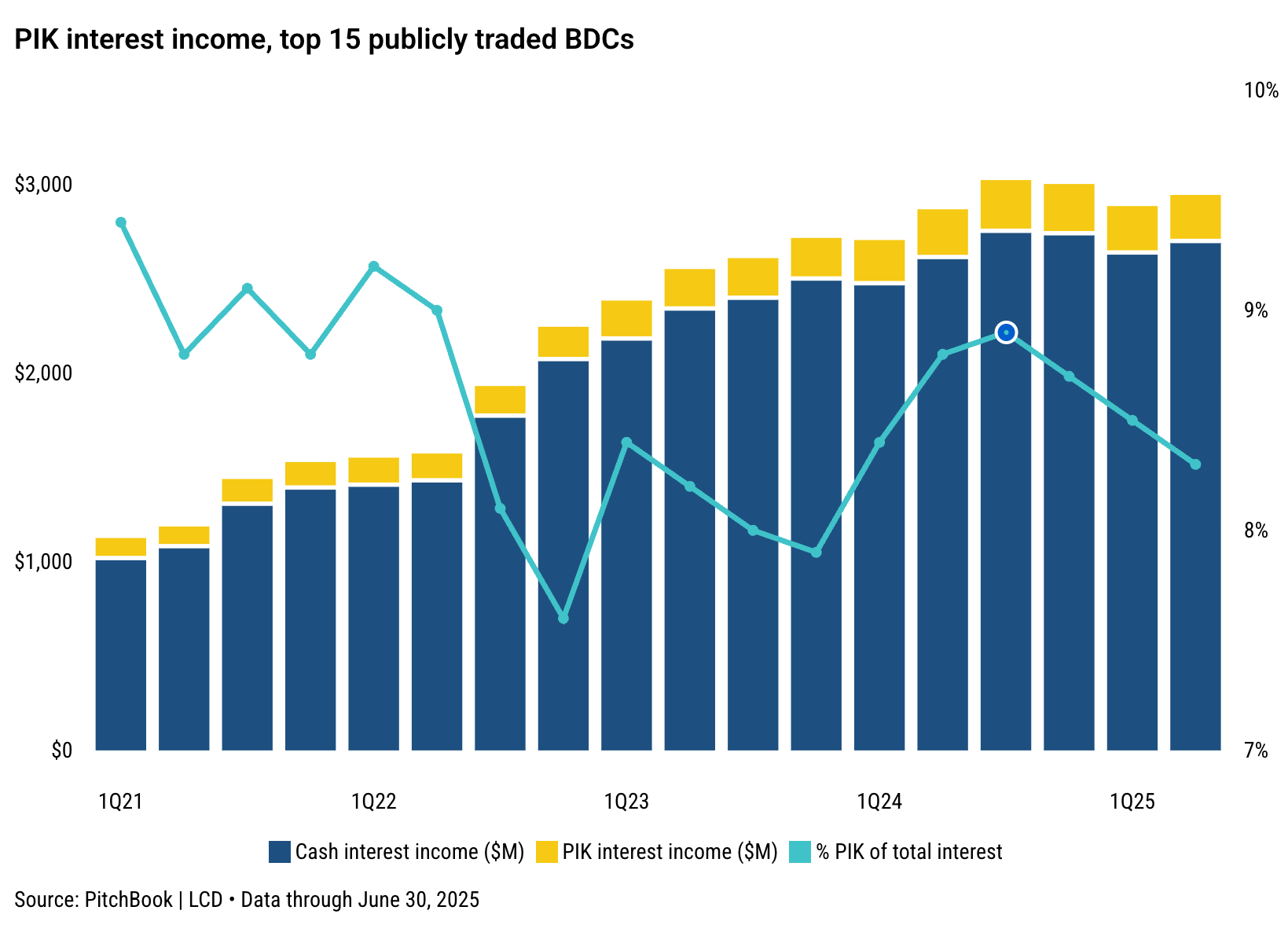
Practitioners treat 10% as the line where PIK stops being a growth accommodation and starts being a liquidity signal.
That matters to you for a reason that has nothing to do with credit markets.
Your next equity investor will read the PIK toggle as a statement about your cash generation. A 3% PIK election in an original term sheet says you chose to protect runway. A PIK toggle switched on mid-term by amendment says something else entirely, and it will be in the data room.
When PIK earns its place. You have a specific dated milestone that the preserved cash buys, and the accreted balance is still comfortably covered by your downside exit value.
When it does not. You are using it to make debt service fit a plan that does not otherwise fit. PIK does not reduce the cost of capital. It moves the cost to the moment you have the least control over the outcome.
The single most expensive word in the document. Whether the cash coupon is charged on “the outstanding principal balance” or “the original principal amount” is one clause. On the deal above it is worth £183,627. Nobody will volunteer which one you have agreed to.
What’s Hot Right Now
The four pieces readers are opening most this month.
The Way VCs Actually Calculate Your Valuation - you’re guessing at your number. They’re reverse-engineering it from exit. The six-step method, plus the Excel calculator that runs it for you.
The Number That Kills More Fundraises Than Any Other - three circles and a trillion-dollar number reads as a red flag. The bottom-up method investors trust, plus a TAM/SAM/SOM calculator where every assumption holds up.
The 300 AI Investors Actually Worth Your Time - you targeted firms when you should have targeted people. 305 named investors with thesis, cheque size, LinkedIn and a specific warm-intro route each.
The Claude Due Diligence Playbook - 1 in 5 signed term sheets dies in diligence, usually on paperwork. Eight copy-paste prompts that find your gaps weeks before an investor’s lawyer does.
4. The Counterintuitive Bit: Repaying Early Costs You More
Every founder taking a bridge says a version of the same sentence. We will refinance this out in eighteen months once the round closes.
Run that through the same £10M deal and the arithmetic reverses.
▫️ Exit in year 4: 14.3% effective annual cost.
▫️ Exit in year 3: 14.7%.
▫️ Exit in year 2: 15.6%, before any prepayment premium at all.
The reason is that fees do not amortise the way intuition says. A 2% upfront fee and a 3% exit fee are a fixed 5% toll. Spread across four years it is a modest drag. Spread across two it is 250 basis points a year. Add a prepayment premium of 1% to 3% of outstanding principal, standard after a no-call period, and on this deal that is a further £212,180 at a year-two exit.
So the plan you describe as the responsible one is the version you pay most for.
That is not an argument against bridges. It is an argument for pricing a bridge as a bridge. If the entire purpose of the facility is early repayment, the fee structure and the no-call terms matter more than the coupon, and that is where your negotiating energy belongs.
💡 Two asks that cost the lender almost nothing. Have the exit fee waived or stepped down on a refinancing with the same lender. Have the no-call period set shorter than your expected raise timeline. Both are routinely granted, and neither touches the headline rate the lender is defending in the room.
5. Warrants: The Only Lever Priced On Your Success
Warrants cost you nothing if the company disappoints and a great deal if it works. That asymmetry is exactly why they are the last thing to concede and the most misunderstood term in the document.
Start with a definitional trap. “Coverage” is usually a percentage of the loan amount, not of your equity. Bank venture debt clusters at 0.5% to 2% coverage. Specialist funds ask 2% to 10%. Stretched deals reach 10% to 15%. Mezzanine warrants typically land at 1% to 5% of fully diluted equity once converted. Two term sheets quoting “5%” can mean completely different amounts of your company, and nobody in the room will do the conversion for you.
Four terms decide what that coverage actually costs.
✅ Strike price. Insist on common fair market value rather than the preferred price. Common FMV typically sits 20% to 30% below preferred, which sounds like it favours the lender and does the opposite. A higher strike means the warrant only pays in genuinely good outcomes. A strike near nominal value, and mezzanine warrants are sometimes struck as low as £0.01, is close to a free share grant.
✅ Drawn versus committed. On a facility you may not fully draw, split coverage so part attaches to commitment and part to drawn amounts. Undrawn capital should not carry full dilution.
✅ Term and expiry. Warrants can run five to ten years or longer. Push for expiry on a qualifying IPO or acquisition to remove the long tail.
✅ Net exercise mechanics. Cashless exercise is standard. Check what it does to the fully diluted count in a downside sale, where warrant holders can take a disproportionate share of a small pot.
6. The Nine-Line Term Sheet Audit
Open the document. These nine lines produce the number that matters. This is the free version of the workbook and it works on paper.
Blended cost. Does the term sheet state an all-in IRR at your base-case exit? If not, build it.
Net proceeds. What cash actually arrives on day one after every fee?
PIK base. Is cash interest charged on original principal or the accreted balance?
Fee schedule. Upfront, exit, unused-line, agency and monitoring fees, listed together in one place.
Repayment shape. Bullet or amortising, and the full exit-year cash requirement.
No-call and prepayment. How long, and what the premium costs at your expected refinancing date.
Warrant coverage basis. Percentage of loan or of equity, on drawn or committed, at what strike.
Covenants. Minimum cash, revenue or leverage tests, and your headroom in months at current burn.
Debt service against burn. A common discipline is keeping cash debt service under 25% of net burn and total debt at 6% to 8% of valuation.
If line 1 and line 9 do not sit comfortably together, nothing else in the document rescues the deal.
Who This Is For
Founders and CFOs weighing mezzanine, venture debt or a bridge. You need the all-in number before the board meeting, not the coupon. Sections 2 and 4 are the two that change decisions.
Operators and finance leads inside a facility already. Your covenant headroom is a date, not a ratio. The tracker in the workbook returns the month you breach and the month you should have started raising.
Advisors and angels reading a founder’s term sheet. The nine-line audit is designed to be run in fifteen minutes on a document you did not negotiate.
Anyone who has been told “it’s standard at 10%”. Coverage is not standard. Strong companies routinely negotiate 5% to 8% where weaker ones pay 10% to 15%, and the strike matters more than the coverage.
Frequently Asked Questions
What is mezzanine financing? Subordinated debt that sits between senior debt and equity in the capital structure. It carries a higher coupon than senior debt because it ranks behind it, and usually includes an equity component such as warrants. In 2026 the all-in cost runs 12% to 15% in cash, and 16% to 22% including warrant value.
How is mezzanine different from venture debt? Mezzanine is typically sized against EBITDA, commonly 1.0x to 1.5x layered on 3.0x to 3.5x of senior debt, and is used in buyouts and profitable growth companies. Venture debt is sized against the last equity round, commonly 25% to 35% of it, and is used by companies that are not yet profitable. Venture debt in 2026 prices around SOFR plus 600 to 900 basis points, roughly 10% to 13% all in, with warrant coverage of 0.5% to 1.5%. The modelling mechanics in this article apply to both.
What does PIK mean and is it bad? Payment in kind. Interest that is added to the loan balance rather than paid in cash. It is not inherently bad. It preserves runway when there is a specific milestone the preserved cash buys. It becomes dangerous when it is used to make debt service fit a plan that does not otherwise fit, because it moves the cost to the moment you have least control.
What is warrant coverage? The size of the lender’s equity kicker, almost always expressed as a percentage of the loan amount rather than of your equity. 5% coverage on a £10M loan means warrants over £500,000 of stock at an agreed strike. What that costs you depends entirely on the strike price, which is why the conversion to percentage of fully diluted equity is the number to negotiate against.
How do I calculate the true cost of a debt facility? Build the lender’s cash flow timeline: negative net proceeds on day one after fees, cash interest in each year, and the full exit payment including accreted principal, exit fees and any prepayment premium. Then take the IRR of that series. That single number lets you compare two structurally different term sheets. The workbook does it in one tab.
Is mezzanine cheaper than equity? Usually, on a lifetime basis. Equity investors target 20% or more and keep that ownership permanently. A mezzanine lender is repaid and leaves. The arbitrage works whenever the return on the capital exceeds its cost, and it stops working the moment the plan the capital was raised to fund slips by a year.
The Mezzanine & Venture Debt Decoder
Nine tabs. Enter your term sheet once on the Assumptions tab and every other sheet recalculates.
✅ Dashboard. One page: all-in cost, lender IRR, dilution, covenant status, and the cost bridge showing which term creates each point.
✅ Debt Schedule and Returns. The full lender cash flow, IRR and MOIC, with the cost bridge that turns 10% into 16.8% one term at a time.
✅ Exit Sensitivity. Cost by exit year and by PIK margin, so you can see before you sign why repaying early is the expensive version.
✅ Warrants. Converts coverage-of-loan into percentage of fully diluted equity, across downside, base and upside.
✅ Covenants. Returns the month you breach and the month to start raising.
✅ Comparison. Three offers across the nine audit lines. It ships loaded with three deals where the lowest coupon has the highest all-in cost.
Paid subscribers also get:
✅ 60+ additional tools across every stage of fundraising and company building: investor research, pitch deck screening, meeting prep, term sheet analysis, financial models, and the full investor database library.
One Last Number
Mezzanine at 17% is expensive. Equity is not cheaper.
An investor putting in the same money targets 20% or more and keeps that ownership forever. The lender is repaid and leaves. One instrument costs more per year. The other costs more permanently.
So everything above resolves into a single question. Does the milestone this money buys arrive before the balance compounds past your exit value?
Founders, You Cannot Negotiate This Without The Model
Every lender you sit across from has already built this. They have run your deal end to end, priced it as one IRR, and tested what happens at every exit year before they sent you the term sheet. That is what a credit committee is.
You are the only person in the room who has not seen the number.
You cannot fix that with a calculator and a good instinct. The gap between 10% and 16.8% is not visible from the front page of a term sheet. It is produced by four terms interacting, and it only appears when you model them together.
So the choice is simple. Walk in with the same number the lender has, or negotiate the one thing they were never worried about.
Start your 7-day free trial → Cancel anytime.