

Founders buy a financial model and think they have bought a finance function.
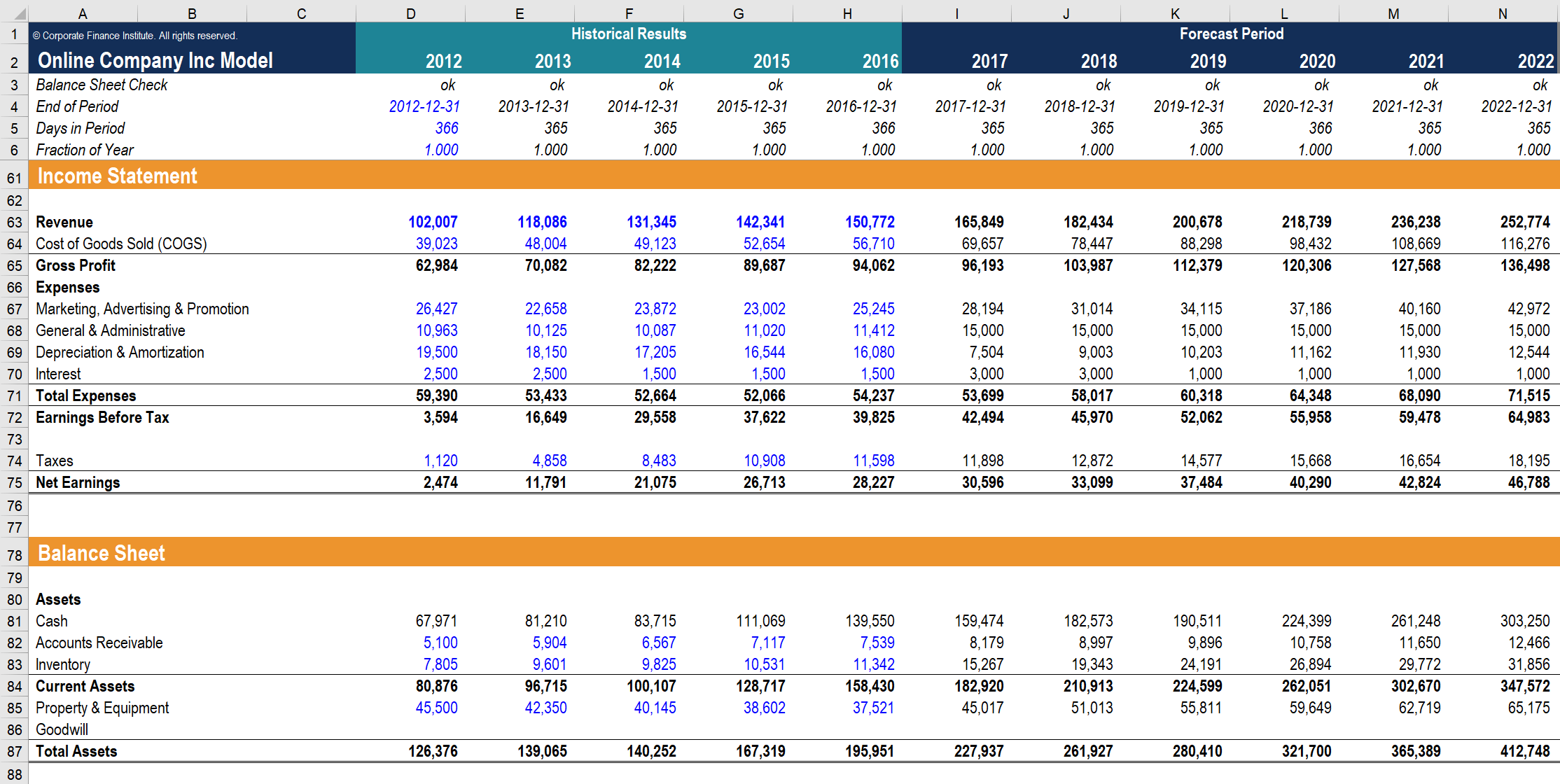
A model is an object. It gets built once, usually in a sprint, usually by someone who then leaves. A finance function is a standing process: it closes your month, reconciles every reported figure back to the ledger, and answers a question the same way in week five as it did in week one. Nobody sells that second thing. Which is why rounds rarely die early, when the model is fresh and the story is clean. They die in week five, when a partner asks for a number they already have and gets a different one back.
An investor is not auditing your model. They are testing whether your company can produce the same number twice.
Eight prompts, run in order, build the thing that passes that test.
One Rule Before You Start
Three layers, kept strictly apart.
Your ledger is live and is the only source of truth in the company. One sheet reads a dated export from it. The project file you are about to build reads copies of both.
The layer that talks is never the layer that holds the truth. Every prompt below works from pasted exports, not from a live connection to your accounts. Give an automated layer write access to your ledger and you have not built a finance function. You have built a fast way to be confidently wrong in a document you then send to an investor.
Want to get in front of 250k+ founders and investors?
For sponsorship opportunities across The Founders Corner newsletter and LinkedIn (160k followers), email: founderscornermedia@gmail.com
Prompt 1: The Drift Audit
A seed software company tells a partner ARR is £1.8M. Five weeks later the associate has rebuilt it from the data room and gets £1.62M.
£96,000 of it is annualised revenue from customers on 30-day rolling terms, which the founder counted and a contracted-revenue definition does not. £54,000 is a signed customer who has not started paying. £30,000 is a discount applied at invoice and never updated in the CRM the founder read the number from.
Three definitional differences. Zero arithmetic errors. Nobody lied.
And what the partner takes away is not that ARR is lower. It is that the most important number in the company has no single source, which makes every other figure they have been given provisional.
Run this against your own back catalogue, before someone else does.
💬 Copy this prompt into Claude
I'm preparing to raise a [STAGE] round and I want to find every number
I have already put in front of investors that does not agree with
itself.

Below are the last four things I sent or showed investors:
[PASTE INVESTOR UPDATE 1, WITH THE DATE SENT]
[PASTE INVESTOR UPDATE 2, WITH THE DATE SENT]
[PASTE THE NUMBERS FROM MY DECK, WITH THE VERSION DATE]
[PASTE ANY EMAIL WHERE I QUOTED A FINANCIAL OR TRACTION FIGURE]

Act as the associate who has been asked to build a model of my company
from these documents and nothing else. Do four things:

1. Extract every financial and traction number I have stated, with the
   date I stated it and the period it referred to.
2. Group them by metric. Flag every metric I have stated more than once
   where the value, the period, or the implied definition changed.
3. For each flag, give me the two readings available to an analyst: the
   innocent one (the month moved) and the unfavourable one (the
   definition moved). Say which is more likely from the text alone.
4. Rank the flags by how much damage each does if an investor raises it
   in week five of diligence rather than me raising it first.

Do not smooth anything over and do not assume I meant the same thing
both times. Where a number is genuinely ambiguous, say so, and tell me
what an analyst would be forced to assume in the absence of a
definition.
💡 Why this works: “Check my numbers” gets you arithmetic. Casting it as the associate building their own model gets you the thing that actually matters, which is the list of places where your company currently has more than one answer, ranked by what each one costs you.
If this is useful, it’s worth knowing it’s one piece of a bigger system.
These prompts assume the numbers you are defending are the right ones to be defending, and that you already know when to open the process. Neither is a given. We have built the same kind of copy-paste system for each of those stages:
The Claude Prompt That Found My Real ARR. Then I Raised.: the definitional work that decides what your headline number is allowed to be, before anyone else reconciles it for you
I Made Claude Build My 13-Week Cash Flow Forecast: the same “raw files in, structured output out” pattern, pointed at your cash position instead of your reporting
The 8 Checks That Can Kill a Signed Term Sheet: what happens to these numbers once a term sheet is signed and a real analyst opens the data room
The Way VCs Actually Calculate Your Valuation: the maths your numbers are feeding into on the other side of the table
How Investors Decide If You Are Ready: stage by stage expectations, so you know which of these numbers is about to be load-bearing
Prompt 2: The Definitions Page
The drift audit tells you where your numbers disagree. This is what stops them disagreeing again.
It is one page. It takes an afternoon. It does more for a raise than most financial models, because it removes the second place an answer could have come from.
💬 Copy this prompt into Claude
Build me the one-page definitions sheet that every number in my company
gets published from.

Business: [ONE-SENTENCE DESCRIPTION]
Stage: [PRE-SEED / SEED / SERIES A]
Revenue model: [SUBSCRIPTION / USAGE / TRANSACTIONAL / MIXED]
Accounting system: [XERO / QUICKBOOKS / NETSUITE / OTHER]
How I currently describe my traction: [PASTE THE PARAGRAPH I USE]

Cover these metrics: revenue, ARR or run rate, gross margin, gross
burn, net burn, cash, runway, customer count, churn, CAC, payback,
headcount.

For each one, do three things:

1. Set out the two or three competing definitions genuinely in use at
   my stage, and what each includes and excludes.
2. Tell me which definition an institutional investor assumes by
   default when I don't specify one, and how far my current wording
   sits from it.
3. Write the definition line I should adopt, in one sentence, in the
   form: metric, what is included, what is excluded, source system.

Then output the finished page as a table with columns for Metric,
Definition, Value, Period, Source, and Date pulled. Leave the last
four columns blank for me to fill from the ledger.

Finish by naming the three definitions on this page most likely to
cause an argument in diligence at my stage, and what specifically
would trigger the argument.
⚡ Two rules make this work, and they are the whole point. Nobody publishes a number that is not on this page. And the page only changes at close. Do that and the week-five problem largely disappears, because there is no longer anywhere else for the answer to come from.
🔒 Finding the drift is the easy part. Here is what closes it.
You have the diagnosis. What you don’t have yet is the thing that runs every month without you: a close that takes twenty minutes, a runway number you can defend in a board meeting, an update that drafts itself, and an answer ready before a partner asks the same question twice.
Six prompts. About an hour a month once they are set up.
✓ Prompt 3: The thirty-minute close. Six steps, named owners, and the freeze rule that stops a closed month quietly moving after you have sent it.
✓ Prompt 4: The triple runway watch. All three numbers, plus the month to open your raise. The third one usually lands two months short of what is in your board pack.
✓ Prompt 5: The variance note. Three lines that tell an investor this was a slow month, not a broken motion. Written before anyone thinks to ask.
✓ Prompt 6: The investor update numbers. Drafts the numbers half from your closed month, and reconciles it first. The first run usually finds a metric that quietly changed definition last quarter.
✓ Prompt 7: The week-five question desk. The one that pays for the other seven. A single rule turns a number moving into proof that you close your books.
✓ Prompt 8: The restatement memo. Say it once, in writing, and have it land in your favour. Plus the three things banned from the memo.
Paid subscribers also get:
✓ 60+ additional tools covering every other stage of fundraising and running a company: investor research and outreach, pitch deck screening, meeting prep, term sheet analysis, and data room management. The same tool stack this finance function plugs into.
Prompt 3: The Thirty-Minute Close
APQC’s benchmarking across roughly 2,300 organisations puts the median month-end close at 6.4 days, top quartile at 4.8, bottom quartile at 10 or more. Companies under $5M of revenue routinely run 12 to 20 days, which is another way of saying the month never really closes. It just gets overtaken by the next one.
You are not trying to hit an audit standard here. Your accountant will still adjust at year end, and that is fine. You are trying to make the month stop moving, so that a figure quoted on the fourteenth is still the same figure on the twenty-eighth.
This is the highest-leverage prompt in the article, because every one below it reads from the output.