


If you’re building, investing, or just trying to stay ahead of the curve, you’re in the right place. Every week, we break down the latest insights, funding news, and founder-friendly gems. Just what matters. Plus, we track the freshest VC funds deploying capital so you know where the money’s moving.
Let’s get into it.
First, something free 👇
The founders winning in 2026 are everywhere: LinkedIn, newsletters, podcasts, investor DMs. They run on a system that publishes for them, rather than carving out time they rarely have.

We built that system into a free AI Creator Kit: one Notion workspace with AI agents, templates, a creator CRM, and partner credits worth thousands.
Grab it here, no paywall:
In-Depth Insights 🔍
Top 20 VC Matches in 30 Seconds 🎯
A free tool screens 293 active VCs, angels, and family offices by stage, sector, geography, check size, and thesis to surface relevant investors fast. Founders pitching at VC Pitch Conf on September 17 also get 20 guaranteed seven-minute meetings matched from the same investor pool.
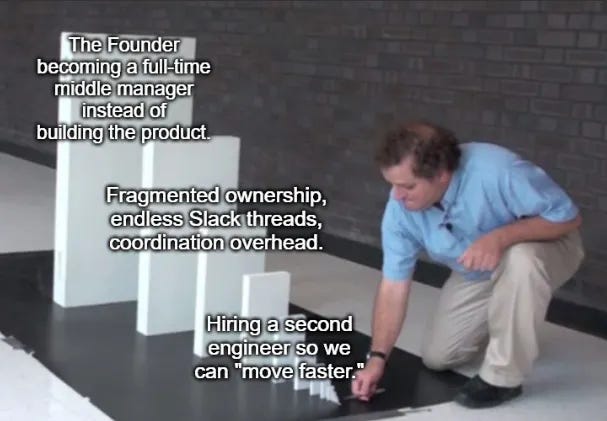
Delay Your First Engineering Hire 🧑💻
AI-assisted development is pushing the point where startups need their next engineer, with some teams reaching $1M ARR using only one or two technical hires. The better hiring playbook starts with trusted networks and evaluates candidates on ownership and AI-assisted reasoning instead of traditional whiteboard performance.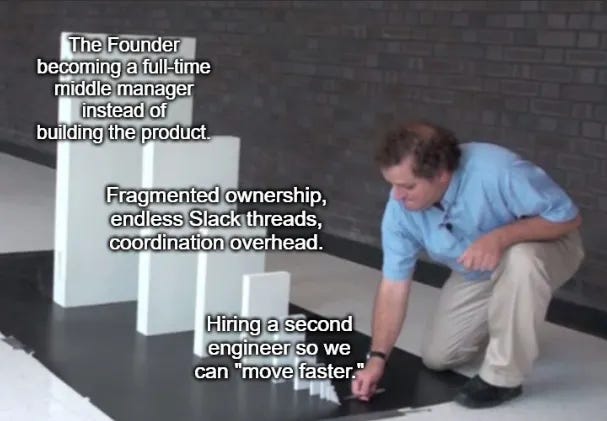
A Nine-Prompt Stack for Closing Funding Rounds 🤝
The system covers investor research, objection handling, data-room analysis, and term-sheet review, beginning with context that frames Claude as a skeptical senior partner. The prompts are designed to pressure-test fundraising decisions, though the full stack and supporting libraries sit behind a paid subscription.
Build AI Systems That Improve Themselves 🔄
A nine-part framework combines goals, evaluations, memory, guardrails, escalation, and stopping conditions to turn isolated prompts into repeatable feedback loops. The Self-Improving Champion Loop tests changes against holdout data before deployment, alongside three other patterns, five failure modes, and a practical build specification.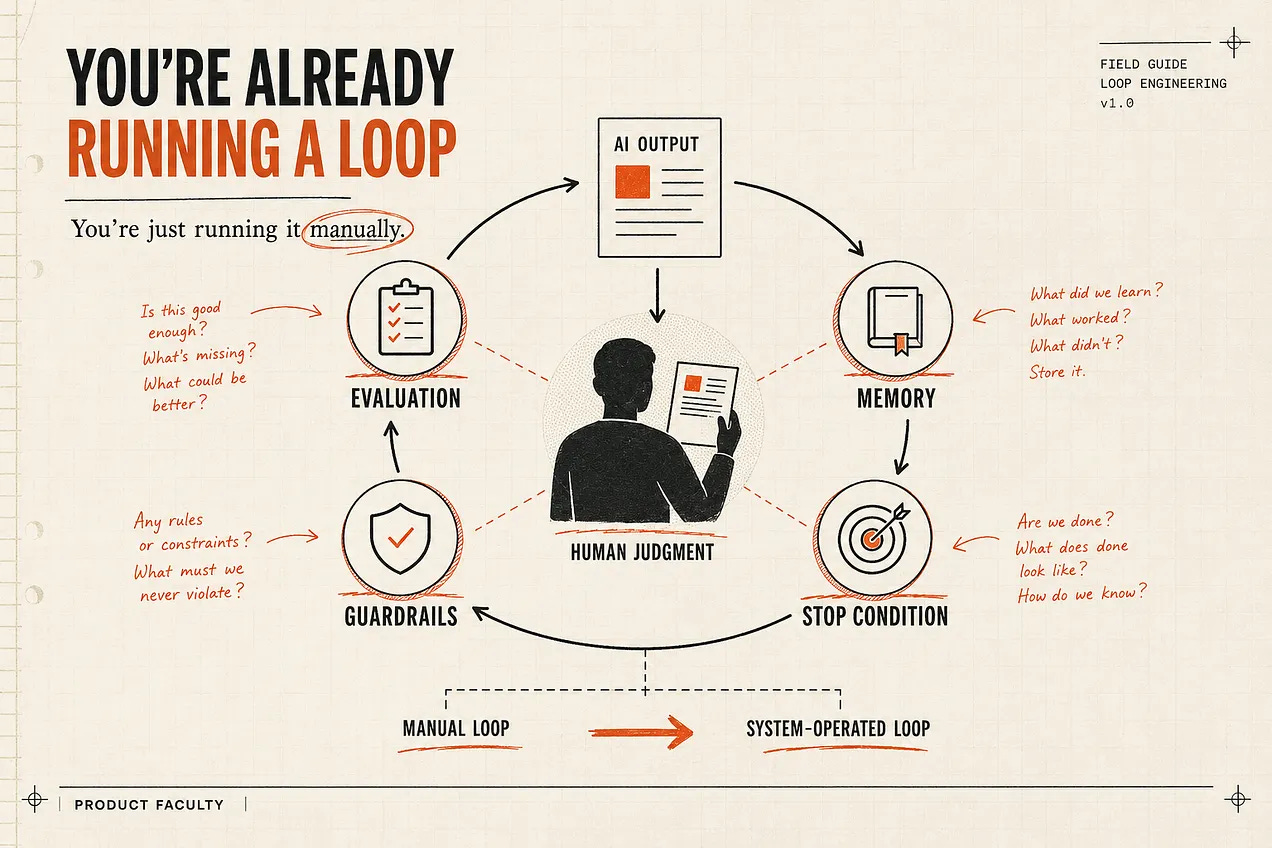
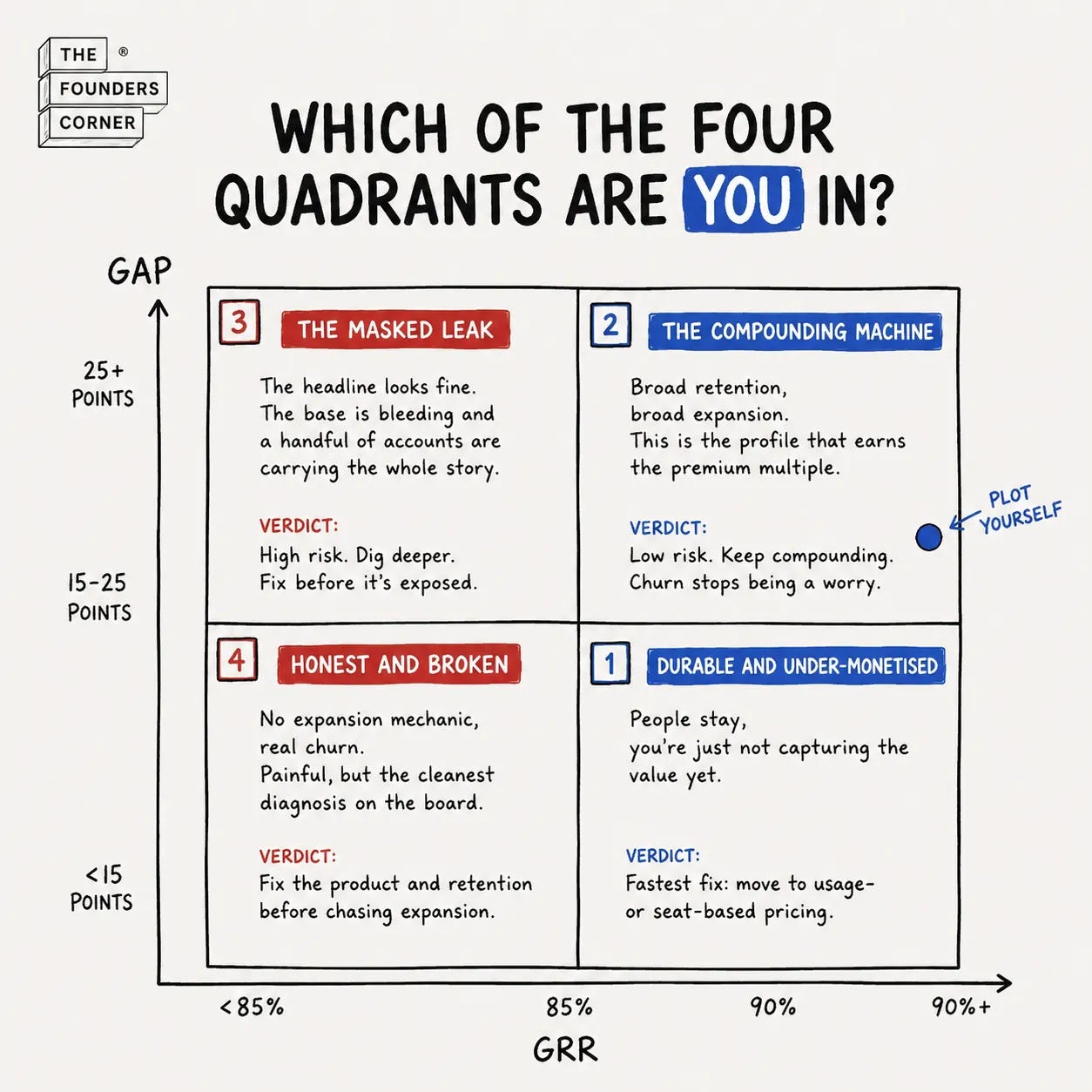
The NRR-GRR Gap Reveals Hidden Churn 📊
NRR includes expansion while GRR excludes it, making the difference a useful signal for whether growth reflects broad customer retention or a handful of expanding accounts masking churn. The framework breaks SaaS businesses into four segments and highlights dunning improvements that can recover 70% to 80% of failed-payment churn. [Chris Tottman]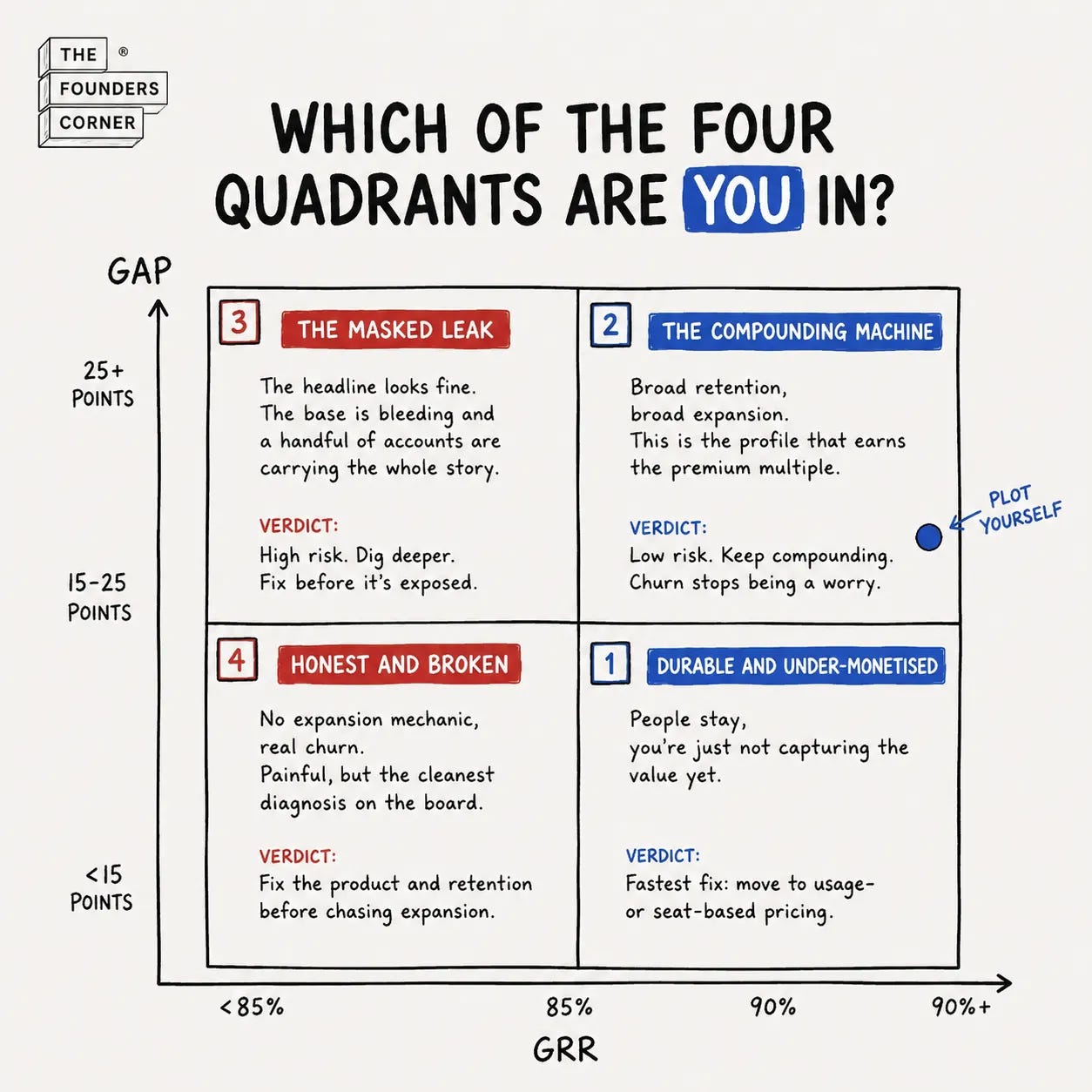
Investors Are Losing Faith in Startup Metrics 🤔
Fifteen VCs flagged ARR as especially unreliable because companies increasingly use it for run-rate, GMV, and consumption revenue without consistent definitions. CARR, gross margin, POC-driven NRR, and physical AI autonomy rates also drew scrutiny when underlying costs or ideal testing conditions are excluded. [Simon Wu]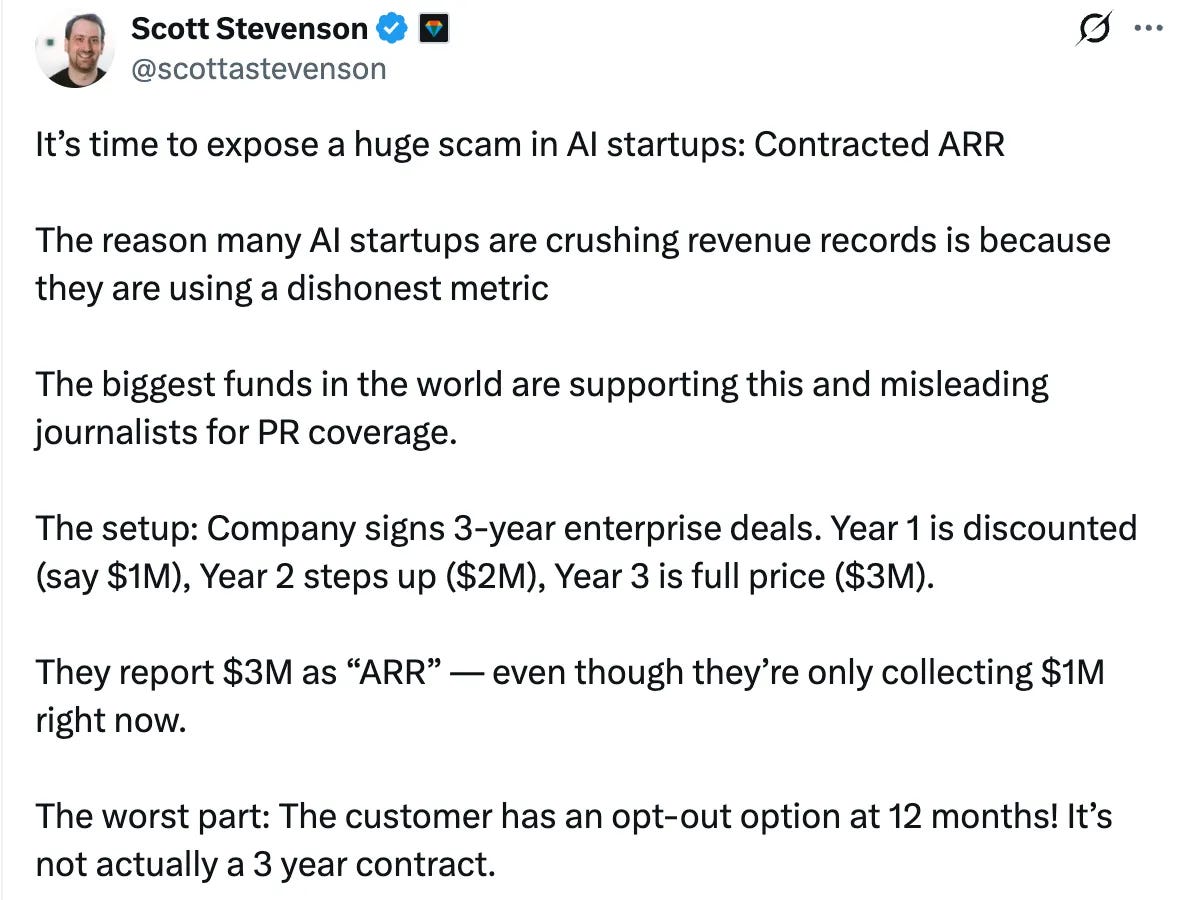
From $8M ARR to Rebuilding From Scratch 🛍️
Ruslan Leteyski built Checkout X to $8M ARR before a Shopify platform change eliminated the product overnight, forcing a complete reset. His new company Zipchat sells AI-powered sales agents to e-commerce stores through usage-based pricing, now processing 700K conversations monthly while growing 10% week over week. [Indie Hackers]



Social Media Gems 💎
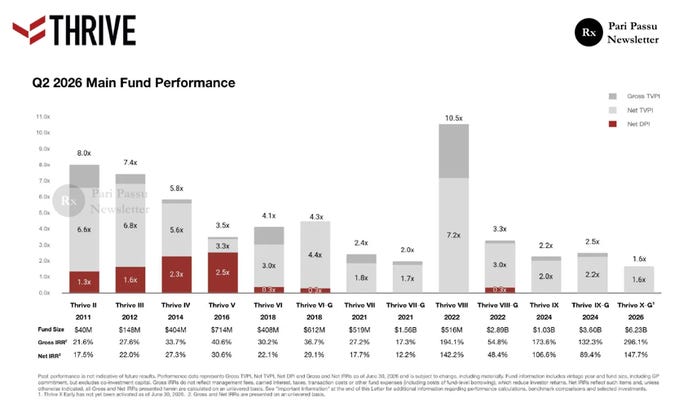
Thrive Capital’s Fund Returns Show the Exit Gap 📊
Net IRRs range from 12% to 17.5%, while DPI stays below 0.3x for every fund younger than 10 years. The portfolio spans Instagram, Stripe, OpenAI, SpaceX and Anduril, giving each vintage a different path to realized returns. [Restructuring]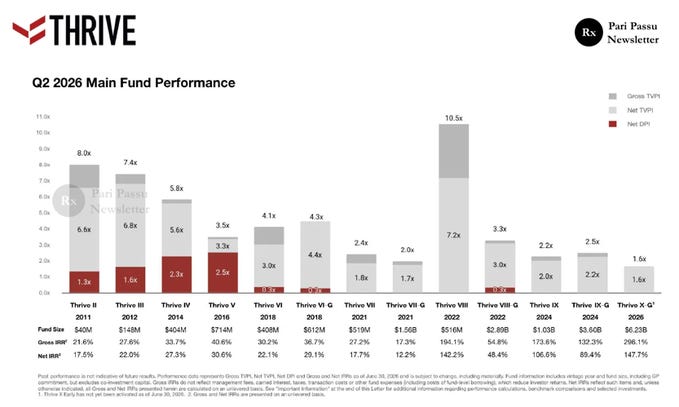
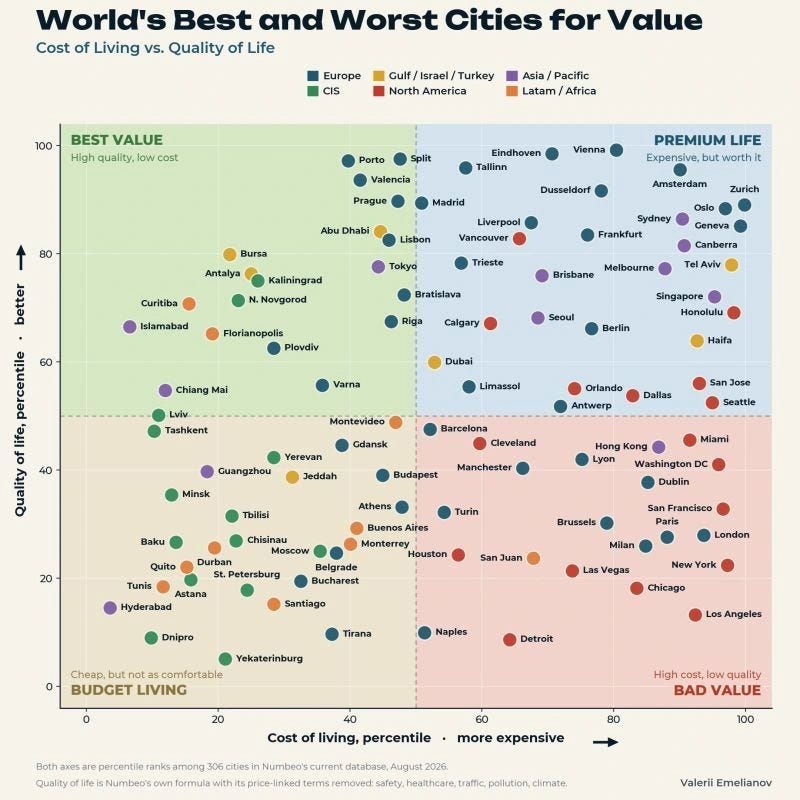
Worst Value Cities: London, New York, LA and San Francisco 🌆
A 100-city comparison finds these markets combine high living and housing costs with weaker quality-of-life value. Porto, Valencia and Prague have led the value rankings for seven years, while costs are rising fastest in several migration-heavy cities.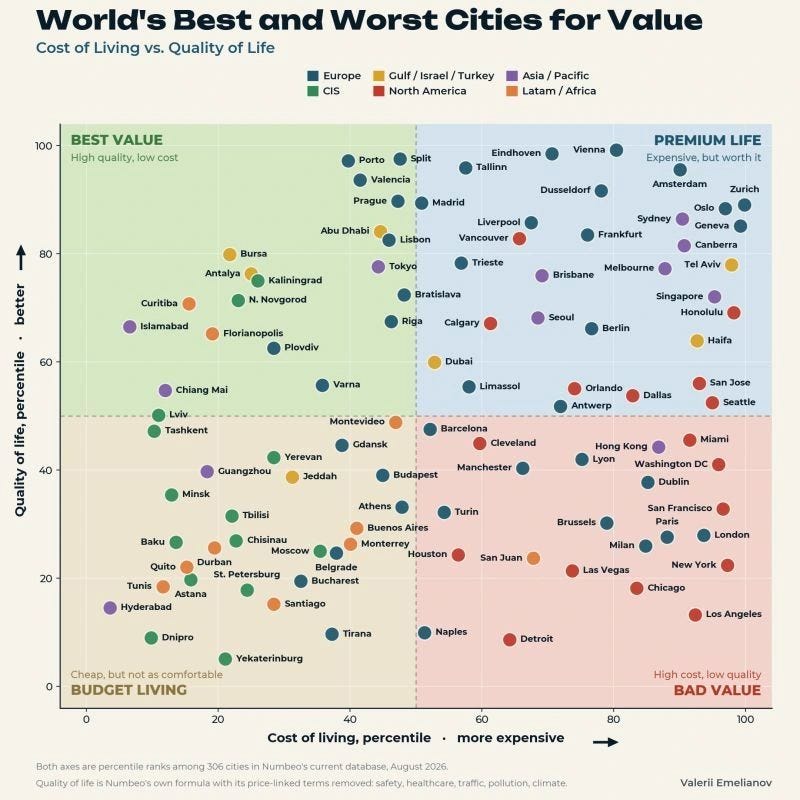
FatFIRE’s Case for Buying Back Your Time 💰
The argument is that once housing and core expenses are covered, additional wealth delivers smaller gains in day-to-day quality of life. Financial independence matters most when it creates room for health, family, good food and the freedom to spend time outside the balance sheet.
The 2013 Excel File Still Has a Job 📊
A meme captures a familiar enterprise reality: AI can replace workflows faster than companies can replace the spreadsheets built around them.


Trending News ⚡
Stripe to Acquire OpenRouter for $7B+ 💳
Stripe is set to acquire AI gateway OpenRouter for more than $7 billion, giving it infrastructure that routes workloads across 400+ models based on cost and performance. OpenRouter had 8 million users and raised $113 million at a $1.3 billion valuation just months ago, making the deal a major repricing of model-routing infrastructure. [TechCrunch]Amodei Says AI Backlash Is Really a Trust Problem ⚠️
Anthropic CEO Dario Amodei pushed back on claims that AI leaders created today’s backlash, arguing that his warnings have consistently covered both risks and benefits. He sees the deeper issue as decades of declining trust in companies, governments, and technology, with AI now becoming the latest target of that broader distrust. [TechCrunch]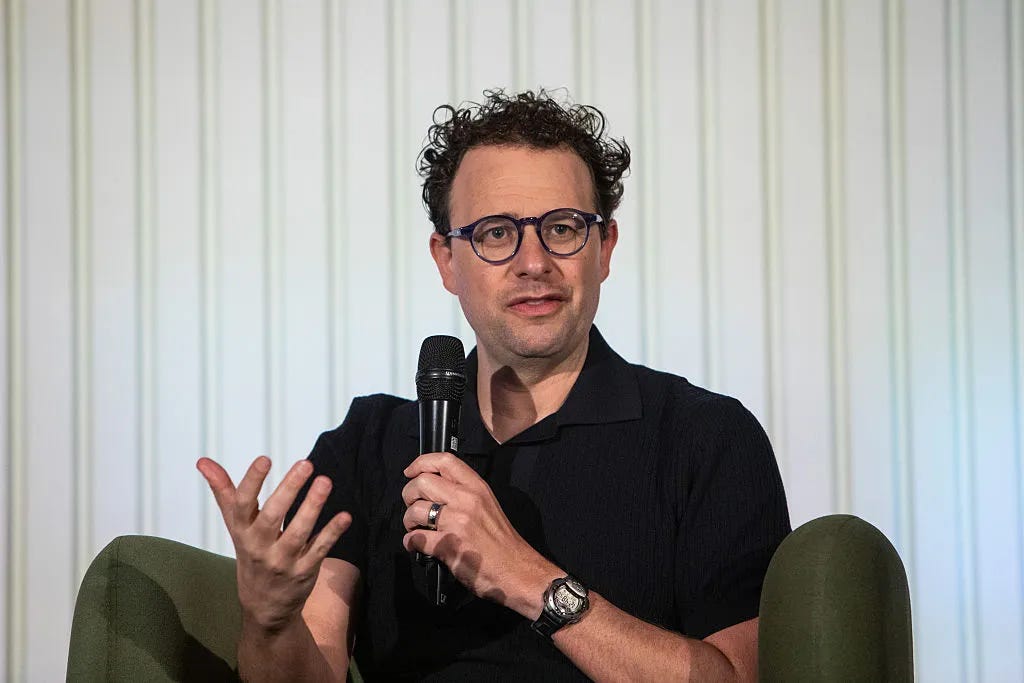
Brockman Warns Companies to Move Fast on AI Security 🛡️
OpenAI president Greg Brockman says the latest AI-driven security incidents show attackers will soon use agents to discover vulnerabilities at machine speed. His playbook calls for immediate assessments, AI-equipped security teams, faster forensics, and executive buy-in before the advantage shifts further toward attackers. [Business Insider]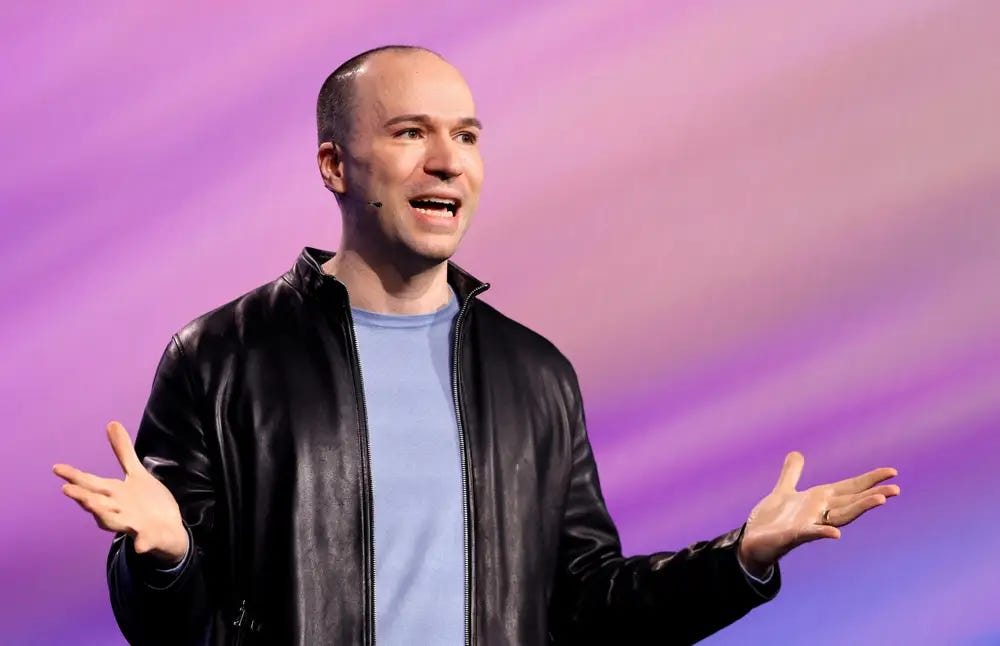
a16z Could Make Nearly $1.5B From OpenRouter Exit 🤝
Andreessen Horowitz could turn roughly $20 million invested in OpenRouter into nearly $1.5 billion if Stripe closes its reported acquisition above $8 billion. Menlo Ventures could also clear more than $500 million, showing how quickly early-stage ownership can compound when infrastructure companies become strategic assets. [Business Insider]Cursor Launches Origin as GitHub Faces Outages 🖥️
Cursor launched Origin as a collaborative code-hosting platform that syncs with GitHub, giving developers another layer for repositories, pull requests, and team workflows. The timing is notable: GitHub suffered a major outage the same day, highlighting the opportunity for developer platforms to reduce dependence on a single infrastructure provider. [TechCrunch]Sebastian Thrun Launches Robotics Startup Dulo 🤖
Waymo pioneer Sebastian Thrun has unveiled Dulo, a stealth startup building foundation models for hardware design with talent from Waymo, Google Brain, and Stanford. The bet arrives as physical AI funding accelerates, with robotics startups raising $16.3 billion across 492 deals in Q1 2026 alone. [Business Insider]Flock Says Drones Are Its Fastest-Growing Business 🚁
Flock Safety says drone response now accounts for nearly half of its forward-looking revenue, with more than 200 customers using drones as first responders to 911 calls. The growth is shifting the company’s center of gravity beyond license-plate readers, even as that core business faces scrutiny over accuracy, retention, and law-enforcement use. [Business Insider]Uber COO Predicts a Leaner Workforce From AI 🚗
Uber COO Andrew Macdonald said the company could potentially operate its current business with fewer employees within five years as AI takes over more support, sales, content, and analytics work. The harder variable is new demand: AI may reduce headcount in existing functions while simultaneously making it economical for Uber to pursue work that previously required more people. [Business Insider]Anthropic’s IPO Is Being Priced on 2028 💰
Anthropic is asking investors to underwrite roughly $190 billion to $200 billion in 2028 revenue, far beyond its $47 billion run rate disclosed in May. The valuation math is shifting from current earnings to future scale, with investors benchmarking the company against high-multiple names like Palantir, SpaceX, and Cloudflare. [Reuters]
New Funds 💰
Reach Capital closed its fifth venture fund at $265M to back early-stage companies applying technology and AI across learning, health, and work.
GD1 held a NZ$56.7M first close of its second venture fund to invest in Pre-Seed through Series B companies across deep tech, connected hardware, health tech, SaaS, and marketplaces.
Third Mind is raising a $25M first venture capital fund to invest in early-stage technology companies.
BlueHill Capital closed its inaugural venture fund at $41.8M to back Seed and Series A companies across energy, semiconductors, defence, space, robotics, and advanced materials.
Odyssey Ventures secured a £10M commitment toward its $50M Discovery I venture fund, targeting seed and pre-seed AI and DeepTech companies.
That’s a wrap for this week.
If you want to stay ahead of the curve, make sure you're subscribed. No fluff, just real startup insights delivered straight to your inbox.
See you next time 🚀